

What Google’s Release Notes Actually Tell You About YMYL Ranking Shifts

Read Google’s core update announcements for timing signals: when the search giant mentions “helpful content,” “expertise,” or “trustworthiness,” YMYL sites in health, finance, and legal sectors typically see the most volatility within 7–14 days of rollout completion. Track your rankings daily during announced update windows, comparing fluctuations against Google Search Console’s Core Web Vitals and manual action reports to distinguish algorithm changes from technical penalties.
Cross-reference vague release note language with third-party tracking tools like Semrush Sensor or Moz MozCast to identify which verticals are experiencing the heaviest flux. If “quality” appears without specifics, audit your E-E-A-T signals immediately: author credentials, medical review dates, citation quality, and about-page transparency often determine whether sensitive-niche sites gain or lose visibility.
Monitor the 48 hours following any “broad core update” mention by checking your top 20 YMYL landing pages for position shifts of five ranks or more. Document which content types moved, symptom guides, financial calculators, legal explainers, then reverse-engineer competitors who gained ground to spot pattern changes in content depth, source attribution, or user intent matching that Google’s notes won’t explicitly describe.
How Google Announces YMYL-Focused Core Updates
Quick vocabulary
- YMYL
- “Your Money or Your Life”, Google’s label for queries where inaccurate information could harm a user’s health, finances, safety, or legal standing.
- Core update
- A broad ranking-system change Google announces officially, usually rolling out over 1–3 weeks. Affects how the algorithm weighs quality signals across all topics.
- Helpful content update
- A class of update (now folded into the core update framework) focused on demoting content that reads as written for search engines rather than people.
- Release notes
- Google’s public communication about an update: a Search Liaison tweet, a Search Central blog post, and an entry on the Search Status Dashboard. Rarely detailed.
- E-E-A-T
- Experience, Expertise, Authoritativeness, Trustworthiness, the four signals Google’s quality raters use to evaluate YMYL content, per the Search Quality Rater Guidelines.
- Ranking shift
- A measurable change in position across a tracked keyword set during or after an update window. Five-plus ranks of movement across multiple terms suggests an algorithm cause.

The Standard Core Update Announcement Template
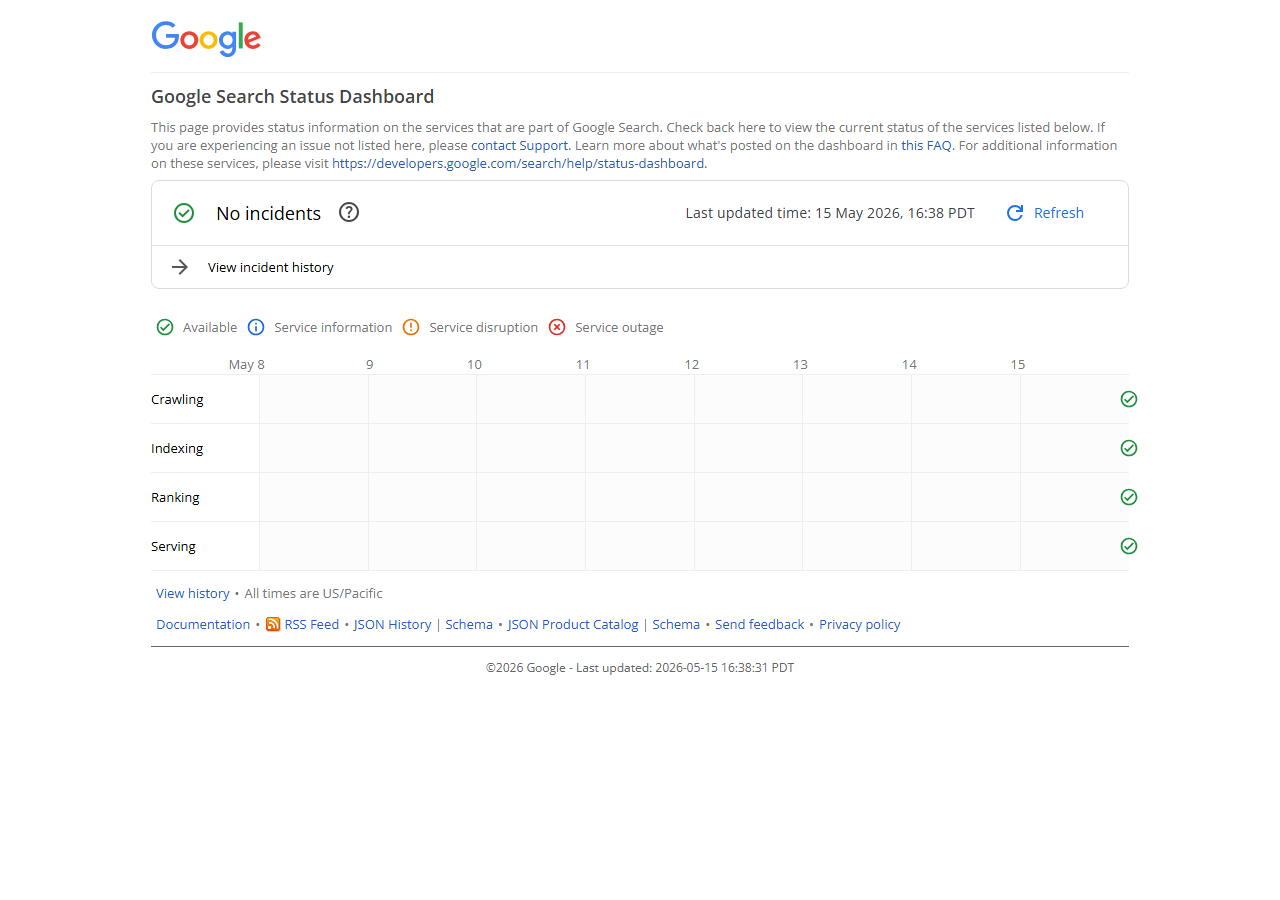
Google’s core update announcements follow a predictable three-part pattern. First, the Search Liaison account posts a confirmation tweet stating “rolling out” with a generic timeline. Within hours, the Search Central blog publishes a brief post reiterating guidance to “focus on content quality” and linking to existing documentation. The same status changes are mirrored on Google’s Search Status Dashboard, which is the authoritative timeline for when an update started and finished rolling out.
Since 2022, these posts consistently employ helpful content framing, phrases like “people-first,” “original insights,” and “satisfying intent”, which typically signal adjustments to Your Money or Your Life verticals. The repetition isn’t empty: when Google emphasizes expertise and experience in an announcement, health, finance, and legal sites should expect volatility. (In my experience, the lag between the tweet and the first dashboard entry is rarely more than a few hours, so you can usually trust either source on day one.)
The template’s real value lies in what it omits. No mention of links or technical factors means the update likely targets content quality and E-E-A-T signals, not infrastructure.
That negative-space reading is what separates practitioners who triage quickly from teams that spend a week chasing the wrong fix. If the post is silent on link spam or site reputation abuse, you can usually deprioritize a link audit and put the hours into author-bio and citation work instead. (I’ve watched this play out across half a dozen client recoveries.) And if the post does name a system, the update notes Google publishes for spam updates, for example, read very differently from core update notes.
Signal Words That Indicate YMYL Recalibration
Google rarely telegraphs YMYL changes explicitly, but certain phrases in release notes act as reliable tells. Watch for mentions of “quality assessments,” “authoritative sources,” or “expertise”. Each suggests Google is refining how it evaluates content in sensitive categories like health, finance, or legal advice. References to “user trust,” “credible information,” or “original research” similarly point to updates that scrutinize E-E-A-T signals more closely. In most cases, these keywords surface even in broad core update notes, revealing when Google has tightened evaluation criteria for sites offering advice that could impact well-being or financial security.
| Phrase in release notes | What it usually signals | Where to look first |
|---|---|---|
| “Helpful content” / “people-first” | Demotions on pages that read as SEO-first or thin-affiliate | Listicles, “best of” pages, generic how-to content |
| “Expertise” / “authoritative sources” | E-E-A-T reweighting in YMYL verticals | Author bios, credential statements, medical-review dates |
| “Quality assessments” / “improvements to how we assess” | Threshold change rather than a new signal | Pages that hover near positions 3–10 in money queries |
| “Original research” / “first-hand experience” | Lift for unique data, demotion for paraphrased competitors | Studies, surveys, screenshots, on-the-job notes |
| “Reducing low-quality content” | Broad demotion sweep, sometimes site-wide | Old archive content, orphan pages, AI-spun drafts |
| No mention of links or technical signals | Update likely isn’t about infrastructure | Don’t run a link audit, audit content first |
When you spot clusters of these terms, expect volatility in YMYL verticals and prioritize author credentials, citation practices, and transparent sourcing in your response strategy. Language around “reducing low-quality content” or “rewarding helpful content” often precedes noticeable ranking shifts for medical publishers, financial advisors, and legal portals.
What YMYL Recalibrations Actually Mean for Rankings
The Three Signals Google Reweights During YMYL Shifts
When core updates recalibrate ranking systems, Google adjusts three interconnected dials for YMYL (Your Money or Your Life) queries, health, finance, legal, and safety topics where misinformation causes real harm. Google’s Search Quality Rater Guidelines are explicit that YMYL pages get the strictest evaluation precisely because the cost of bad information is highest in these categories.
Three dials Google reweights
First, E-E-A-T indicators (Experience, Expertise, Authoritativeness, Trustworthiness) receive heavier weight. Release notes mentioning “helpful content” or “quality improvements” often signal stricter enforcement of author credentials, cited sources, and domain reputation in these verticals. Sites without clear expertise markers, medical reviewer bios, industry certifications, transparent ownership, lose ground even when topically accurate.
Second, backlink authority thresholds rise. Google tightens which domains count as trusted referrers for YMYL claims. Links from peer-reviewed journals, government agencies, or established institutions matter more than equal-count links from general blogs. Post-update volatility in medical or financial niches often reflects this recalibration rather than on-page issues.
Pro tip
When you see “expertise” or “authoritative sources” in the release note, pull a backlink report filtered to your YMYL pages and bucket referrers by TLD. If .gov and .edu are under 5% of the profile while competitors are at 15–20%, that gap is probably where the new threshold sits.
Third, content freshness standards shift based on topic velocity. Static advice on mortgage rates becomes stale faster than evergreen anatomy explainers. Updates emphasizing “current information” penalize outdated statistics or regulatory guidance, even on otherwise authoritative sites.
These three signals interact: a fresh article from a low-authority author still underperforms stale content from a credentialed expert, revealing Google’s hierarchy.
Why Your Site Might Drop Without Doing Anything Wrong
Here’s the thing: rankings operate on a curve, not a fixed scale. When Google tightens YMYL thresholds, raising the bar for author credentials, citation quality, or entity recognition, sites that newly meet those standards get boosted. Your site stays exactly the same, but competitors leapfrog past you in results. No penalty exists. You simply didn’t advance while others did.
This relative displacement explains why finance and health sites often see sudden drops after core updates despite no technical errors or content changes. The fix requires identifying which new signals competitors now satisfy, often revealed through careful release note analysis, then closing those gaps. Monitor category leaders who gained positions during the same window your rankings fell; their improvements signal what Google now rewards.

Tracking YMYL Changes Google Doesn’t Explicitly Document
SERP Monitoring Tactics for YMYL Niches
Monitor positions 1–3 and featured snippets most closely, these slots absorb the sharpest volatility during YMYL recalibrations. When Google tweaks E-E-A-T signals, the top three organic results and position-zero features reshuffle more dramatically than mid-page rankings.
Track informational queries with health, financial, or legal modifiers (e.g., “symptoms of,” “how to invest,” “legal rights for”). These trigger YMYL filters and reveal when Google reweights authoritativeness. Compare your rankings for commercial versus purely informational variants of the same topic; divergent movement signals classification shifts.
Knowledge Panels and People Also Ask boxes are early-warning systems. If previously stable PAA questions disappear or reorder, or if Knowledge Panel sources change, Google likely adjusted its trust thresholds for that entity or topic cluster (though Google’s never confirmed this mechanism publicly). YMYL updates often arrive unannounced in release notes, but SERP features telegraph algorithmic intent before rankings fully settle.
Watch for
Pattern changes across multiple queries in a 48–72 hour window typically precede broader rollouts mentioned weeks later in official communications. If three of your money terms see Knowledge Panel reshuffles on the same day, that’s worth a note in the log even before Google says anything.
Set up daily rank tracking for your core YMYL terms across these elements, not just your own positions, but also which domains occupy snippets and panels.
Correlating Release Timing With Vertical-Specific Impact
Match Google’s broad core update announcements against your site’s actual traffic swings to spot meaningful patterns. Start by logging every confirmed update date from Google’s Search Status Dashboard, then overlay your Google Analytics sessions and Search Console impressions on a timeline. Filter by your most important landing pages, those targeting health conditions, financial products, or legal advice, to see if drops coincide within 2–5 days of rollout completion.
Track niche-wide volatility using tools like SEMrush Sensor or Rank Ranger, filtered by YMYL categories. When Google announces a core update but provides minimal detail, compare your ranking movements to competitors in the same vertical. If finance sites tumble while health pages stay flat, the update likely weighted E-E-A-T signals differently across sectors.
Document which update cycles hit hardest: create a simple spreadsheet mapping update names, rollout dates, your traffic delta, and affected page types. After three or four cycles, well, more accurately, after about five for most teams, you’ll recognize whether your niche absorbs impact early in the rollout or days later during minor adjustments.
Cross-reference release note language for clues. Terms like “content quality” often precede YMYL reshuffles, while “helpful content” language may flag broader shifts. Correlating vague phrasing with concrete ranking changes helps decode future announcements before they fully land.
What to Do When Release Notes Confirm a Core Update
Immediate Assessment Checklist (First 48 Hours)
Within the first two days of a Google release note, establish your performance baseline and triage exposure.
Start by segmenting traffic into YMYL and non-YMYL properties. YMYL sites, health, finance, legal, safety topics, face stricter evaluation under E-E-A-T criteria and experience sharper volatility. Compare week-over-week organic sessions, impressions, and average position for these segments separately in Search Console. Non-YMYL drops may signal broad algorithm shifts; YMYL-specific declines suggest quality recalibration.
Run a competitor SERP audit for your top 20 money keywords. Note which domains gained or lost visibility, particularly sites with different authority profiles or content models. New entrants from established institutions often signal Google is rewarding credibility signals. Displacement by forums or user-generated content may indicate a freshness or diversity adjustment.
Check Search Console’s Manual Actions panel and Security Issues tab immediately. While algorithmic updates dominate release notes, manual penalties occasionally deploy in tandem. Rare, but it happens.
Document baseline metrics before the noise compounds: core page rankings (position 1–10), total indexed pages, Core Web Vitals scores, and referring domain count. Export CSVs timestamped to the update announcement date. These snapshots prove essential when separating update impact from seasonal trends or technical incidents during post-mortem analysis.
Act quickly. The cleanest signal emerges before you make reactive changes that muddy attribution.

Recovery Signals Google Won’t Put in Release Notes
Google’s YMYL recalibrations rarely announce themselves clearly, you’ll see phrases like “improvements to how we assess authoritative content” or “refinements to helpful content systems” buried in bland update notes. If your health, finance, or legal site dropped 30–50% in visibility within 48 hours of a core update, you’re likely caught in one.
The clearest signal: check if your top-performing informational pages (symptom guides, investment explainers, legal Q&As) fell harder than transactional pages. YMYL recalibrations disproportionately target content where inaccuracy could cause harm, not commercial intent pages. Run a segment filter in Search Console, if queries containing “how to,” “what is,” or “symptoms of” show steeper declines than branded or product terms, that’s your confirmation.
Recovery patterns from the past four years show three adjustments that link adjustments historically correlate with rebounds: replacing editorial links from general news sites with citations from niche professional associations or .gov/.edu sources; adding bylines with credentials and institutional affiliations to every affected page; and pruning speculative or opinion-based content in favor of evidence-backed statements with inline references.
Caveat
Though Google has never quantified how long recovery should take, the practitioner consensus is two to three update cycles. If you’re seeing zero movement after the next core update, the diagnosis is probably wrong, not the timeline.
Track your recoveries by monitoring two-week intervals after each subsequent core update. If you see 15–20% gains in formerly affected URLs, you’re moving in the right direction. Full recovery typically takes two to three update cycles, not one. I’d argue this is the single most under-communicated part of the whole framework: recovery isn’t about reversing a penalty; it’s about meeting a threshold Google won’t document.
When Release Notes Signal Action vs When to Wait
Not every release note demands a response. The decision card below is the rule of thumb most teams arrive at after a few cycles of overreacting:
✓
Act on the release note when
- ›The note names E-E-A-T or “expertise” and your YMYL pages already lost 10%+ visibility
- ›Third-party rank trackers show vertical-specific volatility matching your niche
- ›Competitors with stronger credentialing leapfrogged you on the same money terms
- ›SERP features (PAA, Knowledge Panels) reshuffled on your top 20 keywords
- ›The rollout has fully finished per the Search Status Dashboard
✗
Wait it out when
- ›The rollout is still in progress and rankings haven’t stabilized
- ›Your traffic delta is under 5% and no clear competitor pattern has emerged
- ›The release note is generic (“quality improvements”) with no YMYL-specific language
- ›Third-party volatility tools are quiet on your vertical
- ›You’re tempted to “do something” but can’t articulate the hypothesis
Look, the bias toward inaction is usually correct. Most of the worst SEO post-mortems come from teams that changed five things during a rollout and now can’t tell which change moved the needle, or whether the rollout itself was the explanation. Five changes, sometimes more.
Google’s release notes offer valuable signals, but they’re rarely sufficient on their own for YMYL sites navigating algorithmic shifts. Treat official announcements as one layer in a three-part monitoring framework: combine sparse Google communications with independent rank tracking tools that surface volatility before you feel revenue impact, and layer in competitor analysis to understand whether changes affect your niche specifically or broadly. Most core updates mention quality improvements without naming affected verticals, your own data reveals whether health, finance, or legal queries saw movement.
Try it this week
Build your release-note baseline before the next update lands.
-
1
Bookmark the Search Status Dashboard and the last three core update blog posts. Paste the exact phrasing into a single doc. -
2
Tag your top 20 money keywords as YMYL or non-YMYL in your rank tracker. The split is what makes vertical-specific volatility legible. -
3
Export a clean Search Console baseline (impressions, position, clicks by page group) and timestamp it. Next update, you’ll have something to diff against.
The practitioners who decode Google’s vague communications fastest aren’t smarter, they’re better organized before the announcement drops.
Related guides
- How E-E-A-T Signals Shape Core Updates, How Experience, Expertise, Authoritativeness, and Trustworthiness get reweighted during YMYL recalibrations.
- Helpful Content Inside Every Core Update, Why the helpful-content framework no longer ships as a separate update and what that means for release-note reading.

