

Prospecting Videos That Actually Get You Link Placements

Record a 60–90 second screen-share walkthrough of a target site to demonstrate genuine research before pitching a niche edit. Prospecting videos prove you’ve audited their content, traffic potential, and topical fit—turning cold outreach into a warm introduction that earns replies. Use Loom or CloudApp to narrate which existing post matches your anchor topic, why the placement feels natural to readers, and how the link adds value to their audience. Include your face in a bubble to build trust, script three talking points maximum to stay focused, and send the unlisted link in your first email so recipients see effort before obligation. This tactic works best when targeting mid-tier blogs and resource pages where editors appreciate specificity over templated pitches, but skip it for high-volume campaigns or large publishers with formal submission queues. Prospecting videos convert 2–3× better than text-only outreach when the target site has fewer than 50 referring domains, because individual site owners notice and reward personalized attention. Expect to invest five minutes per video; batch-record during dedicated prospecting sessions to maintain momentum without derailing your workflow.
What Prospecting Videos Are (And Why Email Alone Isn’t Enough)
Prospecting videos are short, personalized video messages—typically 30 to 90 seconds—recorded and sent to site owners alongside or instead of traditional text-based niche edit pitches. You record yourself on camera, address the recipient by name, reference something specific about their site, and explain why a link placement makes sense for their audience before asking.
Email alone struggles because site owners receive dozens of identical template pitches daily. Most get deleted unread. Text can’t convey tone, sincerity, or effort, so even well-written messages feel transactional. A video instantly proves you invested time researching their site, not blasting a mail-merge list. Seeing a face and hearing a voice triggers different cognitive processing than scanning lines of text—it builds rapport and trust faster.
This matters for niche edit link building because you’re asking someone to edit existing content, a higher-friction request than accepting a guest post. Video lowers psychological resistance. Recipients perceive you as a real person solving a mutual problem, not another spam operator running outreach that never converts.
The format forces you to be concise and genuine. You can’t hide behind corporate jargon or vague flattery when speaking directly to camera. That constraint improves message quality and dramatically increases reply rates compared to text-only approaches.

The Vetting-First Framework
What to Show While You Vet
Keep your prospecting video tight and purpose-driven. Open with a five-second intro stating your name and site, then jump straight into specifics: mention the exact page or article you reviewed, why it caught your attention, and one or two concrete quality signals you’ve already identified—traffic estimates, domain authority, topical relevance, or editorial standards. This proves you did the homework before hitting record and aren’t mass-blasting generic pitches.
Aim for 60 to 90 seconds total. Show your screen if it helps illustrate fit, but don’t linger on unnecessary tabs or ramble through your process. The goal is demonstrating genuine interest and saving both parties time by surfacing deal-breakers early. Videos work best when paired with smart prospecting frameworks that filter opportunities upfront, so you’re only recording for high-potential placements. End with a direct question or next step—invite a quick reply if they’re open to discussing a link, then stop recording.
Reading the Response (Or Lack of One)
A fast, substantive reply signals a partner who takes their site seriously. Look for responses within 48 hours that directly address your proposal—whether it’s pricing, content guidelines, or technical specs for the placement. Warm, professional tone matters; site owners who engage with questions or offer alternatives often deliver smoother collaboration than those sending terse, template-style approvals.
Red flags include silence beyond a week without follow-up, vague commitments (“we’ll get back to you”), or immediate demands for payment without discussing placement details. If an owner can’t articulate where the link would live or seems unfamiliar with their own content, quality is suspect. Slow replies paired with incomplete answers suggest you’re not a priority—reconsider investing time in that relationship. Response quality often predicts how reliably they’ll honor your niche edit placement strategy once terms are agreed. Trust clear communication over enthusiastic but hollow promises.
Recording Setup That Doesn’t Waste Your Time
You need three things: screen recording software, a modular script, and a batch workflow that lets you personalize without starting from zero each time.
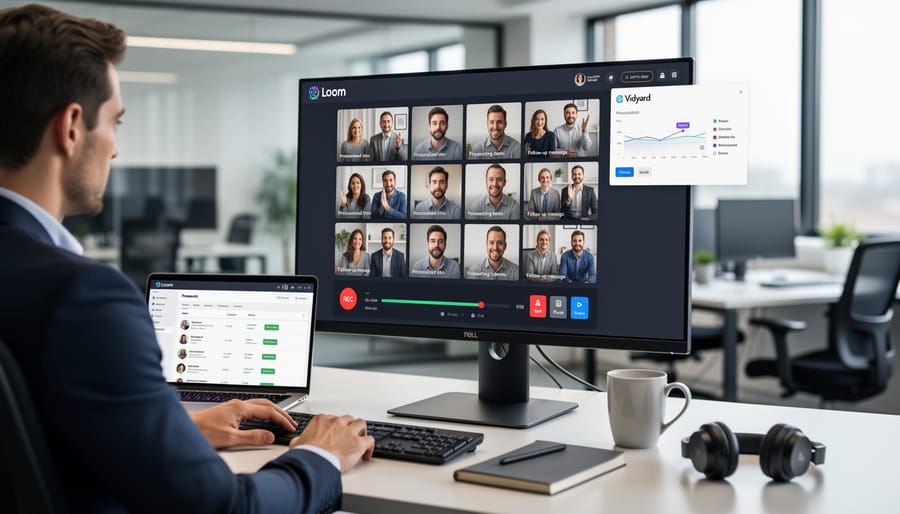
Loom and Vidyard are the go-to tools because they record your screen and camera simultaneously, generate shareable links instantly, and track who watches. Both offer free tiers sufficient for prospecting. Loom feels lighter for quick recordings; Vidyard adds CRM integrations if you’re scaling. Install the browser extension, test your audio once, and you’re ready.
Script in modules, not monoliths. Write a 15-second intro template you can personalize with the recipient’s name and one specific observation about their site. Follow with 30-45 seconds of pre-recorded analysis that applies to multiple prospects in the same niche, explaining your content angle or the link opportunity you’ve identified. Close with a 10-second call-to-action. This structure lets you batch-record the middle segment once, then quickly re-record personalized bookends for each prospect.
Batch your sessions. Group prospects by niche or page type so your middle segment stays relevant across 5-10 videos. Record all intros and outros in one sitting while context is fresh. You’ll spend 2-3 minutes per video instead of 5-7.
Name files clearly and keep a simple spreadsheet linking video URLs to recipient names. When you’re recording ten videos in a row, you will forget who got which link.
The goal is repeatable speed without feeling robotic. Modular scripting makes that possible.
What to Say (And What to Skip)
Start by referencing something concrete you noticed on their site—a recent post, a resource page, or a chart that relates to your content. This proves you did the homework and positions your video as a natural continuation of their existing work, not a cold blast.
State your intent in one sentence: you’re exploring whether a link between your article and their page makes sense. Skip vague requests to “connect” or “collaborate.” Your goal is a specific editorial link, so name it.
End with a question or lightweight reply trigger. Ask if they’re open to reviewing your piece, or whether their resource page is actively maintained. Make replying take ten seconds, not ten minutes.
What kills response rates? Pitching your product or service before establishing relevance. Your video is about link fit, not lead generation. If you open with “We help SaaS companies scale content,” you’ve already lost the editor.
Avoid excessive compliments. Saying “I love your site” without specifics reads as template filler. One concrete observation—”Your breakdown of anchor text distribution in the August post was thorough”—earns more trust than a paragraph of praise.
Don’t script every word. Bullet points keep you conversational and let you adjust tone on the fly. Rehearse your hook and close, then talk through the middle naturally.
Compare your approach to outreach templates that work: both rely on relevance first, clear intent second, and friction-free next steps. Video just adds the signal that you invested time in this one person, not a list.
Sending and Tracking Your Videos
Embed videos as linked thumbnails rather than large attachments—most email clients block autoplay and heavy files trigger spam filters. Host on YouTube, Loom, or Vidyard, then insert a clickable image preview that opens the video in a browser tab. This keeps your email lightweight and trackable.
Subject lines matter. Test plain, curiosity-driven options: “Quick question about [their site]” or “Noticed [specific detail] on [domain]” outperform generic pitches. Avoid “video,” “link,” or anything promotional in the subject. Your goal is a conversation opener, not a broadcast.
Track who watches and for how long. Platforms like Vidyard and Loom show view duration and rewatch behavior—signals of genuine interest. Prioritize follow-ups with prospects who watched more than 50 percent; they’ve invested attention. Send a short text reply referencing a detail from the video to prove you’re human and attentive.
For low engagement, wait three to five days, then follow up with a condensed version of your pitch in plain text. Some prospects prefer reading. If they skip both, move on—forcing contact damages your sender reputation and wastes time better spent on responsive leads.
Why it works: View analytics turn guesswork into prioritization, letting you focus energy where interest exists.
For: Link builders managing high-volume outreach who need efficient qualification signals before investing in relationship-building calls or detailed proposals.

When Videos Don’t Make Sense
Prospecting videos lose their edge in three scenarios. First, when you’re running automated outreach at scale—recording dozens of personalized videos contradicts the efficiency you’re chasing, and recipients can spot the mismatch between custom video and templated pitch copy. Second, when a site publishes clear submission guidelines or a contributor page; ignoring written instructions to send unsolicited video signals you didn’t do basic research. Third, when working through API-driven placement services that handle vetting and insertion programmatically—the platform already filters quality and manages relationships, so adding video introduces unnecessary friction without improving outcomes. In each case, the video becomes performative rather than functional. Save the effort for genuine one-to-one prospecting where demonstrating your attention to their specific content and audience creates measurable advantage. Video works when it replaces friction; when it adds friction, stick to concise written outreach or let the system do its job.
Prospecting videos excel as a vetting mechanism when you’re pursuing high-value placements on individually researched sites and want to demonstrate genuine familiarity with their content. They build trust through specificity and effort, making gatekeepers more likely to engage. But they’re time-intensive by design—each video requires recording, review, and personalized context—so they’re poorly suited to high-volume campaigns where speed trumps customization. Use them when relationship quality justifies the investment per prospect, not when you need to contact hundreds of sites quickly. Think of video prospecting as a scalpel, not a bulldozer: precise, effective in skilled hands, and most powerful when applied selectively to opportunities that warrant the extra care.

