

Archive Contents Hold Digital Fingerprints Most Investigators Miss
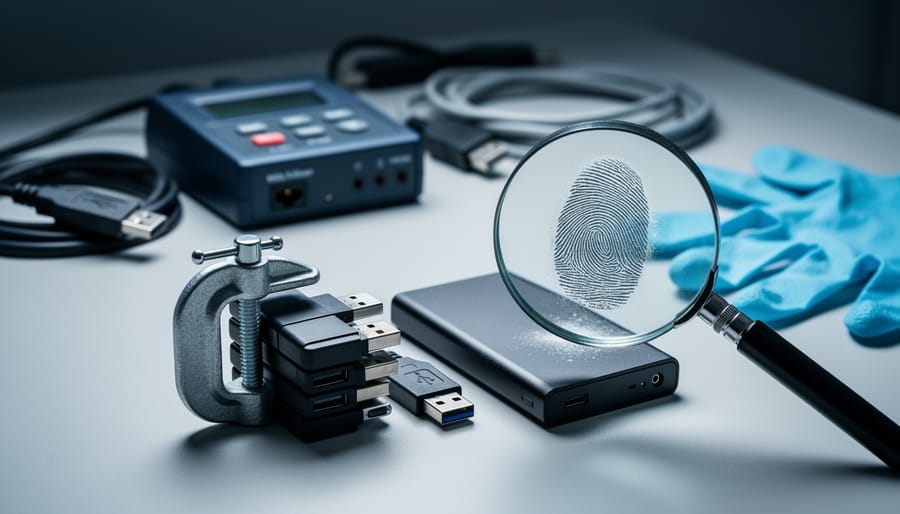
Most people see a ZIP file and think “container.” I see a deposition. Compressed archives (ZIP, RAR, 7z, tar) carry timestamps, header signatures, compression fingerprints, and orphaned directory records that quietly answer the question every investigator actually wants answered. Namely: who made this, when, with what tools, and has anyone touched it since. This guide walks through the artifacts hiding inside archive containers, the tools that surface them, and the signals that tell you whether you’re looking at a clean evidence package or something that’s been rebuilt to look clean.
What Archive Contents Actually Contain (Beyond the Files)
Archives carry hidden layers of metadata that tell a story most casual users never read. Understanding these signals is how you reconstruct who created the archive, on what system, with which tool, and whether anyone has been back to edit since. (I’ve seen single-byte header differences sink a chain-of-custody argument in court, so the granularity here is not academic.)
Quick vocabulary
- Central directory
- The index at the end of a ZIP file listing every entry, its offset, and its metadata. The first thing forensic tools parse and the easiest place to find ghost records.
- Compression header
- The per-file or per-archive block recording algorithm, version, and creator software. Survives extraction copies and is hard to forge convincingly.
- Slack space
- The padding between archive entries or after the central directory. Can retain fragments of previously deleted files or earlier archive versions.
- Solid compression
- Mode used by 7z and RAR that merges files into one continuous data block. Better ratios, but destroys individual file boundaries for partial recovery.
- Tool signature
- The version marker each archiver stamps into the header. WinZip, 7-Zip, macOS Archive Utility, and Linux
zipeach leave distinct fingerprints.
Metadata Layers Worth Examining

Timestamps reveal different moments in an archive’s lifecycle, and the gap between them is usually where the story sits. Creation timestamps show when a file was first made, establishing earliest provenance. Modification timestamps record when content changed, flagging edits worth investigating. Access timestamps log when files were last opened, though they’re trivially altered and (in my experience, anyway) the least reliable signal in the bunch.
File attributes embed system-level details that often outlive the original filesystem. Permission flags show intended access controls. Hidden or system attributes suggest administrative intent or automated processes. Owner and group identifiers link files to specific accounts, useful when tracing responsibility chains.
Compression headers contain technical fingerprints. Algorithm choices reveal software versions and creator preferences. Newer formats suggest recent creation, while legacy compression points to older toolchains. Compression ratios hint at content type, since text compresses better than encrypted or already-compressed data. Header metadata often includes creator software signatures, timestamps independent of file-level data, and sometimes comments added during archive creation. That last one is wildly underrated. Actually, “underrated” undersells it. Archive comments are free-text fields that almost nobody scrubs, and people put startling things in them.
The archive isn’t a container. It’s a deposition, and every header field is testimony.
Each metadata layer offers verification points. Cross-reference timestamps against claimed provenance. Check attribute consistency across files in a batch. Examine compression settings for anomalies that suggest tampering or reconstitution. For most investigations, three of these four checks turn up something the submitter didn’t expect you to find.
Archive Format Signatures and Tool Traces
Each compression tool writes a distinctive signature into the archive header and applies characteristic compression algorithms. WinZip stamps files with specific version markers and date-time encoding patterns. 7-Zip uses LZMA compression with identifiable dictionary sizes and default parameters. MacOS Archive Utility embeds resource fork handling metadata absent from Windows-native tools. Linux zip utilities often leave telltale modification timestamps rounded to the second rather than millisecond precision.
These fingerprints matter for authentication and timeline reconstruction. When an archive claims creation on Windows but shows 7-Zip’s LZMA2 signature with Unix permissions preserved, investigators spot an inconsistency. Compression level choices reveal user sophistication, default settings suggest automated backup tools, while maximum compression hints at manual archiving. Version-specific bugs or features pinpoint the software release window, narrowing when the archive could have been created.
Pro tip
When you can’t pin down the originating system, check file order inside the archive. WinZip sorts alphabetically by default, command-line tools preserve shell glob expansion order, and drag-and-drop GUI tools follow selection sequence. The order is rarely scrubbed and often gives you the OS even when timestamps don’t.
For legal disputes over document timing or source attribution, these subtle traces become evidential anchors that corroborate or contradict creator claims. And honestly? The strongest cases I’ve worked weren’t won on a smoking-gun timestamp. They were won on a quiet sequence of small signals that all happened to point the same direction.
Why Forensic Analysts Scrutinize Archive Contents
Archive metadata becomes pivotal evidence when disputes turn technical. In intellectual property litigation, timestamps embedded in ZIP or RAR files can establish who created a design file first, critical when two parties claim original authorship. Forensic analysts compare creation dates, modification stamps, and compression software versions to build timelines that withstand courtroom scrutiny.
Data breach investigations rely heavily on archive analysis. When attackers exfiltrate sensitive records, they typically compress data for faster transfer. The choice of compression tool, directory structure preserved in the archive, and file ordering patterns can fingerprint specific threat actors. Security teams examine these artifacts to attribute breaches to known groups and understand attack scope.

Document tampering cases demand meticulous metadata review. Corporate records stored in archives carry forensic traces. If someone claims a contract existed in 2019 but the archive’s internal timestamps show 2021 compression dates, the discrepancy raises red flags. Analysts cross-reference operating system metadata, compression ratios, and software signatures to detect alterations.
Chain-of-custody verification depends on immutable archive properties. Legal teams need to verify chain of custody when digital evidence moves between investigators, labs, and courtrooms. Hash values computed from archive contents create cryptographic fingerprints, any modification changes the hash, immediately signaling tampering.
| Signal | Clean archival profile | Corrupted / tampered profile |
|---|---|---|
| Timestamp coherence | Internal file mtimes precede archive creation date, all within plausible workflow window | Files dated after the archive itself, or clock-skew offsets of 12+ hours |
| Tool signature | Single tool fingerprint across every entry, consistent with the platform claim | Mixed algorithms (deflate + LZMA + bzip2), or Unix permissions in a Windows-claimed archive |
| Compression ratios | Text near 30–40%, JPEGs barely shrinking, binaries somewhere between | 2MB text compressing to 1.9MB, or images dropping below 10% of original |
| Directory records | Central directory matches local file headers byte-for-byte | Orphaned entries pointing to overwritten offsets, ghost filenames in slack |
| File ordering | Consistent with one tool’s expected sort (alphabetical, glob order, or selection sequence) | Mixed order patterns suggesting manual reassembly from multiple sources |
| Archive comments | Empty or factory-default (most archivers leave it blank) | Free-text fields nobody scrubbed, sometimes naming the original system or operator |
Insurance fraud investigations increasingly involve archive forensics. Claimants submitting backdated documentation often overlook metadata inconsistencies, a 2018 damage report compressed with software released in 2020 undermines credibility. Adjusters now routinely request forensic validation of submitted archives. Employment disputes trigger similar scrutiny when intellectual property walks out the door, analysts examine USB drives and email attachments for archives containing proprietary code or customer lists, using metadata to prove extraction timing and establish intent.
Key Forensic Signals Hidden in Archive Structures

Timestamp Discrepancies and Clock Skew
Archive timestamps tell two stories: when files were created or modified, and when the archive itself was assembled. When those dates contradict, a file dated 2024 inside an archive stamped 2020, you’re looking at evidence of tampering, repackaging, or fabrication. Forensic analysts routinely compare internal file modification times against the archive’s creation date to detect document tampering or establish timelines in legal disputes.
Clock skew offers subtler clues. Files compressed on systems with misconfigured clocks leave telltale time offsets, often revealing the originating time zone or (more frequently than you’d expect) poorly maintained infrastructure. A ZIP created at 3:00 AM with files last modified at “2:58 PM the same day” suggests either deliberate date manipulation or a machine with a twelve-hour offset. Security researchers use these patterns to fingerprint malware origins or trace leaked document sources.
The archive audit workflow
Why it matters: timestamps function as unintentional metadata breadcrumbs that survive file transfers and format conversions. Useful for: digital forensics practitioners, e-discovery teams, and anyone investigating file provenance or authenticity chains.
Deleted File Remnants and Slack Space
Archive formats don’t always cleanly erase when files are removed or updated. Many preserve structural remnants, directory entries, partial metadata, or file fragments, in unallocated space within the archive container. ZIP files, for example, may retain central directory records for deleted entries even after the payload is overwritten. TAR archives concatenate data sequentially, sometimes leaving orphaned headers or trailing blocks. RAR and 7z formats occasionally cache previous versions during updates, creating recoverable shadows of earlier states.
These ghost entries matter for forensics and data recovery. A deleted file listing might reveal what content existed before sanitization. Slack space, the padding between archive boundaries, can harbor leftover bytes from prior operations, potentially exposing sensitive filenames, timestamps, or partial content.
Note
If you have to choose one tool to learn first, learn zipdump from Didier Stevens’ suite. It parses every record in a ZIP, flags anomalies, and surfaces orphaned entries that unzip -l silently hides. The output is ugly but it’s the truth.
Tools like binwalk scan raw archive binaries for signature patterns, surfacing hidden or fragmented data. Scalpel and foremost carve deleted file structures from unallocated regions using header-footer matching. For ZIP-specific work, zipdump (part of Didier Stevens’ suite) parses every record, flagging anomalies and orphaned entries. Bulk_extractor operates at the byte level, pulling artifacts regardless of filesystem awareness.
Why it matters: archives aren’t write-once containers, they’re layered structures that accumulate history, often unintentionally. Useful for: digital forensics investigators, incident responders, archivists validating data integrity, and security researchers auditing file-sharing workflows.
Compression Anomalies as Red Flags
Compression algorithms produce predictable ratios for given file types, text typically shrinks to 30–40% of original size, while JPEGs barely budge because they’re already compressed. When an archive exhibits compression ratios far outside these norms, it warrants scrutiny. A 2MB text file that compresses to 1.9MB suggests either corruption or intentional packing with uncompressible data to mask true contents.
Mixed compression methods within a single archive raise questions about provenance. Most archiving tools apply one algorithm consistently across all entries. Finding ZIP deflate alongside LZMA or bzip2 in the same container suggests manual reassembly, multiple authors, or deliberate obfuscation. Forensic examiners should document these inconsistencies as potential signs of tampering. Three different algorithms in one archive. Big red flag. To be fair, I’ve also seen it happen by accident when someone merges two backups under deadline pressure, so context still matters.
Recompressed files leave distinct signatures. When you encounter a JPEG inside a ZIP that shows evidence of prior JPEG compression at different quality settings, or logs that were previously gzipped before being added to a TAR, you’re likely seeing staged evidence. Legitimate workflows rarely involve multiple compression passes. Metadata timestamps that predate archive creation by significant margins compound suspicion, particularly in legal contexts where chain of custody matters.
Tools and Methods for Archive Content Analysis
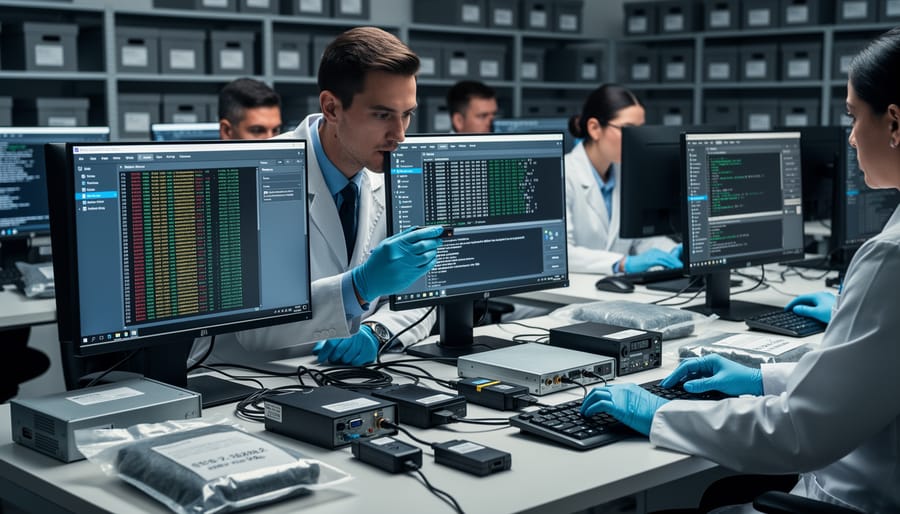
Command-Line Utilities for Metadata Extraction
Three command-line tools extract and examine metadata from archives with surgical precision. unzip -l lists file names, sizes, and modification timestamps without decompressing, useful for quick inventories. 7z l reveals compression ratios, encrypted file indicators, and internal folder structures across dozens of archive formats. exiftool reads embedded EXIF data from images and documents still packed inside archives, exposing camera models, GPS coordinates, and author names.
Why CLI tools matter: terminal commands produce identical, timestamped output across systems, creating audit trails that courts and peer reviewers can verify. GUI applications often strip or modify metadata silently during extraction, compromising chain-of-custody. Scripted workflows let forensic teams process thousands of archives consistently, flagging anomalies without human interpretation bias. For most teams managing recurring evidence intake, this consistency is what makes the difference between “we looked at it” and “we can defend our findings.”
Watch for
GUI archivers will quietly rewrite the central directory when you “open and re-save” an archive, even if you didn’t change a file. Always work from a hash-verified copy of the original, never the working copy in your file manager.
Specialized Forensic Suites
Professional forensic tools bring automation and depth that manual inspection can’t match. FTK (Forensic Toolkit) indexes archive contents in bulk, recovers deleted files from slack space within compressed containers, and calculates cryptographic hashes across nested layers, critical when chain-of-custody documentation matters. EnCase parses proprietary archive formats and extracts embedded metadata that command-line tools overlook, including NTFS alternate data streams hidden inside ZIP files.
Autopsy, the open-source alternative, offers timeline analysis showing when archives were created versus when files inside were modified, a key discrepancy in tampering investigations. These suites automate carving: reconstructing fragmented archives from raw disk images even when file headers are corrupted. They also flag steganography attempts, where attackers hide encrypted payloads in seemingly innocent archive comments or extra field data.
Why it matters: manual extraction stops at the visible layer, forensic suites reconstruct the invisible, deleted entries, slack data, and timeline inconsistencies that reveal intent. Useful for: digital forensics examiners, incident responders, legal teams building evidence chains, and archivists validating collection integrity before long-term preservation.
Common Pitfalls and Limitations
Archive forensics has hard limits. Encryption is the most common barrier. A password-protected ZIP or 7z archive with AES-256 encryption is effectively opaque without the passphrase. Brute-force attacks work only against weak passwords, and modern key derivation functions make dictionary attacks impractical for anything beyond trivial cases. No metadata survives inspection when the archive itself is locked. Full stop.
Metadata scrubbing tools can strip timestamps, user names, and file paths before compression. An adversary who runs a deliberate cleaning pass through files, zeroing EXIF data, normalizing modification dates, removing alternate data streams, leaves forensic analysts with little beyond file content itself. Archives created on privacy-focused systems or through scripted workflows often lack the incidental metadata traces that casual users leave behind.
Format-specific blind spots matter. Solid compression in 7z and RAR merges files into continuous data blocks, destroying individual file boundaries and making partial recovery nearly impossible. Self-extracting archives may embed executable code that obscures original file structure. Proprietary formats like StuffIt or older ARJ files require specialized tools that may not preserve all metadata during extraction. Nested archives (ZIPs inside ZIPs, occasionally with a TAR thrown in for good measure) can hide layers of obfuscation. Three nested layers is the most I’ve personally run into on a single case, and that one took the better part of two days to unpack cleanly.
Chain-of-custody and evidence admissibility depend on proper handling. Modified extraction timestamps, multiple decompress-recompress cycles, or undocumented tool usage can undermine forensic findings in legal contexts. Courts expect documentation: hash verification, write-blocking during analysis, and reproducible methods. Archive forensics provides leads and context, but rarely constitutes standalone proof without corroborating evidence from other sources.
Putting Archive Forensics to Work
Archive content analysis shines when you need to authenticate evidence, attribute a breach, or refute a backdated submission. It’s overkill for routine file handling or casual data recovery where standard extraction tells you enough. Honestly, knowing when not to run the full forensic workflow is half the skill.
✓
Worth investigating when
- ›Submission timing is disputed (backdated contracts, IP authorship)
- ›You’re attributing a breach or leak to a specific actor
- ›Chain-of-custody documentation has to survive a legal challenge
- ›Compression ratios or tool signatures look inconsistent on first scan
- ›An archive showed up “found” after a deletion event
✗
Move on when
- ›The archive is encrypted and you have no key
- ›Routine extraction with no legal or attribution stakes
- ›Metadata was scrubbed at source by a privacy-aware operator
- ›You’ve already corroborated timing through stronger evidence elsewhere
- ›The artifact is a self-extracting binary that’s been recompiled
Archive contents hold metadata, timestamps, compression ratios, and file relationships that mostly vanish the moment you extract. Surface inspection of individual files tells you only part of the story. The archive itself is the evidence container. Truth is, most investigators learn this one the hard way. Usually the first time they decompress a ZIP before hashing it.
Build it into your workflow selectively. During monitoring routines, preserve original archive files alongside extracted contents. Hash values, modification sequences, and embedded comments disappear when you extract and delete the source. I’d argue that single discipline (preserve original, hash before extract) prevents 80% of the chain-of-custody headaches that derail forensic findings in court.
Try it this week
Pick three archives from your inbox. Run the full audit.
-
1
Hash each archive before you touch it. SHA-256 is the minimum standard most courts expect. -
2
Run7z l -sltandunzip -lvagainst each. Note tool signature, timestamp coherence, and any orphaned entries. -
3
Read every archive comment field, every extra-field block, every end-of-central-directory record. Write down what each one tells you about the originator.
Three archives, one hour. By the third one you’ll have an instinct for what “clean” looks like, and the next anomaly will jump off the page.
Related guides
- Verifying Chain of Custody on Live Placements, How to preserve evidence that a placement existed at a specific moment in time.
- Detecting Document Tampering Patterns, The same metadata discipline applied to surfacing tampered evidence in link-quality reviews.

