

Multi-Page Entities: Why Search Engines Now Read Your Site Like a Story

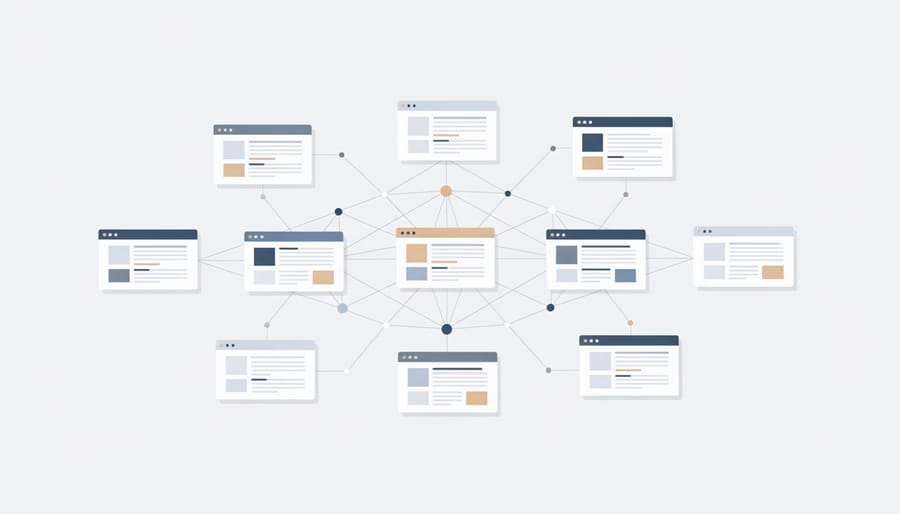
Search engines don’t really evaluate entities one page at a time anymore. They read your domain like a story, tracking how a topic surfaces across multiple URLs, which pages reinforce which, and whether the supporting cast of internal links, schema, and media adds up to coherent authority or scattered fragments. That narrative reading is what makes a multi-page entity strategy more durable than any single-page push, and it’s why a five-page cluster routinely outranks a 4,000-word monolith on the same query. Most of the time, anyway.
What Multi-Page Entity Optimization Actually Means
Single-Page vs. Multi-Page Entity Signals
Traditional on-page optimization follows a simple rule. One page, one keyword, one focus. You optimize a single URL for a target term, refine its title and headings, and measure rankings in isolation. This treats each page as an independent asset and lets you ship fast, which is part of why the pattern stuck for a decade.
Quick vocabulary
- Entity
- A distinct, identifiable thing (person, product, place, concept) that search engines treat as a node in a knowledge graph rather than a string of characters.
- Narrative arc
- The sequence and structure of pages that, read together, tell a coherent story about an entity across a domain.
- Topic depth
- The breadth and granularity of supporting content covering an entity, measured across pages rather than within one.
- Multi-page entity
- An entity whose signals (mentions, schema, media, links) are distributed across an anchor page plus several supporting URLs that reinforce it.
- Entity salience
- How central a given entity is to a page’s meaning, scored by Google’s NLP models from mention frequency, position, and surrounding context.
- Narrative coherence
- The degree to which pages in a cluster use consistent terminology, schema, and internal links to describe the same entity.
Multi-page entity architecture works on a different premise. Instead of confining an entity to a single URL, you distribute related entity salience signals across multiple pages that reference, link to, and reinforce each other. A product entity might appear on a category page, a tutorial, a comparison guide, and an FAQ, each page contributing unique context and attributes to the same underlying knowledge graph node.
Search engines evaluate that cross-page coherence. When multiple URLs consistently mention, describe, and link to the same entity using aligned terminology and structured data, they build cumulative authority that no single page could achieve alone. In my experience (and I’ve audited a lot of plateaued pillars on B2B SaaS sites), this is where most “comprehensive guide” strategies stall out. The page wins one query, then has nowhere to grow because every supporting concept is already trapped inside it.
Search engines read narrative, not just keywords. A cluster of five reinforcing URLs tells a story; a monolith tells a paragraph.
Why does this matter? Because modern search prioritizes understanding what things are and how they relate, not just matching strings on individual pages. The shift is gradual, well, gradual at the algorithm level and abrupt the day a competitor with a tighter cluster outranks your 6,000-word pillar.
How Search Engines Connect the Dots
Search engines build knowledge graphs by tracking how entities appear together across your site. When you mention a person, product, or concept on multiple pages, crawlers note the context, supporting terms, and relationships each time. Co-occurrence patterns, which entities show up near each other, how often, and in what order, signal to algorithms what your domain is authoritative about and how topics connect.
| Coverage dimension | Single-page approach | Multi-page entity cluster |
|---|---|---|
| Entity surface area | One URL carries every mention, definition, and media asset for the topic | Anchor page plus 3, 5 supporting URLs each contribute unique context to the same entity |
| Internal link signals | Outbound only; few inbound paths reinforce the page’s authority | Bidirectional links between anchor and supporting pages map a clear topic hierarchy |
| Schema deployment | One schema block tries to cover Article + FAQ + HowTo on the same URL | Each page carries focused schema (Article, FAQ, HowTo, Product) tied via sameAs to one entity |
| Media reinforcement | Hero image, maybe one diagram, all on a single URL | Images, video, and infographics scattered across pages, each tied back via schema attribution |
| Query coverage | Wins on one head term; struggles to surface for adjacent long-tail variants | Each supporting page captures its own long-tail queries while feeding authority upstream |
| Velocity to publish | Fast, one editorial cycle | Slower, requires architecture planning before drafting |
Crawlers follow internal links to map your site’s structure, treating each page as a node in a relationship network. If three articles reference the same technique and link to a detailed guide, that guide becomes a hub. Distributing related images, videos, and text across pages rather than cramming everything onto one URL gives crawlers more touchpoints to confirm entity relevance. Moz’s topic-cluster framework walks through the same pattern from the pillar-page angle, the architecture overlaps almost completely with the entity model.
Pro tip
Before drafting a single page in a new cluster, sketch the entity map on paper. One anchor, three to five supporting URLs, and the directional arrows between them. If you can’t name the arrows (“defines,” “compares,” “demonstrates,” “extends”) in plain language, the cluster isn’t ready to write, it’s still a brainstorm.
Why Multi-Page Matters for Multimodal Content
Entity Reinforcement Through Media Types
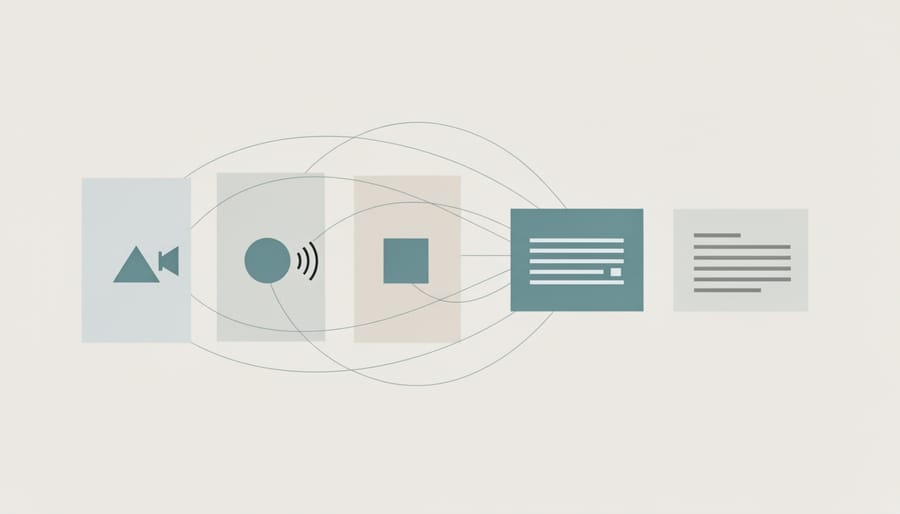
Search engines parse multiple media types across your site to triangulate entity identity and topical authority. When you publish an image on one page with descriptive alt text, a video transcript on another, and structured schema markup on a third, all referencing the same entity, you create overlapping signals that reinforce recognition.
Alt text associates entities with visual context. A product page featuring “ergonomic mesh office chair” in the alt attribute teaches crawlers that this entity appears in visual inventory, not just prose. Video transcripts function similarly. Timestamped mentions of concepts or products extend entity reach into multimedia assets that text-only crawlers would otherwise skip (which is, frankly, most of them).
Schema markup crystallizes these connections. ProductSchema on a detail page, VideoObject schema on a tutorial, and ImageObject metadata on a gallery page tell search engines how these media types relate to the same core entity. This layered approach compounds relevance scoring because each format validates the others. Ahrefs’s entity SEO guide argues this compounding is exactly what NLP-driven ranking systems are tuned to reward.
Cross-Page Media Attribution
Here’s the thing. Search engines now track which media assets belong to which entity, even when those assets appear on different pages. A YouTube video embedded on your /resources page, an infographic on /blog/post-123, and a podcast episode linked from /about can all strengthen the same topical cluster. Provided they share consistent schema markup, canonical entity references, and authorship signals.
The key is explicit attribution. Mark each media item with Organization or Person schema that points to your primary entity identifier. Use sameAs properties to link social profiles, author bylines, and video channels back to a single authoritative source. Honestly, this is the step most teams skip, and it’s why their video carousels never materialize despite shipping plenty of video content.
Note
Entities with coherent cross-page media signals earn richer search features, video carousels, podcast panels, image packs, that isolated pages rarely trigger. Distributing media across URLs is fine. Leaving attribution ambiguous is not.
Building a Multi-Page Entity Architecture
Mapping Your Core Entities
Start by listing the core topics your site owns, products, services, locations, or subject-matter domains, and designate one anchor page per entity. These pages act as the primary reference point where you concentrate entity signals, structured data, authoritative definitions, rich media, and inbound links. The anchor is the page you’d want a journalist to cite when writing about the topic.
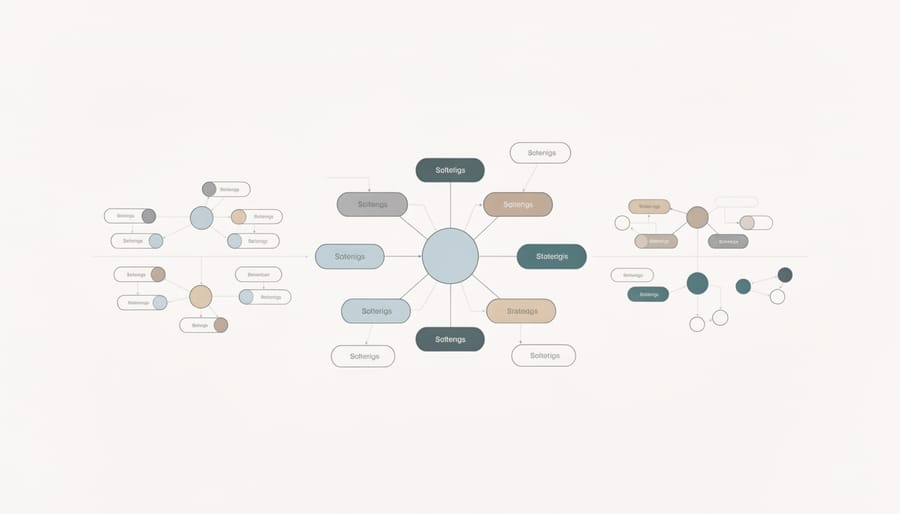
Next, identify secondary entities that orbit each primary. If your anchor is “email marketing automation,” secondary entities might include “drip campaigns,” “segmentation,” or “A/B testing.” Assign each a supporting page that links back to the anchor and uses consistent terminology. The naming discipline matters as much as the architecture (probably more, if I’m being honest). The words you use to describe each entity on the supporting pages need to match the words you use on the anchor.
Building a multi-page entity narrative
Plan content types that reinforce relationships naturally. Comparison guides connect related entities. Case studies demonstrate real-world applications. Glossaries define clusters of related terms. Each piece should clarify how entities relate rather than exist in isolation, and the easiest test is whether you can describe each page’s role in the cluster in one sentence.
Map bidirectional links explicitly. Anchor pages link to supporting content, and supporting pages cite the anchor as the authoritative source. This creates a web of signals that search engines can trace, building confidence that your site genuinely covers the domain rather than chasing isolated keywords.
Internal Linking for Entity Flow
Link strategically between entity pages to signal relationships and flow authority. Use descriptive anchor text that mentions the target entity by name. “Explore our guide to [Entity B]” beats generic “click here” every time. Position links where they add semantic value, not just navigational convenience. Both readers and crawlers benefit when connections emerge naturally from the content.
Strong internal linking patterns reinforce which entities are central to your site and how supporting pages relate to hub content. Backlinko’s deconstruction of the topic-cluster model shows the same anchor-text discipline applied at scale, the cluster that ranks is almost always the one whose internal anchors read like an editor wrote them.
Anchor text should reflect the entity relationship you want search engines to understand. Linking from a product page to a category page? Use the category name plus a qualifier. Connecting related features? Name both entities in the phrase. This clarity helps algorithms map your entity graph and understand which pages deserve ranking priority for overlapping queries.
Watch for
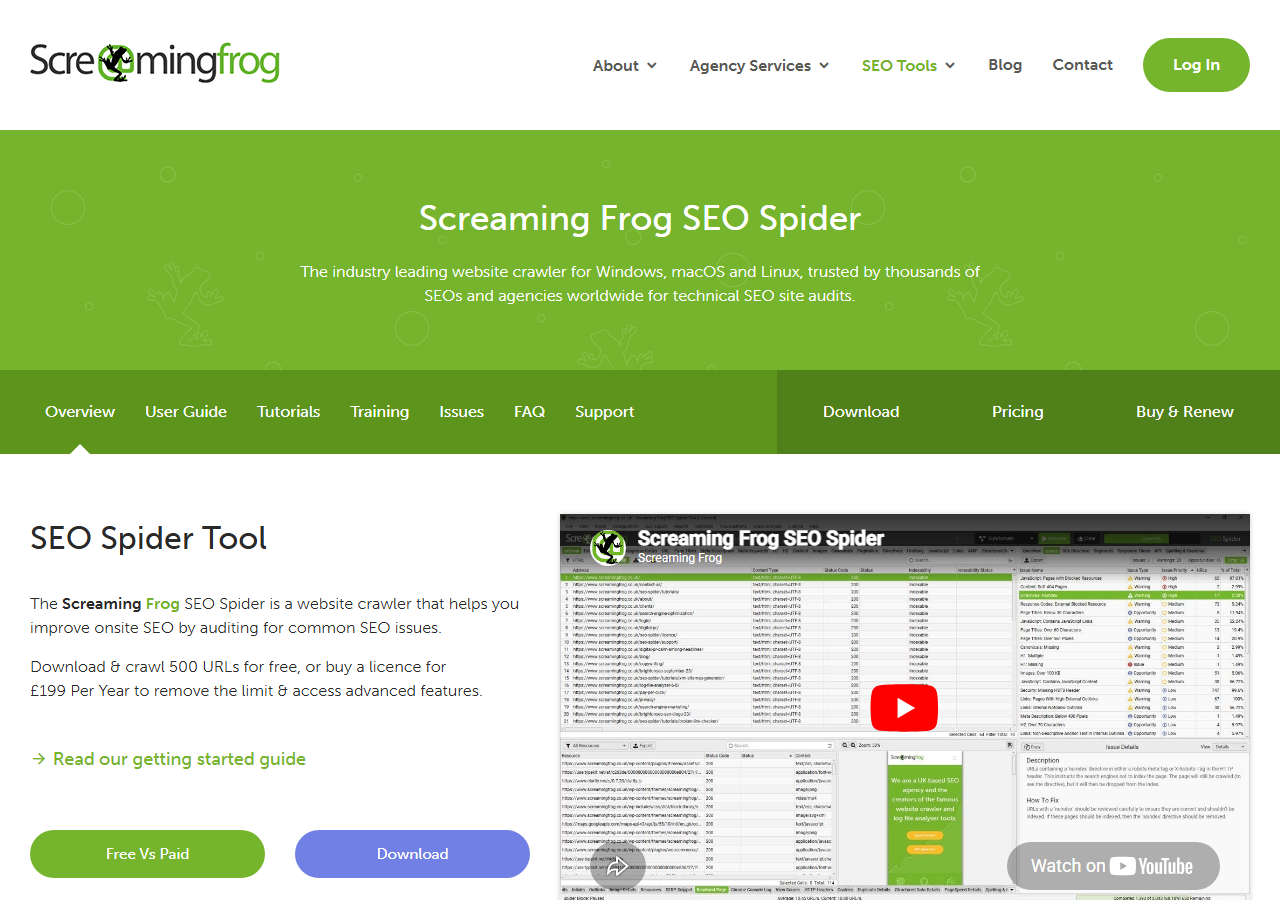
Orphan pages. Every entity page should receive at least two internal links from contextually relevant sources to ensure crawlability and signal importance. A Screaming Frog crawl filtered to “inlinks < 2” surfaces these in minutes, fix them before adding new pages to the cluster.
Optimizing Multimodal Media Across Pages
Structured Data and Schema Markup
Structured data ties distributed content together. When you spread entity information across multiple pages, biography on an About page, works on portfolio pages, mentions in blog posts, schema tells search engines these fragments describe the same entity. Use sameAs properties to link your profiles across platforms. Apply AboutPage schema to landing pages that consolidate entity attributes. Deploy entity-specific schema like Person, Organization, or Product on each relevant page, repeating core identifiers (name, URL, identifier properties) so crawlers recognize continuity across URLs.
This explicit markup reduces ambiguity when entity signals scatter across your site architecture, making it easier for search engines to aggregate attributes, relationships, and context into a coherent knowledge graph entry. Consistency matters more than completeness on any single page. A half-complete schema block repeated faithfully across ten URLs beats a perfect block on one. I’ve seen this play out on entity coverage audits more times than I can count, the cluster with messy-but-consistent schema wins.
Alt Text, Captions, and Transcripts
Images, video, and audio metadata create entity signals that compound across pages, or create conflicting noise if handled poorly. The key is consistent naming without mechanical repetition.
Write alt text that describes the subject naturally. “Dr. Elena Kim presenting at TechConf 2024” works better than “Dr. Elena Kim keynote speaker” stuffed into every image. Vary phrasing while maintaining clarity. “Kim’s opening session” or “TechConf keynote by Kim” on subsequent pages signals the same entity without robotic duplication. Mostly, the test is whether a human editor would let the alt text ship.
Captions offer context that alt text shouldn’t carry. Use them to explain why the media matters: “Kim’s framework reduces inference latency by 40%.” This lets you reference entities in meaningful ways across your site’s narrative arc rather than padding alt attributes with keywords.
For transcripts and longer video descriptions, mention entities when substantively relevant. If a podcast episode discusses three topics, name those entities in chapter markers and the description, search engines parse temporal metadata. Balance keyword presence with readability. Humans skim transcripts too.
The goal is coherent entity graphs, not keyword density. Well-written metadata helps search engines connect your media to the concepts and people you’re actually covering.
Measuring Multi-Page Entity Performance
Tools and Dashboards
Google Search Console’s entity-related features let you track how Google associates your content with knowledge graph entities, though direct multi-page entity reports remain limited. Check the Performance report filtered by query to spot patterns where branded or topical entity queries surface multiple URLs from your domain, a signal that Google recognizes distributed authority.
Third-party platforms like Kalicube, InLinks, and Wordlift offer entity dashboards that map how your pages connect to knowledge graph identifiers, surface missing schema opportunities, and visualize cross-page entity relationships. These tools crawl your site, extract entity mentions, and compare them against Wikidata or proprietary knowledge bases to highlight gaps in your multi-page entity coverage. Similarweb’s traffic-distribution view is a useful sanity check on the output, if entity coverage is working, you’ll see traffic spreading across the cluster rather than concentrating on the anchor alone.
Pro tip
For practitioners managing large content inventories, entity-focused crawlers save hours of manual auditing and reveal which pages lack the schema or internal links needed to strengthen entity associations across your domain. Run them quarterly. The drift between “intended cluster” and “actual crawled cluster” is usually larger than teams expect.
KPIs That Matter
Track visibility across entity-linked pages, not just individual URLs. Winning featured snippets for entity-defining queries signals strong topical authority. Knowledge panel appearances confirm Google recognizes your entity cluster as authoritative.
Monitor related-entity rankings. When you rank for queries about connected entities or attributes you haven’t explicitly targeted, your multi-page structure is working. Measure cross-page click-through patterns in Search Console to identify which supporting pages drive traffic to pillar content. Track query diversity growth, more long-tail entity variations appearing in impressions means your distributed signal approach is broadening reach.
Conversion attribution across the entity cluster reveals which page combinations guide users to action, showing how the whole network performs beyond individual page metrics. In my experience, the supporting pages convert at lower rates per visit but feed disproportionate downstream value because they pull in users at earlier stages of intent.
Putting It Into Practice
Search engines now evaluate entities across your entire domain, not page by page. This shift means siloed optimization, a single hero image, one mention of a topic, isolated schema, no longer signals topical authority. Instead, distribute entity signals site-wide. Place supporting content on dedicated pages, deploy images and video across related URLs, and link canonically to reinforce semantic relationships.
The catch? Not every topic deserves a cluster. Some queries are head-term commodity searches where a single tight page wins on velocity. Others are concept-rich knowledge spaces (the kind I tend to flag during entity-coverage audits) where a cluster is the only way to compete with established authorities. Knowing which you’re looking at is half the battle.
✓
Build a multi-page entity cluster when
- ›The topic spans 3, 5 secondary concepts that each deserve a page
- ›You’re competing against entrenched authorities on the head term
- ›The entity has natural multimodal coverage (video, image, podcast, schema)
- ›Long-tail variants outnumber head queries in your keyword research
- ›You can commit editorial bandwidth to bidirectional linking and schema discipline
✗
Stay single-page when
- ›The topic is genuinely atomic and won’t bear sub-pages
- ›You need to ship this week, not next quarter
- ›The SERP is dominated by single-page how-tos with no cluster patterns
- ›You don’t yet have authoring capacity to maintain a 5-URL cluster
- ›The topic is seasonal or time-bound, the cluster will go stale before it ranks
Start by auditing where your core entities appear today. Map content clusters, identify gaps in media distribution, and check whether internal links connect related topics clearly. Then layer in schema markup that ties entities together across pages, not just within one URL. Track entity visibility in Search Console performance reports and Knowledge Graph appearance to measure whether your multi-page structure is surfacing in search features.
Try it this week
Pick one core entity. Map its current cluster. Find the missing page.
-
1
List every URL on your site that mentions the chosen entity. Tag each as anchor, supporting, or incidental. -
2
Draw the directional arrows between them. Where an arrow needs a verb you can’t name, that’s a missing page or a missing internal link. -
3
Commission the one supporting page that would close the largest gap, then add sameAs schema across the cluster pointing to your anchor’s canonical URL.
One missing page and one schema sweep is a week of work. The compounding visibility shows up in the impressions report two months later.
Related guides
- Information Gain and Entity Salience, How Google’s NLP models score entity prominence on a page.
- Internal Link Graphs and Topic Clusters, The connective tissue that turns a cluster into a ranking system.
- Where Schema Markup Actually Goes, Placement rules for entity-specific structured data across a multi-page architecture.

