

Why Your Expired Domain’s Backlink Profile Could Destroy Your SEO

An expired domain’s backlink profile is the asset (or the liability) you’re actually buying. A clean profile built through legitimate outreach inherits trust and ranking equity to whatever you build on it; a toxic one stuffed with paid links, comment spam, or PBN footprints inherits algorithmic filters and manual actions that don’t disappear when ownership changes. Before money moves, you need systematic vetting: link-source quality, anchor-text distribution, acquisition velocity, topical alignment, and historical disavow activity. Get the vetting wrong and you’re paying for a penalty. Every single time.
What a Backlink Profile Actually Is
A backlink profile is the complete collection of inbound links pointing to a specific domain, along with key details about each connection: the source domain’s authority, the anchor text used in the link, whether the link carries a nofollow or dofollow attribute, and the editorial context surrounding it.
Quick vocabulary
- Link velocity
- The rate at which a domain acquires (or loses) backlinks over time. Steep spikes and sudden drops are the signatures engines watch for.
- Anchor cloud
- The distribution of anchor-text phrases across every inbound link. Clustering on commercial keywords is the textbook over-optimization signal.
- Link-pop trust score
- A vendor-specific metric (Majestic’s Trust Flow, Moz’s Spam Score, Ahrefs’ Domain Rating) estimating how much authority the profile carries.
- Disavow file
- A text file submitted to Google asking it to ignore specific backlinks. Its presence on a domain’s history hints the previous owner was fighting toxicity.
- Topical alignment
- The degree to which inbound links come from sites in the same niche as the target. Mismatch is one of the strongest “this is a flipped domain” tells.
This collection matters because search engines use it as a primary ranking signal. A strong backlink profile with links from reputable, relevant sites signals trust and authority. A weak or manipulative profile can trigger penalties or prevent a domain from ranking altogether.
For expired domain buyers, the backlink profile is the single most important asset you’re purchasing. You’re not just buying a name, you’re inheriting every link relationship that domain accumulated over its lifetime (I’ve passed on three domains this year specifically because their anchor clouds screamed manipulation no metric was flagging yet). That history can either propel your project forward or saddle you with algorithmic baggage.
The profile includes both visible metrics like total link count and domain diversity, and qualitative factors like topical relevance and link placement. Understanding what constitutes a healthy profile helps you distinguish between a genuinely valuable expired domain and one that only appears strong on the surface but carries hidden risks.
Why Backlink Profiles Matter for Expired Domains
Inherited Authority vs. Inherited Penalties
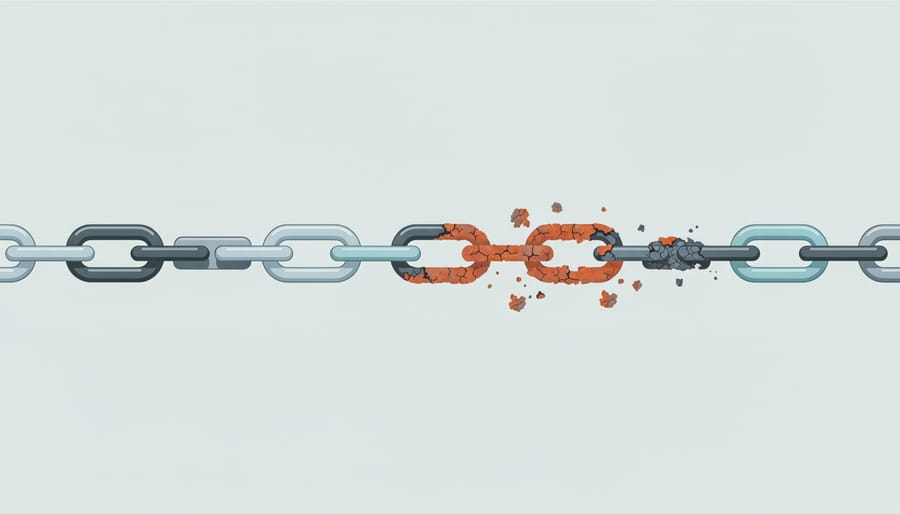
A backlink profile carries the full history of a domain’s link relationships, both assets and liabilities. When you acquire an expired domain, you inherit every high-authority editorial link that once boosted its rankings, but you also absorb every spammy directory submission, paid link scheme, or algorithmic flag in its past.
Search engines treat domains as continuous entities. A profile built through legitimate outreach and quality content creation transfers ranking power to your new project. Conversely, domains previously used for link farms, comment spam, or aggressive anchor text manipulation come with inherited penalties that suppress visibility from day one.
You’re not just buying a name. You’re inheriting every link relationship the domain accumulated, asset by asset, liability by liability.
This dual nature makes pre-purchase vetting essential. A domain showing strong metrics but hosting toxic backlinks delivers the opposite of its promised value, it can trap your site in a penalty you didn’t create and must work months to escape.
What Search Engines See When You Relaunch
Relaunched domains get treated cautiously. When a previously expired domain returns with fresh content, ranking systems compare the new backlink profile against historical patterns stored in the index. Sudden topic shifts, retained links from unrelated niches, or preserved spam connections trigger quality reviews.
The engine evaluates whether existing backlinks still make contextual sense for the new content, a tech blog inheriting fashion links raises flags. Link velocity matters too: dormant domains that suddenly acquire or lose dozens of backlinks appear manipulative. Essentially, the algorithm asks whether the domain’s link history supports or contradicts its current purpose, then adjusts rankings accordingly until trust is reestablished through consistent, relevant signals. In my experience, the trust-reset window is shorter than vendor marketing suggests, but longer than most buyers plan for.
Watch for
The “trust reset” period after a relaunch typically runs 3 to 9 months, depending on how aggressive the inherited profile looks. Domains carrying foreign-language link farms or pharma anchors take the longest, sometimes never recovering without a full disavow campaign on day one.
Healthy vs. Toxic, Reading the Profile at a Glance
Look, the same five components decide whether a profile is an asset or a trap. The pattern across all five is what matters, no single signal in isolation is dispositive.
| Signal | Healthy profile | Toxic profile |
|---|---|---|
| Link sources | News, .edu, industry blogs, community forums across diverse IPs and regions | Clustered on shared IP ranges, identical WHOIS proxies, templated link-farm layouts |
| Anchor distribution | ~20% branded, ~30% generic, ~15% exact-match, balance scattered | 60%+ exact-match commercial phrases, near-zero branded anchors |
| Link velocity | Gradual accumulation over months, organic seasonal fluctuation | Sharp spikes followed by plateaus, or sudden drops aligned with penalty cycles |
| Topical alignment | Inbound links from sites in the same or adjacent niche | Finance blogs linking to a fashion domain, pharma anchors on a SaaS site |
| Link placement | Editorial body content, contextual mentions, mixed follow/nofollow | Sitewide footer, sidebar blogroll, comment spam, 100% follow ratio |
Core Components of a Backlink Profile
Link Source Quality and Diversity
A strong backlink profile draws links from diverse, authoritative sources within relevant niches. Look for domains with established trust signals, high domain authority, consistent publication history, and editorial standards that suggest real human curation rather than automated link insertion.
Geographic and topical diversity matters. Links from a single country or industry vertical can signal manipulation. Natural profiles show variety: news sites, educational institutions, industry blogs, and community forums across different regions.
Pro tip
When the top 10 referring IPs hold more than 25% of total link weight, treat that as a PBN signature regardless of what the domain’s overall metrics look like. The diversity test is the cheapest filter you can run.
Red flags include link farms (networks of low-quality sites created solely to pass link equity), private blog networks (PBNs) where the same entity controls multiple domains to manufacture authority, and comment spam across unrelated sites. Check for suspicious patterns: identical IP addresses hosting multiple linking domains, templated content, or sudden spikes in backlinks from unrelated niches. Moz’s link spam taxonomy documents the detectable patterns search engines flag at scale.
Anchor Text Distribution
Anchor text is the clickable phrase in a hyperlink. In a healthy backlink profile, that text varies naturally, branded terms, naked URLs, generic phrases like “click here,” and occasional keyword matches. Red flags appear when too many links use identical commercial keywords (exact-match anchor text), a pattern search engines associate with manipulation.
For expired domains, check the anchor distribution before purchase: if 60% of backlinks repeat the same phrase, the previous owner likely built spammy links. Natural profiles show diversity, maybe 20% branded, 30% generic, 15% exact match, and the rest scattered across variations (the DR didn’t move on a domain I audited last quarter, but the anchor cloud should have screamed; the seller was asking $4K for what turned out to be a stage-3 burn). Tools like Ahrefs and Majestic reveal this breakdown in percentage charts. Over-optimized anchor patterns can trigger penalties that persist even after domain ownership changes, making the investment worthless for clean SEO work.
Link Attributes and Types
Not all backlinks carry equal weight. Follow links pass authority and tell search engines to count the endorsement; nofollow links include a rel="nofollow" attribute that signals engines to ignore the vote. A natural backlink profile mixes both, too many nofollow links suggest low editorial trust, while 100% follow can look manipulative.
Placement context matters as much as the attribute. Editorial links embedded in body content signal genuine relevance. Footer, sidebar, and blogroll links carry less weight because they’re sitewide and rarely contextual. Comment spam, links dropped in user-generated content with thin relevance, is a red flag. When vetting an expired domain, a profile dominated by footer links or comment spam suggests past manipulation, not earned authority. Look for contextual, editorially placed links that exist because the content warranted them.
Link Velocity and Growth Patterns
Link velocity, the rate at which a domain acquires backlinks, reveals much about its history. Healthy profiles show gradual, organic growth with natural fluctuations tied to content updates or seasonal interest. Suspicious patterns include sharp spikes followed by plateaus, suggesting link purchases or network injections, and sudden drops that may indicate bulk removal after penalties.
Watch for
A “trust mountain” curve, slow build over years followed by a sharp 90% drop in a single month, almost always indicates a manual action or disavow campaign on the previous owner’s watch. The domain may still show high lifetime DR while functionally being a graveyard.
Expired domains with unnatural velocity curves carry higher risk; search engines flag these inconsistencies as manipulation signals. Compare the link timeline against domain events like ownership changes or site relaunches. Steady accumulation over months or years typically indicates genuine editorial links, while hundreds of links appearing within days warrant deep skepticism before purchase. Actually, scratch that, not always days. I’ve seen legit viral spikes on news-adjacent domains hit a couple hundred links inside 72 hours, so the question isn’t pure velocity, it’s whether the spike has an event behind it you can actually point to.

The Destructive Sequence, How Bad Profiles Tank Rankings
The damage from a toxic profile doesn’t arrive all at once. It unfolds in a predictable sequence, and understanding the order helps you spot which stage a candidate domain is already in before you commit funds.
How a poisoned profile destroys rankings
Truth is, most poisoned domains sit somewhere between stage 2 and stage 3 when they go up for resale. The previous owner saw rankings start to slide, stopped renewing, and let the domain drop rather than fight the disavow battle. That’s exactly the moment the profile looks healthiest on paper, the DR and referring-domain count haven’t crashed yet, but the algorithmic discount is already priced in.
Red Flags in Expired Domain Backlink Profiles
Spam Signature Patterns
Search engines flag specific patterns that signal low-quality or manipulative link sources. Automated comment spam leaves telltale footprints: generic anchor text like “nice post” paired with promotional URLs, identical comment templates across hundreds of blogs, and links from irrelevant discussion threads. Scraped content sites duplicate entire articles without permission, often hosting them on subdomains with template-driven layouts and no original editorial voice.
Known bad neighborhoods include link farms, gambling portals, pharmaceutical spam networks, and hacked WordPress installations littered with hidden footer links. Expired PBN networks show coordinated hosting footprints, shared IP ranges, identical WHOIS privacy services, and cross-linking patterns that reveal central ownership. Monitoring tools surface these red flags by checking domain registration dates, analyzing link velocity spikes, and comparing against blacklists.
If you discover these patterns pointing to your domain, act quickly to clean up toxic links through disavow files or removal requests before they trigger algorithmic penalties.
Unnatural Anchor Text Ratios
Search engines expect anchor text, the clickable words in a link, to look natural and varied. When 70% of backlinks use identical commercial phrases like “best insurance quotes” or every anchor is an exact-match keyword, the profile gets flagged as manipulated. Healthy sites earn a mix: brand names, generic phrases (“click here”), naked URLs, and occasional keyword matches.
Over-optimization is a red flag during expired domain vetting because it signals previous link schemes. To spot trouble, export anchor text distributions from tools like Ahrefs or Majestic and watch for clustering around money keywords, lack of branded anchors, or repetitive patterns across dozens of domains. Profiles dominated by exact-match commercial terms often carried penalties that transfer with the domain.
Sudden Link Loss or Disavow Files
A sharp drop in backlink count, say, 30% or more in a short window, signals either a penalty recovery effort, removal of spammy links, or loss of a major referring domain. Large-scale link loss weakens domain authority and may indicate past manipulation. Disavow files tell search engines to ignore certain backlinks; their presence means the previous owner fought toxic links, possibly due to negative SEO or aggressive link-building tactics that left a residue worth disowning.
Search Engine Journal’s coverage of the disavow tool walks through how disavow histories carry forward. When vetting an expired domain, review historical backlink data in tools like Ahrefs or Majestic to spot sudden dips. If you see dramatic loss paired with disavow activity, dig into what links were removed and why, inherited toxicity can linger even after cleanup. In most cases, a partial cleanup is worse than no cleanup at all, because it tells you the previous owner knew there was a problem and still couldn’t fully unwind it.
How to Vet a Backlink Profile Before Buying
Tools and Data Sources to Use
Three tools dominate backlink analysis: Ahrefs offers the largest index and intuitive interface, Majestic specializes in Trust Flow and Citation Flow metrics that gauge link authority and volume, and SEMrush provides competitive overlap data.
For expired domains, prioritize Trust Flow over Citation Flow, high trust with moderate citations signals quality over quantity. Watch the spam score closely; anything above 30% warrants scrutiny. Domain authority and referring domain count matter less than the ratio of dofollow to nofollow links and anchor text diversity. The Wayback Machine isn’t a backlink checker but reveals historical content context, essential for confirming a domain’s past aligned with its current link profile. Most tools offer free trials sufficient for single-domain vetting; for serious buyers, monthly subscriptions pay for themselves by preventing one bad purchase.
Manual Review Steps
Automated tools give you volume; your judgment catches nuance. Pull a random sample of 10-20 referring domains from the backlink list. Visit each site directly to confirm it exists, loads cleanly, and contains real content written for humans. Check the linking page for context: does your domain appear in a relevant article, a comment spam footer, or a sitewide template?
Look for topical alignment, finance blogs linking to a health domain signal manipulation. Note site quality markers like coherent navigation, legitimate contact information, and recent updates. If you plan to assess purchase risk on an expired domain, prioritize domains where anchor text and surrounding copy match your intended niche. Flag any pattern of thin affiliate sites, foreign-language link farms, or pages crammed with unrelated outbound links. Manual review takes minutes but surfaces red flags that metrics alone miss.

When to Buy, When to Walk
Vetting a backlink profile isn’t optional when buying expired domains, it’s the single step that separates a valuable asset from a liability. Toxic links, spam networks, and undisclosed penalties can tank your rankings and waste months of effort. Sometimes years.
✓
Buy when you see
- ›Branded + naked-URL anchors above 40% combined
- ›Referring domains spread across diverse IPs and registrars
- ›Gradual link accumulation tied to real content events
- ›Topical alignment between linking sites and your intended niche
- ›Trust Flow and Citation Flow tracking within 1.5× of each other
✗
Walk away when you see
- ›60%+ exact-match commercial anchors
- ›Top 10 referring IPs holding more than 25% of link weight
- ›Velocity spikes of hundreds of links in single-week windows
- ›Moz Spam Score above 30% or DR/TF diverging by more than 3×
- ›Niche mismatch between historical and inherited link sources
Transparent link data lets you catch red flags before money changes hands: unnatural anchor text distributions, sudden link velocity drops, or profiles dominated by low-authority sites all signal trouble. The same transparency principle applies when building links for active sites, knowing exactly what you’re adding to your profile prevents compounding past mistakes. Hetneo’s approach to exposing link origins and quality metrics mirrors what careful domain investors demand: full visibility into what you’re actually getting, no surprises later.
Try it this week
Score one expired-domain candidate across the five signals before you bid.
-
1
Pick the next domain on your auction shortlist. Pull its anchor-text distribution and top-10 referring IPs from Ahrefs or Majestic. -
2
Score it row-by-row against the healthy-vs-toxic table. A single toxic-column hit isn’t a veto, three or more is. -
3
Document the verdict in a one-line note. Build the habit of writing it down before bidding, not after.
An hour of vetting beats months of disavow work every time. The cheapest expired domain is the one you didn’t buy.
Related guides
- Spotting Expired Domains, Weekly process for surfacing topic-relevant expired domains before competitors find them.
- Cleaning Up Toxic Links, How to disavow inherited link liabilities before they trigger algorithmic penalties.

