

How Knowledge Graph Schemas Make Your Schema Markup Actually Work

Schema.org markup tells a crawler what a page is. A knowledge graph schema tells the crawler which specific entity that page is talking about, and how that entity sits inside the wider web of people, places, products and ideas Google already knows. The first is vocabulary. The second is identity resolution. Most “schema markup” you’ll see in the wild stops at the first, which is why pages with perfectly valid JSON-LD still fail to trigger Knowledge Panels, sitelinks or rich-result enhancements. This guide walks through the gap between the two, and the handful of properties (sameAs, identifier, knowsAbout, @id) that actually let your structured data merge with the graph instead of sitting beside it. Or rather, that’s the goal.
What a Knowledge Graph Schema Actually Is
A knowledge graph schema is the structural blueprint that defines how entities, their attributes, and their relationships connect inside a semantic network. Think of it as the architectural plan that tells a graph what types of things exist (Person, Organization, Event), what properties they have (name, founding date, location), and how those nodes relate to each other (worksFor, locatedIn, hasPart). Google’s Knowledge Graph uses these schemas to understand that “Marie Curie” is a Person entity with attributes like birth date and nationality, connected through relationships to other entities like “Nobel Prize” and “University of Paris.”
Quick vocabulary
- Knowledge graph
- A networked database of entities and the typed relationships between them. Google’s is the canonical example.
- Entity
- A specific, identifiable thing (a person, place, product, concept) that can be referenced by a unique ID across systems.
- sameAs
- A Schema.org property that points to canonical URLs (Wikidata, Wikipedia, LinkedIn) representing the same entity.
- identifier
- A typed external identifier (ISBN, ISNI, DUNS, Wikidata QID) that resolves an entity unambiguously.
- knowsAbout
- A Schema.org property declaring the topics a Person or Organization has demonstrable expertise in. Topical scope, not credentials.
- Wikidata QID
- A stable identifier (e.g. Q95) for an entity in Wikidata. The closest thing to a universal primary key for entities on the open web.
- ConceptNet
- An open multilingual knowledge graph of concepts and their relationships, complementary to Wikidata when you’re describing abstract topics rather than named entities.
This differs from Schema.org markup alone in an important way. Schema.org is vocabulary, the standardized terms you can use to label structured data. A knowledge graph goes further by defining the permissible connections, constraints and hierarchies that govern how those terms interact inside the graph itself. You might add Schema.org markup declaring someone as a Person with a jobTitle property, but the graph determines whether that entity merges with an existing node, what related entities get surfaced, and what confidence score applies to the match.
So the practical consequence: search engines don’t simply index your markup, they evaluate whether it fits their existing graph patterns. Entities that align with the structural expectations have better odds of triggering rich results, populating Knowledge Panels, and establishing semantic authority. Your structured data becomes a candidate for graph integration rather than isolated page metadata. (In my experience, this is the single most common misunderstanding when teams hand off “schema work” to a developer, the work gets done, the validator goes green, and nothing changes downstream. Six months later, still no Knowledge Panel.)
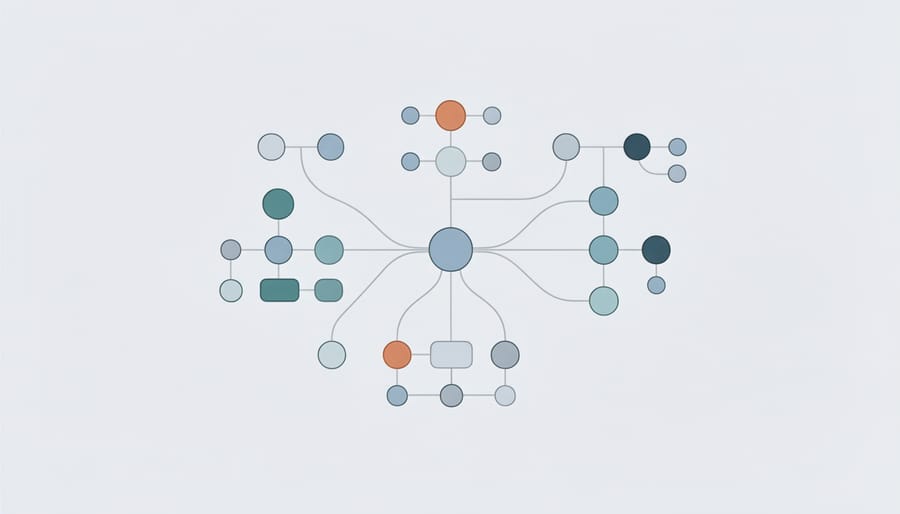
The Entity Alignment Problem Most SEOs Skip
Most teams treat schema as a checklist: add Organization, Product, or Article markup, validate it, move on. But search engines don’t index structured data in isolation. They attempt to match it against entities already recognized in their graph, a resolution step that fails quietly when your markup lacks the disambiguating signals confident matching requires.
The disconnect happens because generic Schema.org implementations describe what something is (a Person, a Product, an Event) without providing the unique identifiers a graph needs to connect that markup to one specific entity. When Google or Bing encounter a Person schema with only a name property, they can’t reliably determine whether this refers to an existing graph node or represents a new, unverified candidate. Probably the latter, in most cases. The result: your structured data gets parsed but not integrated, which means it contributes nothing to entity salience signals or Knowledge Panel eligibility.
Schema.org is vocabulary. The knowledge graph is identity. Most “schema markup” stops at the first.
This alignment gap explains why pages with valid markup still fail to trigger enhanced features or entity associations. The fix isn’t more properties, it’s the right three. Disambiguation lives in sameAs, identifier, and properly scoped @id references that explicitly link your markup to authoritative references the graph already trusts. Resources like Moz’s structured data primer and Ahrefs’ schema markup guide both nod at this, but it’s worth saying plainly, validation is not integration.

The Three Properties That Carry Entity Recognition
sameAs: Your Entity’s Identity Bridge
The sameAs property functions as a universal identifier bridge, explicitly connecting your entity to its canonical representations across authoritative knowledge bases. When you declare that your Organization or Person entity is the same as a Wikidata ID, a Wikipedia page, or a verified social profile, you’re handing the graph an unambiguous confirmation signal. This matters for entity identity optimization because search engines use these links to merge data from multiple sources, resolve disambiguation, and increase confidence scores.
Here’s a minimal Organization schema with the entity-linking properties wired in. Strip the comments, keep the structure:
{
  "@context": "https://schema.org",
  "@type": "Organization",
  "@id": "https://example.com/#organization",
  "name": "Acme Analytics",
  "url": "https://example.com/",
  "logo": "https://example.com/logo.png",
  "sameAs": [
    "https://www.wikidata.org/wiki/Q12345678",
    "https://en.wikipedia.org/wiki/Acme_Analytics",
    "https://www.linkedin.com/company/acme-analytics",
    "https://twitter.com/acmeanalytics",
    "https://github.com/acme-analytics"
  ],
  "identifier": [
    { "@type": "PropertyValue",
      "propertyID": "Wikidata",
      "value": "Q12345678" },
    { "@type": "PropertyValue",
      "propertyID": "DUNS",
      "value": "123456789" }
  ],
  "knowsAbout": [
    "Search engine optimization",
    "Knowledge graphs",
    "Structured data",
    {
      "@type": "Thing",
      "name": "Entity disambiguation",
      "sameAs": "https://www.wikidata.org/wiki/Q1361932"
    }
  ],
  "founder": {
    "@type": "Person",
    "@id": "https://example.com/#founder",
    "name": "Jane Doe",
    "sameAs": "https://www.wikidata.org/wiki/Q87654321"
  }
}
Implementation is otherwise straightforward. Add a sameAs array to your JSON-LD containing URLs to Wikidata entries, the official Wikipedia page, the verified LinkedIn company profile, and other authoritative platforms where your entity exists. The more high-authority sources you link, the stronger the resolution signal, though there are diminishing returns past five or six. Graphs cross-reference these connections to validate that the structured data represents a real, established entity rather than noise.
Pro tip
Wikidata QID first, everything else second. If your entity doesn’t have a QID yet, creating one (with sources) is usually a higher-leverage hour than adding three more social-profile sameAs URLs. Wikidata is the spine most other graphs reconcile against.
For developers and technical SEOs building entity recognition into a site, sameAs is the lowest-friction, highest-leverage addition to schema markup you can make today.
identifier and the Disambiguation Layer
Ambiguity breaks knowledge graphs. When “Cambridge” could mean a university, a city in Massachusetts, or one of thirty other municipalities worldwide (I once watched a perfectly competent SEO team spend a week wondering why their UK-Cambridge client kept getting US-Cambridge entity hits), search engines need explicit signals to bind your markup to the correct entity. That’s where the identifier property earns its keep.
Unlike sameAs, which points at URLs, identifier carries typed values: a DUNS number for a US company, an ISNI for an author, an ISBN for a book, a Wikidata QID for almost anything. The structured form (PropertyValue with propertyID and value) is what lets graphs ingest the value into the right column of their internal tables rather than treating it as another opaque string.
Add contextual properties that narrow scope. For organizations, include foundingDate, address with full locality and country, and parentOrganization. For people, birthDate and birthPlace create unique fingerprints. A “John Smith” born in 1982 in Toronto working at Microsoft is unambiguously different from the John Smith born in 1975 in Sydney. (Backlinko’s schema reference is a decent jumping-off point if you’ve never written one of these by hand.)
Implement alternateName for every variant users might search, legal names, former names, abbreviations, and common misspellings. This expands matching opportunities while keeping your primary name canonical. Disambiguation properties transform vague markup into precise entity references the graph can confidently merge with existing data, the difference between being ignored and being integrated.
knowsAbout: Declaring Topical Scope
Honestly, knowsAbout is the property most teams forget, and it’s the one that makes the strongest topical signal. Applied to a Person or Organization, it asserts the domains that entity has demonstrable expertise in. Crucially, the values don’t have to be plain strings, they can be Thing objects with their own sameAs pointing to Wikidata or ConceptNet. Most implementations I audit don’t bother with the nested form.
That nested form is what closes the loop. A consultant who knowsAbout “structured data” as a string is plausible. A consultant whose knowsAbout entry resolves to https://www.wikidata.org/wiki/Q26385108 is verifiable, because the topic itself now sits in the same graph as the person. Pair this with worksFor linking to an Organization that knowsAbout the same topics, and you’ve built a topical authority cluster the graph can traverse end-to-end.
Note
Don’t pad knowsAbout. Three to seven topics that genuinely reflect the entity’s expertise beat fifteen aspirational ones. Graphs cross-check topical claims against content; an Organization claiming to know about quantum computing while publishing recipe posts will quietly lose trust on both topics.
Basic Schema vs Knowledge-Graph-Aware Schema
The gap between “I added schema” and “my schema participates in the graph” is mostly about a handful of properties. Side by side:
| Layer | Basic schema | Knowledge-graph-aware schema |
|---|---|---|
| Entity type | Generic (Organization, Person) | Most specific subtype available (MedicalClinic, SoftwareApplication, ScholarlyArticle) |
| Identity | name + url | name + url + sameAs (Wikidata, Wikipedia, official socials) + typed identifier values |
| Topical scope | Implicit, derived from page content | Explicit, via knowsAbout pointing to Wikidata/ConceptNet nodes |
| Relationships | Flat, string-valued (author: “Jane Doe”) | Nested entity blocks with @id references, bidirectional (founder/foundedBy, worksFor/employee) |
| Validation goal | Rich Results Test passes | Google NL API returns the Knowledge Graph IDs your schema asserts |
| Outcome | Parsed and stored against the page | Merged into the graph as a recognized node |
Honest take. Most sites don’t need the right column for every page. They need it for the entities they want to be known for, the organization page, the founder/author profiles, the cornerstone topic hubs. Everything else can stay at basic-schema parity without much loss. Probably.
Building Schema That Maps to the Graph
Start With Entity Type Precision
Choose the most granular Schema.org type that mirrors Google’s own classification. If you run a Thai restaurant, don’t settle for LocalBusiness or even Restaurant, use schema.org/ThaiRestaurant where it exists, or Restaurant with servesCuisine="Thai" if it doesn’t. Graphs categorize entities hierarchically, and precision is itself a signal of authority.
Check how Google already classifies your entity by searching the brand name and examining the Knowledge Panel details. If Google shows you as a specific subtype, your markup should reflect that exact category. Mismatches create friction. Claiming you’re a generic Organization when the graph already knows you’re a MedicalClinic tells algorithms your data may not be reliable (and once that trust deficit sets in, every other property you assert gets weighted down with it).
Entity-linking pipeline
Start at Schema.org’s type hierarchy and drill down. For organizations, traverse from Organization to LocalBusiness to the applicable subtype (AutoRepair, DayCare, LegalService). For creative works, distinguish Article from NewsArticle from ScholarlyArticle. The more specific your type, the more relevant properties become available, and the stronger your entity signal becomes to the algorithms doing the graph-merge work.
Add Bidirectional Relationships
Reciprocal relationships strengthen graph signals by confirming entity connections from both directions. When Entity A references Entity B, explicitly marking the inverse on Entity B’s page helps search engines validate the cluster as a real structure rather than a one-sided claim.
Use inverse properties in schema markup. If a Person schema references an Organization via worksFor, add the reciprocal employee property on the Organization’s page pointing back to the Person via @id. Connect Article schemas via mentions and about bidirectionally across related content. Common reciprocal pairs include: author ↔ worksFor/employee, isPartOf ↔ hasPart, mentions ↔ subjectOf, and alumniOf ↔ alumni. Schema.org defines many of these inverse relationships explicitly, check the property documentation for supported pairs.
Bidirectional markup creates verifiable graph edges that search engines can cross-reference, which raises confidence in the relationship and improves how the content surfaces in panels and rich results. Audit your most important entity pages first, well, “most important” meaning the ones where a Knowledge Panel actually moves the needle. Add reciprocal references between cornerstone content (author bios, organization pages, key topic resources) before expanding to secondary connections. Validate bidirectional links using structured-data testing tools to confirm both directions resolve.
Testing Entity-KG Alignment
Validation is where theory meets reality. Once you’ve deployed schema, you need proof it’s actually contributing to graph recognition rather than floating ignored in your page source.
Google Search Console’s Performance report is the most direct signal. Filter by “search appearance” to see which queries trigger enhanced results tied to your entities. Low impression counts or zero rich-result appearances suggest the markup isn’t mapping cleanly to Google’s entity database. Check the Experience section for manual actions or enhancement errors that might block recognition. The Rich Results Test parses your markup and flags syntax errors, but a green tick confirms valid syntax, not entity alignment. Look past the checkmark: does Google recognize the specific entity properties you declared? If your Person schema includes sameAs links to Wikidata or LinkedIn, do those surface in the preview?
Third-party entity recognition tools provide independent validation. Google’s Natural Language API extracts entities from your content and returns confidence scores plus Knowledge Graph IDs when matches exist. Compare those IDs against your schema declarations, if the API identifies different entities than your markup claims, you have a mismatch problem. Diffbot’s Knowledge Graph API offers similar extraction with salience scores, useful for confirming which entities dominate your content semantically. Low salience for your primary schema entity suggests thin contextual support in the actual text. (Screaming Frog’s SEO Spider will surface structured-data errors at scale during crawls, similarweb’s audience overlap data can confirm whether the entities you’re claiming attract a coherent audience.) For ongoing monitoring, Schema.org’s own validator catches deprecation warnings as standards evolve, which prevents silent failures when properties change. Quarterly is a reasonable cadence for most teams, more often after large content updates that might shift entity focus.
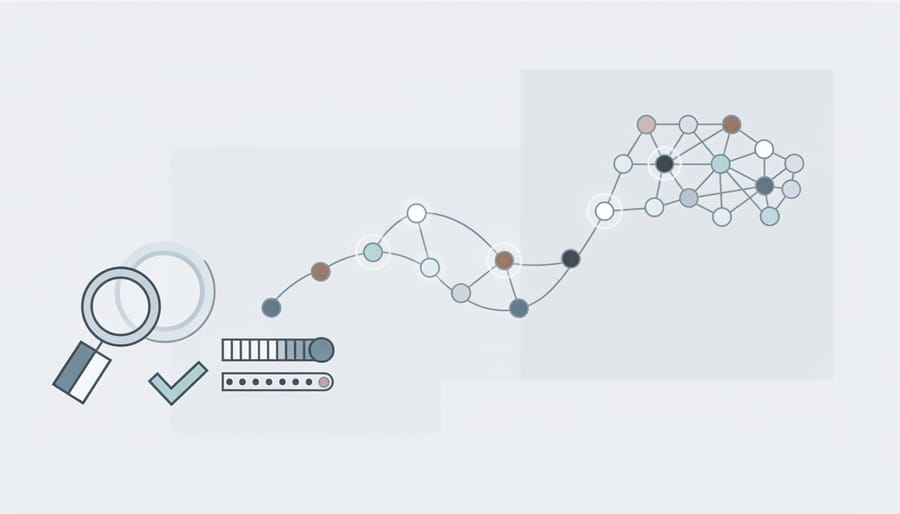
The two tests worth running on every entity page you care about, in order:
| Tool | What it tells you | What it doesn’t |
|---|---|---|
| Rich Results Test | Syntax is valid, required properties present, eligible for specific rich-result features | Whether Google actually resolved the entity to a Knowledge Graph node |
| Google NL API | Which entities Google extracts from the page, their salience, and (where confident) the Knowledge Graph mid | Whether the resolved entity matches what your markup intended |
| GSC Performance + Enhancements | Whether rich results are actually rendering in live SERPs and at what volume | Why a panel isn’t rendering when markup looks correct |
Why This Matters for Link Building
Here’s where this gets useful for link builders. When search engines crawl your link network, properly implemented knowledge-graph schema helps them understand the semantic relationships between pages, not just the presence of hyperlinks. If both your linking page and the target page use consistent entity markup, Person, Organization, Article, or Product schemas with shared @id values and overlapping sameAs or knowsAbout targets, you signal topical coherence that arguably translates into stronger link-equity flow. This matters because Google’s algorithm increasingly evaluates links through an entity-first lens, assessing whether the entity clusters and relationships across your site form a logical knowledge structure.
Pages with aligned schema that reference the same entities, topics, or concepts get a contextual relevance boost, while isolated links without entity markup may be discounted as less authoritative. For technical SEOs managing client link portfolios, this means auditing schema consistency across both internal and inbound link sources becomes as critical as traditional anchor-text optimization. The link from a domain whose Organization schema knowsAbout the same topics as your target page carries more semantic weight than an anchor-text match alone, all else equal.
When the Upgrade Is Worth It (and When It Isn’t)
Knowledge-graph-aware schema is more work, more research, more discipline, more ongoing maintenance. It’s not the right default for every page on every site. Be honest about which pages actually need the right column of that comparison table.
✓
Worth the upgrade for
- ›The organization page (one per site, the spine of every other entity)
- ›Founder/author profiles you want surfacing in Knowledge Panels
- ›Cornerstone topic hubs that anchor your topical authority claims
- ›Products or services where rich-result eligibility moves CTR
- ›Brands competing on entity-ambiguous names where disambiguation is the bottleneck
✗
Basic schema is fine for
- ›Routine blog posts that don’t introduce new entities
- ›Category and tag archives
- ›Thin landing pages where the entity is already well-known elsewhere
- ›Internal admin or utility pages crawlers shouldn’t be indexing anyway
- ›Sites where the entity has no Wikidata presence and creating one isn’t realistic
Treat the upgrade as a tiered rollout. The Organization schema is non-negotiable, that single block radiates entity context to every other page that references it via @id. Author and founder profiles come next. Topic hubs follow. Everything else can stay at basic-schema parity until you have evidence the missing properties are blocking a specific rich-result feature.
Try it this week
Pick one entity. Wire its schema into the knowledge graph.
-
1
Find or create the Wikidata QID for your organization. Use sources, not marketing copy, the page has to survive a Wikidata reviewer. -
2
Update the Organization JSON-LD on your homepage: add the QID via sameAs, add a typed identifier block, add knowsAbout with 3-5 Wikidata-linked topics. -
3
Run the page through Google’s Natural Language API. Confirm the returned Knowledge Graph mid for your organization matches the QID you asserted.
If the IDs match, you’ve moved from “schema markup that validates” to “schema markup that participates in the graph.” Every other entity page on the site can now @id back to this one.
Related guides
- Information Gain and Entity Salience, the on-page signals that decide whether your entity claims actually carry weight.
- Authors as Entities, applying the same entity-linking discipline to people, not just organizations.
- Internal Link Graphs and Topic Clusters, how entity-aware schema and link structure reinforce each other.
- Rich Results Checker Tools, what each testing tool actually reports, and where that diverges from what Google renders.

