

Why Your International Site Is Invisible (And How Hreflang Fixes It)

Hreflang is bidirectional. Half the implementations I audit aren’t. The tag tells search engines which language and regional versions of a page to serve users in different locations, but the signal only works when every page in a cluster references every other page (and itself). Miss a return tag on one variant and Google quietly throws out the entire cluster, falling back on its own language detection. So this guide walks through the syntax, the three implementation surfaces (HTML head, HTTP header, XML sitemap), the validation tooling, and the bidirectional-pairing trap that breaks most rollouts. Mostly the trap.
What Hreflang Actually Does
Hreflang tags tell search engines which language and regional versions of your pages to serve which users. Implement them when you maintain multiple language variants (example.com/en/, example.com/fr/) or regional versions (example.com for US, example.co.uk for UK) to prevent duplicate content cannibalization and ensure German searchers land on German pages, not English ones.
Quick vocabulary
- ISO 639-1
- The two-letter language-code standard (
en,fr,de). Used as the language portion of any hreflang value. - ISO 3166-1 Alpha 2
- The two-letter country-code standard (
US,GB,DE). Used as the region portion after the hyphen. - x-default
- The fallback hreflang value for users whose language or region matches none of your declared variants. Serves as the catch-all landing page.
- Bidirectional pairing
- The rule that every alternate reference must be reciprocated. If page A points to page B, page B must point back to A or Google discards both.
- Self-reference
- Each page’s hreflang set must include a tag pointing at itself. Omitting this is one of the most common, and quietest, failures.
- Hreflang cluster
- The full set of pages that reference each other through hreflang. A cluster is only valid when every member references every other member, plus itself.
The stakes are measurable. Misconfigured hreflang sends traffic to wrong-language pages, tanks engagement metrics, and wastes crawl budget. Common failures include missing return tags (if page A references page B, page B must reference A), incorrect language codes (use ISO 639-1 for language, ISO 3166-1 Alpha 2 for region), and incomplete annotation clusters that omit self-referential tags. In my experience these three failure modes account for the vast majority, well, maybe not the vast majority, but most of the broken implementations I see in audits.

Language vs. Region Targeting
Hreflang accepts two types of codes, language-only (like en or es) and language-plus-region (like en-US or en-GB). Use language-only codes when your content serves all speakers of that language equally, regardless of location. Use language-plus-region codes when you’ve tailored content for specific markets, different spelling conventions, currency, shipping policies, or cultural references.
If your English content works for everyone, use en. If you’ve created separate versions for American and British audiences with localized pricing or terminology, use en-US and en-GB. Region targeting matters most for e-commerce, legal compliance, and content with location-specific information. Language targeting? It works for purely informational sites where regional differences don’t really affect user experience.
Pro tip
Choose based on how you’ve actually differentiated content, not on theoretical audience geography. I’ve seen teams declare 14 regional variants of pages that were byte-identical, all that did was multiply the maintenance surface and confuse the cluster validator. Overly granular targeting without meaningful content differences wastes crawl budget and complicates maintenance.
The Self-Referencing Requirement
Every page in your language set must reference itself with a hreflang tag alongside all alternate versions. This self-referential pattern tells search engines “this is the canonical version for this language or region” and ensures complete bidirectional mapping across your international variants. If en-US links to de-DE but de-DE omits the reciprocal en-US tag, Google may ignore both annotations.
The requirement applies even to single-page implementations, a standalone English page serving US audiences still needs <link rel="alternate" hreflang="en-us" href="..." /> pointing to itself. Think of it as declaring membership in a cluster rather than simply pointing outward to siblings. (Honestly, this is the most under-emphasized rule in the spec, most implementation guides bury it in a footnote, or skip it entirely. I had a client last year whose entire DACH rollout was silently broken for eight months because nobody had added the self-reference to the German template. Eight months.)
Half of the broken hreflang setups I audit aren’t missing tags, they’re missing the self-reference on each page in the cluster.
Where to Implement Hreflang Tags
There are three surfaces where hreflang can live. Each fits a different architecture. Pick one and stick with it, mixing surfaces is how implementations drift out of sync.
HTML Link Elements
The most straightforward implementation places <link rel="alternate" hreflang="x"> tags directly in your page’s <head> section. Each tag declares one language or regional variant, pointing to the corresponding URL. You include tags for every version of the page, including a self-referential tag for the current page.
A minimal three-variant cluster (English, French, German, plus the default fallback) looks like this in the head of every page in the set:
<link rel="alternate" hreflang="en" href="https://example.com/en/page" />
<link rel="alternate" hreflang="fr" href="https://example.com/fr/page" />
<link rel="alternate" hreflang="de" href="https://example.com/de/page" />
<link rel="alternate" hreflang="x-default" href="https://example.com/en/page" />
This block must appear, byte-for-byte the same set of URLs, on all three pages. Identical. If the English, French, and German variants exist, all three pages have to carry identical sets of hreflang tags pointing to each other. The approach offers complete control and works pretty well for sites with a limited number of pages, or when you need manual oversight of each annotation.

Ideal for small portfolios, landing page campaigns, or sites where automated deployment isn’t feasible. The main constraint, maintenance grows linearly with page count, making this impractical beyond a few dozen URLs (in most cases, anything past 50-100 templates needs templated generation).
HTTP Headers
When HTML markup isn’t an option, serve hreflang annotations via HTTP Link headers. The server returns a Link: header containing all language-region alternates for the requested resource, following RFC 8288 syntax. This method works for any file type, PDFs, images, video, making it essential for non-HTML content in multilingual architectures.
A typical response header for a PDF that exists in three locales:
Link: <https://example.com/en/spec.pdf>; rel="alternate"; hreflang="en",
      <https://example.com/fr/spec.pdf>; rel="alternate"; hreflang="fr",
      <https://example.com/de/spec.pdf>; rel="alternate"; hreflang="de"
Each alternate appears as a separate Link: header or comma-separated within one header, including rel="alternate" and hreflang attributes. This is the right approach for backend engineers managing media-heavy international sites, it enables language targeting without modifying file formats or requiring HTML wrappers, letting you treat hreflang as infrastructure rather than markup.
Watch for
CDNs and edge caches can strip or rewrite custom Link: headers if not explicitly whitelisted. I’ve watched a Cloudflare worker quietly drop hreflang headers on PDF responses for six months before anyone noticed traffic on the French and German variants had flatlined. Confirm headers survive the full request path, not just at the origin.
XML Sitemap
For sites managing dozens of language-region combinations, declaring hreflang tags in a centralized XML sitemap implementation prevents scattered errors across thousands of templates. Each URL entry includes alternate versions using xhtml:link elements pointing to every language variant.
This approach scales well but demands rigorous process. When you launch a new market or remove old URLs, every affected sitemap entry needs updating, or search engines index incomplete signals. Automated pipelines that generate sitemaps from a central translation database reduce manual drift, mostly. For teams managing 5+ locales or frequent content changes, the sitemap surface is usually the only sustainable option. Usually.
Comparing the Three Surfaces
| Surface | Best for | Scale ceiling | Common failure mode |
|---|---|---|---|
HTML <link> |
Small portfolios, landing pages, manual oversight | ~50 URLs before maintenance breaks down | Drift, one variant updated, others stale |
HTTP Link: header |
Non-HTML assets (PDFs, video, images) | Limited by server config complexity | CDN strips or rewrites the header |
XML sitemap (xhtml:link) |
Large multi-locale sites, templated generation | Tens of thousands of URLs with discipline | Sitemap regeneration lags the URL launch |
Common Hreflang Mistakes That Break Everything
Missing Return Tags (the Bidirectional Pairing Trap)
Hreflang requires bidirectional linking. If your English page points to a French alternate, the French page must point back to the English version. When page A includes a hreflang tag referencing page B, but page B omits the reciprocal tag to page A, Google treats the entire cluster as invalid and ignores the annotations.
This is one of the most common implementation errors, particularly on sites where regional versions are added incrementally or managed by separate teams. Look, I’d argue this is also the failure mode that’s hardest to catch with eyeballs, every individual page looks fine on its own. The break only surfaces when you crawl the full cluster and diff the reference graphs.
Validate every hreflang cluster to ensure all pages reference all alternates, including a self-referential tag. Automated crawlers and hreflang validators help catch asymmetric references before they erode your international visibility. Incomplete clusters signal inconsistency, prompting Google to fall back on its own language and region detection rather than trusting your explicit signals.
Incorrect Language/Region Codes
Search engines expect ISO 639-1 language codes (two letters, like en or fr) and ISO 3166-1 Alpha 2 country codes (also two letters, like US or GB). Using three-letter codes, full country names, or invented combinations breaks the parser, your tags get ignored. Just ignored, no warning, no GSC notification. Mixing formats across pages creates inconsistent signals that confuse crawlers about your site’s structure.
A common mistake, writing en-UK instead of en-GB, or eng when you mean en. (Truth is, UK is a valid ISO 3166-1 reserved code but it isn’t the assigned country code for the United Kingdom, GB is.) Validate every code against the official standards before deployment. When codes fail silently, you lose the targeting precision hreflang exists to provide, and users see wrong-language pages in search results.
Pointing to Redirected or Non-Canonical URLs
Each hreflang tag must point directly to the canonical version of each page, not to intermediate redirected URLs or alternate versions. When search engines encounter a hreflang pointing to a redirect, they must follow the chain before understanding the true alternate, wasting crawl budget and risking misinterpretation.
Similarly, if hreflang references a non-canonical URL (like a paginated or filtered variant), engines may ignore the signal entirely. Or index the wrong page. Either way you lose. This creates fragmented indexation and diluted signals across language variants. So validate that every hreflang href resolves directly with a 200 status code and that it matches the canonical URL declared in that page’s own canonical tag.
| Signal | Correct hreflang | Broken hreflang |
|---|---|---|
| Cluster references | Every member references every other member plus itself | Asymmetric, some pages list more siblings than others |
| Language code | Two-letter ISO 639-1 (en, fr, de) |
Three-letter (eng), full name, invented combinations |
| Region code | Two-letter ISO 3166-1 Alpha 2 (US, GB, DE) |
UK for Britain, EU for Europe, language-as-region |
| href target | Resolves with a direct 200, matches that page’s own canonical | 301/302 chain, or points to a paginated/filtered variant |
| Self-reference | Present on every page, even single-page implementations | Omitted, page only references its siblings |
| x-default | Present and pointing at the global fallback landing page | Missing, or pointing at a 404/redirect |
Automated audits should flag any hreflang targets returning 301, 302, or conflicting canonical declarations, allowing you to fix chains before they confuse crawlers or split equity across duplicates.
Building a Scalable Hreflang System
The Implementation and Audit Pipeline
A working hreflang program isn’t a one-time deploy, it’s a recurring loop. The four stages below are the minimum viable pipeline for any site past the dozens-of-URLs threshold.
Hreflang implementation and audit pipeline
hreflang, diff the cluster graph for symmetry.Template-Based Automation
Hardcoding hreflang tags for dozens or hundreds of pages invites errors and maintenance headaches. Most modern content management systems and static site generators let you automate tag generation through templates or build scripts, ensuring consistency as your site scales.
In WordPress, plugins like WPML or Polylang inject hreflang tags automatically based on your language configuration. Mostly automatically, anyway, I’ve seen WPML drop the self-reference on archive pages more than once, so don’t assume the plugin got it right. For custom builds, create a template snippet that loops through available translations of the current page and outputs the appropriate link tags in your document head. Each tag pulls the language code and URL dynamically from your site’s translation map.
Static site generators like Hugo or Next.js support similar patterns, define language variants in your content metadata, then use a template helper to render all hreflang annotations at build time. This approach works especially well when combined with a structured content model that enforces language and region codes as required fields.
Note
Script-based solutions work for any tech stack. Write a deployment script that crawls your sitemap, identifies translation groups, and injects or validates hreflang tags before publishing. This catches missing tags and mismatched language codes before they reach production, turning hreflang maintenance from a manual chore into a solved problem. For most teams managing more than five locales, this is the difference between hreflang as infrastructure and hreflang as ongoing firefighting.
Validation and Monitoring
Catching hreflang errors early saves rankings and prevents search engines from wasting resources on mismatched signals, making validation part of your pre-deploy checklist and ongoing monitoring a non-negotiable habit.
Google Search Console surfaces hreflang errors in the International Targeting report under Legacy Tools (or via the Core Web Vitals/Experience sections in newer interfaces). Check for missing return links, incorrect language codes, and conflicting signals. It’s Google’s own diagnostic tool, so errors here directly reflect what the crawler sees.

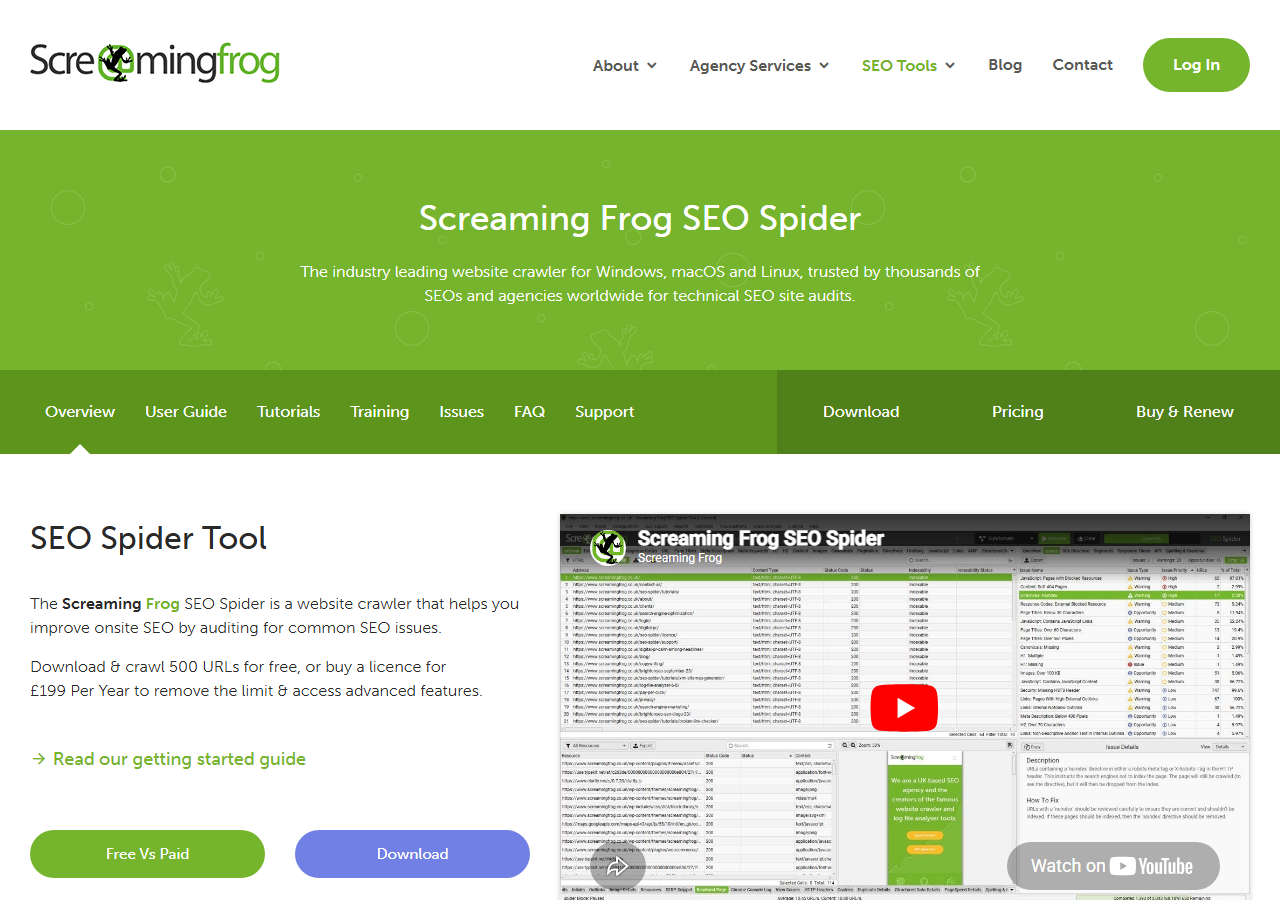
Screaming Frog and Sitebulb crawl your site to audit hreflang clusters, flagging orphaned annotations, self-referential loops, and malformed tags across thousands of URLs. Both tools visualize relationships between alternates, making complex setups debuggable. Desktop crawlers catch implementation drift before Google does, which is the whole point, GSC’s International Targeting report tends to lag the actual state of the site by days to weeks.
Custom scripts (Python with Beautiful Soup or Scrapy) let you validate hreflang at scale, cross-referencing sitemaps, HTML head tags, and HTTP headers to enforce consistency. Automation integrates validation into CI/CD pipelines, blocking bad deploys before they ship. For engineering teams managing dynamic multilingual platforms, this is the only approach that keeps up with release cadence.
Monitoring hreflang health ties directly to crawl budget optimization, broken annotations force crawlers to waste resources reconciling conflicting signals instead of indexing fresh content.
When Hreflang Isn’t Enough
Hreflang tags tell search engines which language variants exist, but they don’t guarantee rankings in target regions. Google relies on multiple signals to determine geographic and linguistic relevance, and hreflang is just one input.
Server location still matters for latency and perceived relevance, though CDNs mitigate much of this. Country-code top-level domains (ccTLDs like .fr or .de) send strong geographic signals that reinforce hreflang directives. Generic TLDs with subdirectories or subdomains work fine but require clearer supporting evidence.
Content quality remains paramount. Or, well, it remains paramount in the sense that markup won’t save bad copy. Machine-translated pages tagged with correct hreflang annotations won’t outrank well-written native content. Search engines evaluate linguistic naturalness, local idioms, and user engagement metrics. A French page that reads like English translated word-for-word will underperform regardless of markup. (I’ve watched this play out on three e-commerce sites in the last two years, perfect hreflang, broken French, flat traffic. Three sites in a row.)
User signals provide real-world validation. If visitors from Spain consistently bounce from your es-ES variant or prefer the English version, search engines notice. Click-through rates, dwell time, and conversion patterns influence which variant surfaces in regional results.
Think of hreflang as a map you provide to search engines, not instructions they must follow. The map needs to align with infrastructure choices, content investment, and actual user behavior. Correct implementation prevents cannibalization between variants, but earning visibility in each market requires the full internationalization stack working together.
Worth Implementing or Single-Language Is Fine
Hreflang is infrastructure for sites with multiple language or regional variants. It’s also overhead for sites that don’t need it. The decision card sorts where the effort actually pays off.
✓
Worth implementing for
- ›Multi-language sites with translated content per locale
- ›Regional e-commerce variants with localized pricing or shipping
- ›Sites competing in markets where wrong-language SERPs cost real traffic
- ›Architectures with ccTLDs or subdirectories per locale
- ›Content that’s been genuinely localized, not just machine-translated
✗
Single-language is fine for
- ›Sites serving one language to one region
- ›Content with no regional differentiation (no localized pricing, idioms, or compliance)
- ›Domains where 95%+ of traffic comes from one country
- ›Sites where Google’s automatic language detection already serves the right variant
- ›Small portfolios where the maintenance overhead exceeds the SEO upside
Hreflang exists to solve one problem, showing each visitor the version of your site built for their language and region. Implement it correctly and search engines stop cannibalizing your own pages in international results, German users see your .de content, Spanish users see .es, without duplicate content cannibalization.
The mechanics matter, self-referencing tags, bidirectional links, and proper locale codes prevent indexing chaos. For multi-region sites, hreflang isn’t optional SEO polish, it’s infrastructure that protects traffic and delivers relevant experiences at scale. Get the syntax right once, automate it, and validate regularly to maintain clean international visibility.
Try it this week
Crawl one locale cluster. Confirm every reference is bidirectional.
-
1
Pick one URL with hreflang declared. Pull its full alternate set from the page source or HTTP headers. -
2
For each alternate URL listed, fetch the page and extract its own hreflang set. Confirm it points back at every sibling plus itself. -
3
Flag every asymmetry, missing return tag, missing self-reference, redirect target, code format mismatch. Fix the cluster before the next release.
One cluster validated by hand this week is one cluster you won’t be debugging in GSC three months from now.
Related guides
- Canonical Systems at Scale, Companion infrastructure for hreflang, every hreflang target must match its page’s own canonical.
- XML Sitemap Architecture, How sitemap-based hreflang scales past the HTML-head ceiling for large multi-locale sites.

