

Why Smart SEOs Test Their Strategies on PBN Links First

Look, test on a network you can afford to burn before you bet client money. That’s the whole logic of using PBN links as a controlled lab. You hold the variables, you pick the burn radius, you read the signal. Single-variable changes, 30-day baselines, 60-day measurement windows, the boring methodology that turns “PBNs are risky” into “here’s what the algo actually tolerates in this vertical.” Boring on purpose. This guide walks through the hypotheses worth testing, how to structure tests so the data isn’t noise, and the framework for graduating tactics from sandbox to client property.
What Makes PBN Links Ideal for SEO Testing

A private blog network is, at its core, infrastructure you own. That ownership is the whole point. You decide which anchor goes where, which page receives the link, when the link goes live, and when (or whether) it stays. None of those levers exist on a guest post once you’ve hit send (I learned this the hard way back in 2019 when a placement we paid four figures for got the anchor “scrubbed” by the editor a week after publication and we had zero recourse). This is the gap testing methodology lives in.
Quick vocabulary
- Test variable
- The single property you change between test arms (anchor ratio, velocity, placement). Holding everything else constant is what makes the result interpretable.
- Control group
- The arm where the variable is left at its baseline value. Without one, you can’t separate your intervention from background ranking noise.
- Baseline window
- The 30-day pre-test period where you record rankings, indexed pages, and organic clicks before introducing the experimental change.
- Inflection point
- The threshold at which adding more of a variable (exact-match anchors, monthly links) stops helping and starts hurting. The number you actually want from a test.
- Burn radius
- The maximum cost if the test domain gets penalized. On a PBN node, it’s the price of one domain. On a money site, it’s revenue plus reputation.
- Living link
- A placed link whose anchor, target URL, or surrounding context can be edited without republishing or rebuilding. Turns one placement into many sequential tests.
Full Control Over Link Variables
PBNs give you surgical control over the variables that matter most in link experiments. With owned infrastructure, you dictate anchor text distribution, testing exact-match versus branded ratios without negotiating with webmasters. You control contextual placement, positioning links in introductory paragraphs, mid-content, or sidebars to measure position impact on rankings. Linking velocity becomes a dial you adjust at will, ramping links gradually or deploying them in clusters to isolate timing effects.
These parameters remain fixed or unknown with earned links, where you’re constrained by editorial discretion and outreach response rates. Honestly, this is the single biggest reason “best practice” rules circulate as folklore in this niche: nobody can run a clean A/B on a campaign they only half-control.
Test on a network you can afford to burn before you bet client money.
This control transforms link building efficiency from guesswork into testable hypotheses. You can isolate single variables, measure outcomes against control groups, and reach statistical significance faster than waiting months for organic link acquisition. The tradeoff is risk, Google penalizes manipulative patterns, but for testing in sandboxed environments before applying insights to live campaigns, the precision is unmatched.
Pro tip
Pick one variable per test cycle. I’d argue most lab failures aren’t bad hypotheses, they’re three variables changing at once and nobody knowing which one moved the needle. Document the one you’re changing, freeze the rest in writing, and resist the urge to “also try” something mid-run.
Zero Risk to Your Main Properties
The most pragmatic reason to test on PBN-backed properties is insulation. Or, more accurately, blast containment. When you experiment with aggressive anchor text ratios, rapid link velocity spikes, or untested content structures, you’re collecting data without gambling your revenue sites. A PBN test domain acts as a dedicated laboratory where penalties, indexing issues, or ranking volatility stay contained.
If Google responds negatively to a hypothesis you’re testing, the blast radius stops at a throwaway domain, not the client property paying your invoices. This firewall model lets you push boundaries, document what triggers manual reviews or algorithmic adjustments, and arrive at your production campaigns with evidence-based confidence. Google’s own spam policies are explicit that link schemes targeting ranking manipulation are violations regardless of network sophistication, which is exactly why you want to learn the boundary on a domain you don’t care about.
You learn which tactics are durable and which invite scrutiny before your reputation or income depends on the answer. The cost of a burned test site is trivial compared to recovering a penalized client domain or explaining a traffic collapse to stakeholders who trusted your judgment.
Five SEO Hypotheses Worth Testing on PBN Links

Not every hypothesis deserves a test cycle. Some questions have already been answered (broken links don’t pass equity, nofollow attribution is real), and some are unfalsifiable inside a single lab. The five below are the ones I keep coming back to because the answer changes by vertical, and folklore stops being useful the moment your client’s vertical isn’t the one the folklore was forged in.
Anchor Text Tolerance Thresholds
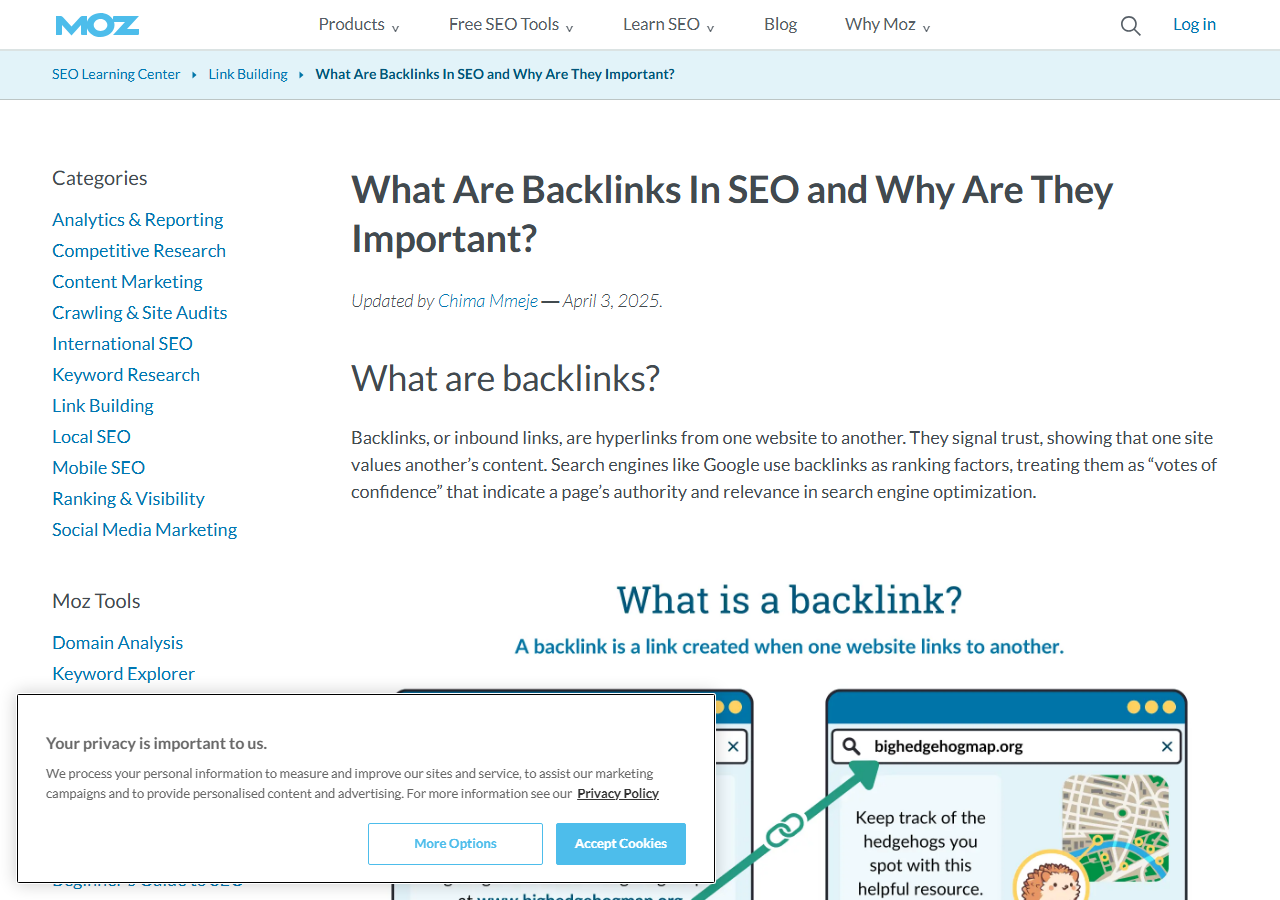
Start with a controlled test, pick 5-10 PBN posts linking to a low-stakes test page, then vary anchor text ratios across exact-match (target keyword), partial-match (keyword variations), branded (your site name), and generic (“click here,” “learn more”). Track rankings weekly for 60-90 days to identify when Google’s algorithm responds negatively, typically above 40-60% exact-match for competitive niches, though thresholds vary by domain authority and topical relevance. Moz’s anchor-text primer covers the classification scheme in more depth if you need a baseline taxonomy before you start labelling placements.
Compare movement against a control group using only branded anchors. The sweet spot often lands at 15-25% exact-match, 30-40% partial, and the rest split between branded and generic, but your vertical may differ. (Local-service queries seem to tolerate more exact-match than DTC ecommerce, in my experience, though I haven’t run that test cleanly enough to publish a number.) Document inflection points where additional exact-match anchors produce diminishing returns or trigger manual review patterns.
Content Relevance vs. Domain Authority Trade-offs
Here’s where it gets interesting. PBN tests reveal an uncomfortable truth, neither content relevance nor domain authority consistently wins. For commercial queries, raw DR above 40 often outperforms topic-aligned lower-authority links. Informational queries flip that pattern, topical context matters more, even from weaker domains. Or at least, that’s what I’ve seen in roughly a dozen runs; your mileage may vary. The insight, test both variables independently before scaling.
Run two link placements, one from a high-DR off-topic PBN site, another from a contextually aligned lower-authority property, tracking rank movement over 14 days. Compare velocity and stability, not just position. The winner depends on your query’s commercial intent and SERP competitiveness, making blanket rules unreliable. Ahrefs’s writeup on Domain Rating is worth bookmarking if you want a clear sense of how DR is calculated before you start comparing properties.
Note
Authority metrics are vendor-specific estimates, not Google signals. DR, DA, TF, CF, they’re all proxies built on third-party crawl data. Treat them as relative measures inside a test (high-DR vs low-DR), not as absolutes. Two domains at “DR 45” in different verticals can have wildly different real authority.
Link Velocity and Acquisition Patterns
Link velocity experiments reveal how search algorithms interpret growth patterns. Test gradual ramps (3-5 links monthly) against aggressive spikes (20+ in a week) using identical content and anchor distributions. Most PBNs detect 200-300% monthly growth as suspicious, while 20-30% remains algorithmically neutral. Compare these findings against manual outreach strategies where natural acquisition is slower but editorial signals are stronger.
Track indexation delays, ranking fluctuations, and penalty triggers across different velocity tiers. Document the exact inflection point where quantity undermines quality in your niche. This data informs realistic campaign timelines and helps distinguish algorithmic thresholds from anecdotal advice. (For most teams, velocity is the variable they get wrong first, hammering the test domain with 30 links in week 1 and then wondering why the data is uninterpretable.)
| Signal | What PBN tests show you | What guest-post tests show you |
|---|---|---|
| Anchor text tolerance | Exact-match ratios at the manipulation threshold (you control 100% of the distribution) | Editorial-normal anchor patterns (editors round everything toward branded or generic) |
| Velocity sensitivity | Aggressive ramp behaviour, 20+ links in a week, what triggers algorithmic dampening | Natural acquisition cadence, 3-8 links monthly, sustainability of editorial signals |
| Contextual relevance | Same surrounding paragraph, swapped semantic density, isolated to one variable | Editor-authored context, real audience signals (CTR, dwell, share) |
| Iteration cost | Cheap, you can rerun the same test on the same domain with a different variable next week | Expensive, every iteration is a fresh outreach campaign or a paid placement |
| External validity | Mechanism-level (what Google’s algorithm tolerates) | Campaign-level (what actually scales when humans gatekeep) |
Surrounding Content Optimization
Context shapes link value more than most SEOs test for. Way more, probably. Run isolated experiments changing only the 50-100 words surrounding your anchor, vary semantic keywords, swap technical depth for casual tone, or adjust link placement from paragraph opening to closing sentence. Track whether links embedded in topically dense paragraphs outperform those in thin connector text.
Test anchor proximity to related entities and LSI terms versus orphaned mentions. PBNs let you control variables that client sites can’t replicate, identical page structure, same domain authority, only the contextual wrapper changing. Measure CTR and time-on-page as secondary signals; ranking movement alone may mask whether context improved relevance scoring or just reduced bounce rates. Look, this is the test most people skip because it feels too subtle to matter. It matters, especially on informational queries where Google’s relevance scoring is doing more work than its link graph.
How to Structure a Valid PBN Link Test
A valid test starts before the first link goes live. The lab has to exist first, matched domains, recorded baselines, success metrics committed to in writing. Skip those, and the data you collect later won’t survive a serious “but did you control for…” question.
The test pipeline
Creating Comparable Test Sites
Valid PBN testing demands matched properties to isolate the variable you’re actually measuring. Start with three to five aged domains, registered at least 12-18 months prior, purchased simultaneously to control for domain history variance. Install identical WordPress themes, publish similar content volumes (15-20 articles of 800+ words each), and let them index for 30-60 days before initiating tests.

Check that each site achieves comparable baseline visibility, target domains ranking for at least 5-10 low-competition keywords with similar search volumes. This foundation mirrors the control group logic from clinical trials. Without comparable starting conditions, your backlink experiments measure noise rather than signal.
Document initial metrics rigorously, Domain Rating proxies, indexed pages, ranking keywords, and organic traffic, so you can attribute changes to your PBN links rather than site age or content quality differences. Tools like Similarweb are useful for sanity-checking the organic-traffic estimates from a different angle than the ones your link-graph tooling produces. This same disciplined approach applies when scaling from test environments to production campaigns using systematic link prospecting methods for your main properties.
Measurement Windows That Actually Matter
Honestly? Most PBN backlink tests require 4-8 weeks before drawing conclusions. Google’s ranking algorithms don’t update instantly, core updates, index refreshes, and link graph recalculations happen on different schedules. Check rankings weekly but resist daily analysis paralysis. Truth is, the daily check-ins are where most PBN testers torch their own data, they panic at week 2, change a second variable, and lose the test. Done it myself, more than once.
Expect subtle movement in weeks 2-3 for low-competition keywords, broader shifts around week 5-6 for moderately competitive terms. If you see zero ranking change after 8 weeks, your test likely failed due to poor PBN quality, topical mismatch, or the variable you’re testing doesn’t matter for that query type.
Set clear success metrics before launch, +5 positions within 6 weeks, appearing in featured snippet rotation, or crossing onto page one. Document external factors that could confound results, algorithm updates announced during your window, competitor domain drops, seasonal search pattern shifts.
End experiments early only if you detect penalties or manual actions. Otherwise, let tests run their course. Premature optimization wastes the control group advantage PBNs provide. If results remain ambiguous at week 8, extend another 4 weeks or accept the hypothesis as unproven rather than rushing to scale tactics with questionable efficacy.
Archive detailed notes on timing patterns. Your fourth or fifth experiment will reveal whether your PBN infrastructure consistently shows signals at week 3 or week 6, letting you design faster iteration cycles without sacrificing statistical validity.
Why Living Links Change the Testing Game
Traditional backlink testing locks you into decisions made at placement time. Frozen in amber, basically. You publish a guest post with specific anchor text pointing to a landing page, and that configuration becomes permanent. Want to test different anchor text? Build another link. Target URL changed? The original link becomes dead weight or requires outreach to update.
Living Links technology flips this model. Each placed link becomes a persistent testing asset you can reconfigure without republishing or requesting edits from site owners. Modify anchor text from exact-match to branded. Swap target URLs to test which landing pages convert traffic best. Adjust surrounding context to evaluate how relevance signals affect performance. The link placement itself remains stable while the variables you’re testing stay fluid.
This matters because valid SEO experiments require controlling for confounding factors. When you build a new link to test a hypothesis, you’re introducing placement-level variables, different referring domains, varied content contexts, distinct publication dates. Living Links isolate the variable you actually want to test. Change only the anchor text across ten existing placements and measure ranking shifts. Redirect five links to a new landing page while keeping five as controls. Run sequential tests on the same infrastructure rather than compounding variables across different link profiles.
For PBN operators, this transforms economics. Instead of building 50 links to test five anchor text variations, build ten links and rotate through all variations over time. Each placement generates multiple data points rather than a single observation. You’re testing hypotheses iteratively instead of running expensive parallel experiments.
The constraint, you need infrastructure that supports editable links. Most PBN setups hardcode links into static HTML, or rather, into post bodies that have to be manually re-edited every time you want to swap an anchor. Living Links require dynamic systems that separate link logic from published content, enabling updates without republishing or leaving audit trails in revision histories.
When to Graduate Strategies from PBN Tests to Real Campaigns
Moving from PBN tests to production requires a systematic decision framework, not gut instinct. Three core criteria determine readiness, demonstrable success metrics, replication confidence, and risk profile alignment.
Start with success metrics. A strategy graduates when it delivers consistent, measurable results across at least three distinct PBN properties over 60-90 days. Look for ranking improvements in positions 11-30 moving into the top ten, or sticky gains that persist after link velocity decreases. Document exact anchor ratios, content formats, and linking patterns that correlate with movement.
Replication confidence means you can articulate why the strategy worked and reproduce it deliberately. If results feel random or you can’t explain the mechanism, keep testing. Strong candidates have clear cause-effect relationships, specific anchor dilution ratios that avoid penalties, content relevance thresholds that trigger authority signals, or linking velocity patterns that mimic natural growth.
✓
Worth testing on PBN
- ›Anchor-ratio thresholds (the answer changes by vertical)
- ›Velocity tolerance (how fast is too fast for this niche)
- ›Surrounding-context sensitivity (50-100 words around the anchor)
- ›DR vs topical relevance trade-offs on commercial vs informational queries
- ›Link-edit elasticity (Living Links rotated through anchor variations)
✗
Skip the lab for
- ›Editorial outreach feasibility (PBN can’t simulate editor friction)
- ›YMYL verticals where the burn radius isn’t worth the data
- ›Questions that are already answered (nofollow attribution, broken-link equity)
- ›Brand-mention or PR-driven link strategies (mechanism doesn’t transfer)
- ›Tests where you can’t commit 90+ days of clean measurement
Risk assessment varies by client tolerance and existing link profile. A lot, in practice. Conservative profiles (enterprise, medical, legal) require lower-risk strategies tested across six-plus months with zero penalty indicators. Aggressive niches (affiliate, local service) can graduate strategies faster but demand closer monitoring during the first 90 days of real deployment, and probably the next 90 after that too if I’m being honest.
The graduation checklist, three successful replications, documented methodology, zero algorithmic penalties during testing, client risk tolerance match, and budget to sustain the approach at scale. Strategies meeting these criteria transition from real link campaigns with measurably lower risk than untested tactics.
For SEO strategists managing client portfolios who need defensible go/no-go frameworks before scaling unproven link tactics, this is the framework that survives the “why did you do that?” conversation when something moves.
So here’s the bottom line. PBN backlinks function as more than ranking levers, they’re controlled environments where you can measure Google’s response to link variables before committing resources to production campaigns. By systematically testing anchor ratios, velocity patterns, and contextual relevance on isolated properties, you gather signal intelligence that informs safer, smarter decisions at scale. Quietly, and on your own terms.
Try it this week
Set up one anchor-ratio test on three matched PBN nodes. One variable. Sixty days.
-
1
Pick three aged PBN nodes with comparable baselines. Record 30 days of ranking, indexed-page count, and GSC clicks for the test target on each. -
2
Place a link from each, identical content, identical placement, identical target URL. Only anchor ratio changes (one branded, one 25% exact-match, one 50% exact-match). -
3
Measure weekly for 60 days. Tag any algo updates in the window. Write up the inflection point, that’s now a number, not folklore, for your vertical.
One clean experiment beats a year of guessing. The next time a client asks “how much exact-match is too much?”, you’ll have an answer that survived contact with their SERP.
Related guides
- PBN Links vs Guest Posts, When private blog networks beat editorial outreach (and when they don’t).
- Smart Prospecting Frameworks, Graduating from PBN tests to systematic outreach without losing what the lab taught you.

