

Why Google Workspace Appears in Search Results That Have Nothing to Do With It

Google’s March 2024 algorithm update reshuffled rankings for thousands of sites not because of backlink changes or technical errors, but because the search engine fundamentally reimagined how it connects queries to content through entity recognition. When you search “Google Workspace,” the algorithm no longer simply matches keywords—it constructs a web of semantic relationships between the product name, its features, competing tools, use cases, and user intent signals to determine which pages demonstrate true topical authority.
This shift explains why a comprehensive buyer’s guide might suddenly outrank official documentation, or why a narrow tutorial on Google Sheets automation gains visibility for broader workspace queries. The engine now evaluates whether your content addresses the complete entity cluster around a topic, not just isolated keywords. For SEO practitioners, this means link-building strategy must evolve from chasing domain authority metrics to establishing semantic connections that signal genuine expertise. Understanding how Google parses entities—and building links that reinforce those relationships—separates sites that weather algorithm updates from those that vanish overnight.
What Entity Understanding Actually Means in Search
For most of its history, Google matched words on a page to words in a query. Type “apple” and you’d get pages containing that string—whether you meant the fruit, the company, or a Beatles record label. Around 2012, Google began teaching its algorithms to recognize entities: distinct people, places, organizations, products, and concepts that exist in the real world and can be connected in a knowledge graph.
An entity isn’t just a keyword. It’s a unique thing with attributes and relationships. Google Workspace is an entity—a productivity suite formerly called G Suite, owned by Alphabet, competing with Microsoft 365, used by businesses for email and collaboration. Google’s systems now understand these semantic connections even when pages don’t mention every synonym or related term.
Why it’s interesting: This shift explains why keyword-stuffed pages often lose rankings while topically comprehensive content wins, even without exact-match phrases.
The mechanism relies on named entity recognition (NER) algorithms that identify entities in text, then disambiguate them using context clues. When you search “workspace security,” Google infers whether you mean physical office security, Google Workspace data protection, or Slack’s equivalent feature based on your search history, location, and the entities co-occurring in top-ranking documents.
For SEOs and content creators, this changes everything. Optimizing now means establishing topical authority around entities, not just inserting keywords. You signal relevance by covering related entities, linking to authoritative entity sources, and using structured data markup that explicitly declares which entities your page discusses.
Understanding entities means understanding that Google reads content the way informed humans do—recognizing things, not just matching strings.
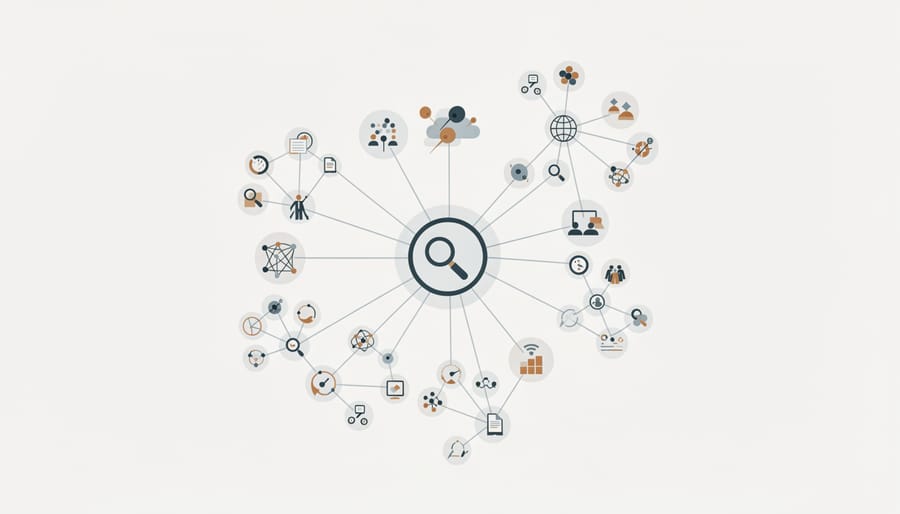
The Google Workspace Pattern: When Entity Signals Misfire
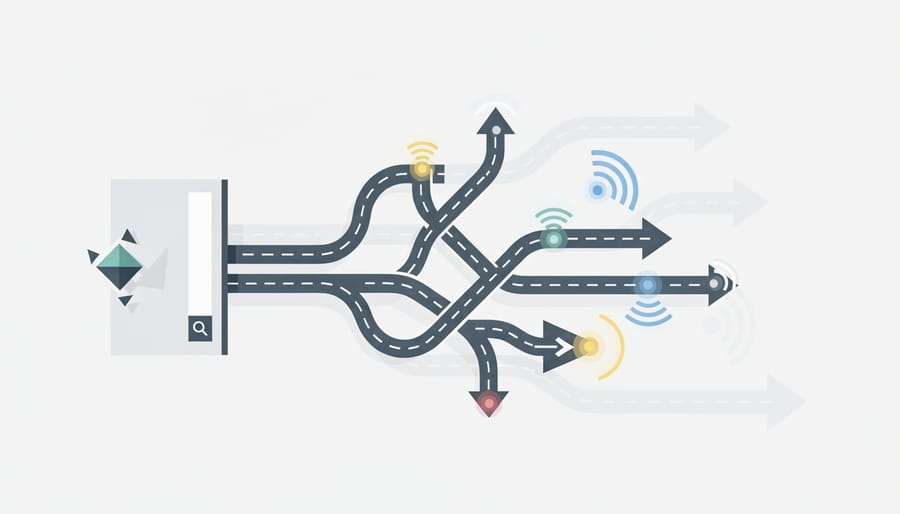
How Core Updates Changed Entity Weighting
Recent core updates reveal a sharp pivot toward entity signals. Google’s September 2023 Helpful Content Update penalized sites relying on exact-match anchor text while rewarding those with consistent brand mentions across authoritative sources—even when those mentions lacked explicit backlinks. Analysis of ranking volatility showed sites with strong entity graphs (Wikipedia entries, Knowledge Panel presence, structured data markup) recovered faster from algorithm turbulence than keyword-optimized competitors.
The March 2024 update doubled down on topical authority clustering. Pages ranking for “Google Workspace” queries increasingly belonged to domains Google recognized as technology authorities through co-citation patterns, author credentials verified via schema markup, and cross-referenced mentions in industry publications. Entity understanding after core updates now factors how often your brand appears alongside established entities in your niche—a relationship graph that traditional keyword research misses entirely.
By August 2024, exact keyword density mattered less than semantic proximity to validated entities. A page mentioning “collaborative productivity suite” alongside recognized tools like Gmail and Drive outranked pages repeating “Google Workspace” twelve times but lacking entity context. Google’s systems now interpret queries through entity lenses first, matching search intent to knowledge graphs before evaluating on-page optimization signals.
What This Tells Us About Google’s Current Priorities
The Workspace ranking pattern reveals that Google privileges established entity graphs—platforms with dense internal cross-references, consistent branding signals, and clear domain authority boundaries. Official documentation and knowledge-base pages from recognized vendors rank aggressively because they satisfy both entity coherence and E-E-A-T signals in core updates.
This explains why niche tutorials often struggle: they lack the entity infrastructure that binds queries to authoritative sources. Google now weights topical hubs over isolated how-to posts, treating entity relationships as ranking priors. The search engine presumes users seeking product terms want canonical answers, not fragmented interpretations.
Understanding how Google’s update types interact shows this isn’t just link equity—it’s semantic positioning. Pages that clearly state their relationship to recognized entities perform better than those assuming algorithmic neutrality.
For practitioners: optimize entity mentions, schema markup, and topical clustering to signal your place in Google’s knowledge graph, not just keyword relevance.
How Entity Shifts Impact Your Link Strategy
Google now evaluates links through an entity lens: it asks whether the linking page and destination share semantic territory, not just whether the anchor text matches a keyword. A backlink from a project-management blog to your Google Workspace explainer carries more weight than a generic business-tools directory listing, even if the directory has higher domain authority. The algorithm measures entity proximity—how closely related the topics, named entities, and vocabulary fields are between source and target.
This shift explains why core updates devaluing links often surprise site owners: links that once passed value now register as contextually irrelevant. Exact-match anchor text from unrelated pages signals manipulation rather than natural citation. Instead, focus on earning links from pages that already mention entities in your semantic cluster—collaboration software, SaaS productivity tools, Google Cloud ecosystem partners. When a page discussing Slack alternatives links to your Workspace guide, Google recognizes the shared entity space and assigns relevance accordingly.
Outdated anchor strategies fail because they ignore the surrounding content. A “Google Workspace tutorial” link embedded in a casino forum post holds near-zero value; the entity mismatch is glaring. Modern link building demands you map your content’s core entities, identify publications covering adjacent topics, and craft outreach that highlights genuine topical overlap. Entity-aware link audits reveal which existing backlinks reinforce your semantic authority and which merely inflate vanity metrics.
Why it’s interesting: This reframes link building from a volume game into a precision exercise in topical alignment.
For: SEO practitioners, content strategists, and founders managing their own backlink profiles.
Building Links That Match Entity Intent
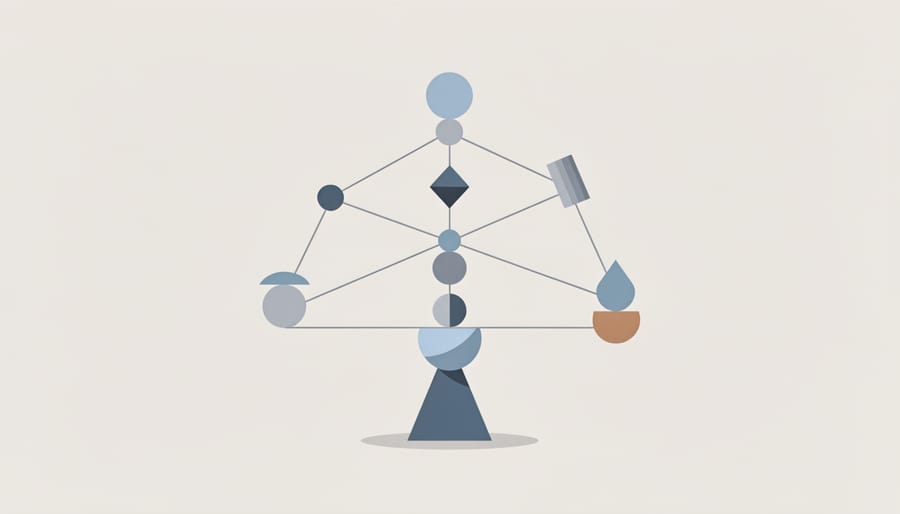
Why Static Links Break Down in Entity-First Search
Traditional link strategies assume stable relationships: anchor text signals topic, target URL delivers relevance, and rankings follow predictably. But entity-first search dissolves those certainties. When Google reinterprets “Google Workspace” from a product feature cluster to a unified productivity entity, inbound links anchored with legacy terms like “G Suite collaboration tools” or “Google Apps integration” suddenly mismatch the entity Google now expects. Fixed URLs pointing to outdated feature pages become dead weight if the entity’s authoritative hub shifts to a consolidated landing page. Static links can’t adapt when entity boundaries evolve—when Google merges overlapping concepts, splits formerly unified topics, or reweights relationships between entities. The liability compounds over time: your backlink profile ossifies while Google’s knowledge graph remains fluid. Adaptive link infrastructure—dynamic anchor strategies, entity-aware URL selection, and context-responsive internal linking—treats links as living connections that reflect current entity understanding rather than historical keyword guesses. For SEOs managing enterprise sites, this means auditing link portfolios not just for authority metrics but for entity alignment, pruning or updating links that anchor to deprecated entity interpretations before they drag rankings down.
Measuring Entity Alignment in Your Backlink Profile
Start by exporting your current backlink profile from tools like Ahrefs, Semrush, or Google Search Console. Download the full list of linking domains and anchor text distributions—you’ll need this raw data to analyze entity signals at scale.
Run your anchor text through an entity extraction API. Google’s Natural Language API or similar tools can identify which entities appear most frequently in your incoming links. Compare these extracted entities against your site’s core topics. If you’re a Google Workspace reseller but your backlinks primarily mention generic “cloud storage” or unrelated SaaS products, there’s a mismatch worth addressing.
Map linking domains to their own topical authority. Use topical clustering tools or manual review to classify whether each linking site operates in your entity neighborhood. A link from a Microsoft 365 comparison site reinforces Google Workspace as your core entity; a link from a generic business blog weakens that signal.
Check for entity dilution in your link portfolio. Calculate what percentage of your backlinks mention your primary entities versus tangential or off-topic terms. If fewer than 40 percent of your links reference your main subject matter, Google may struggle to pinpoint your site’s expertise.
Audit your most powerful links first. Sort backlinks by domain authority or referring domain traffic, then manually verify whether the top 50 linking pages use language and context that aligns with your target entities. High-authority misaligned links can skew Google’s perception more than dozens of low-value relevant ones.
Document patterns in anchor diversity. Entity-aligned profiles typically show varied but semantically related anchor text—”Google Workspace tips,” “Gmail productivity,” “collaborative tools”—rather than exact-match repetition or random phrases. Flag outliers for potential disavowal or outreach correction.
Google’s shift from matching keywords to understanding entities changes how you should approach link building. Instead of chasing anchor text variations, focus on earning links from pages that discuss related entities—industry terms, products, people, and organizations in your topic cluster. Search engines now recognize that a link from a SaaS pricing comparison page or a collaboration tools roundup establishes topical authority for Google Workspace, even without exact-match anchor text.
Your next step: audit your most important pages and list five entities naturally connected to each topic. Then pursue editorial links from content that already discusses those entities, whether through guest contributions, expert quotes, or resource partnerships. This entity-aware strategy aligns your efforts with how Google actually evaluates relevance today.

