

Turn Broken Links Into Backlinks (Before Your Competitors Do)

Find dead pages on authoritative sites in your niche using Ahrefs Site Explorer or Screaming Frog, filtering for 404 errors that still have inbound links pointing at them. Build (or repurpose) a working replacement that matches the original’s topic and depth, then email each linking site with a short, specific note about the dead URL and your alternative. Pair this with brand-mention reclamation, catch unlinked mentions via Google Alerts or Mention.com and ask publishers to wrap your name in an href. Both tactics piggyback on editorial decisions someone has already made, which is why they convert at multiples of cold outreach.
How Broken Link Building Actually Works
Honestly, the pitch writes itself. A page on a trusted site links to something that no longer exists, you have something that does, and you point this out in two sentences. That’s it. Most of the craft sits upstream of the email, in finding the right dead links and building the right replacement. Not in the outreach copy itself.
Quick vocabulary
- Broken-link building
- Pitching your content as a replacement for a dead URL that another site already links to.
- Mention reclamation
- Asking a publisher to wrap an existing, unlinked reference to your brand in an anchor tag.
- Resource page
- A curated list of outbound links on a topic. Linkable by design, and a magnet for 404s as the listed pages age out.
- Replaceability
- How well your content matches the dead URL’s original topic, depth, and format. The single biggest driver of reply rate.
- Unlinked mention
- A reference to your brand, product, or staff in body copy with no hyperlink attached. The lowest-friction link ask there is.

Finding Dead Links Worth Chasing
Start with resource pages and tool roundups in your niche, these link out heavily and age poorly. The Check My Links Chrome extension scans pages in seconds and highlights dead links in red. Useful for spot-checking individual prospects without firing up devtools (which, let’s be honest, nobody wants to do at 9am on a Monday).
Ahrefs Site Explorer’s Best by Links report surfaces your competitors’ highest-authority pages, then filters by HTTP status 404 to isolate broken outbound links they haven’t noticed yet. You’re mining pre-vetted, high-value targets instead of random directories.
Screaming Frog crawls entire domains to map broken internal and external links at scale. Configure it to follow external links one level deep, export the results, and prioritize pages with strong backlink profiles using Majestic or Moz metrics.
Ten placements on maintained resource hubs outperform fifty on dormant listicles. Replaceability is the entire game.
Combine these methods with smart prospecting frameworks that score opportunities by domain authority, relevance, and replaceability, chase links on pages that still attract traffic and editorial updates. Not abandoned blogs. Quality beats volume, every time. Ten placements on maintained resource hubs outperform fifty on dormant listicles.
| Signal | Worth pursuing | Skip |
|---|---|---|
| Page freshness | Updated in the last 12 months, comments still trickling in | Last updated 2017, comments closed, author bio dead |
| Backlink profile | DR 40+ with referring domains gained in the past year | DR 20 sitting flat for three years, no inbound momentum |
| Topic match | Your replacement answers the same question with same depth | You’d need to invent or repurpose content from a different niche |
| Editorial signal | Real byline, active newsletter, recent social posts from the editor | Generic “admin” byline, no recent activity anywhere |
| Other outbound links | Curated, relevant, mostly still live (signals an editor who cares) | Half the outbound links are also dead, page is abandoned |
The Replacement Content That Gets Links
Not every piece of content makes a worthy replacement. The webmaster linking to the broken resource chose it for a reason, it served their audience. Your replacement must match or exceed that original value.
Start by understanding context. Read the linking page carefully, all of it, not just the paragraph around the dead link. What point was the author making? What gap does the dead link leave? A blog post citing “10 SEO tools” needs a tool recommendation, not a theory explainer. A research roundup expects data. Not opinion.
Pro tip
Always pull the dead URL from the Wayback Machine before you draft the replacement. The original title, headings, and word count tell you exactly what bar you have to clear. I’ve watched campaigns die because someone pitched a 600-word how-to as a replacement for a 4,200-word data study.
Your content should answer the same question the original did, ideally with updated information or a fresh angle. Outdated 2018 statistics? Offer 2024 data. Disappeared tool page? Provide a live alternative with similar features. The Wayback Machine is essential here. Pull a snapshot of the dead URL from the year it was getting links (the year it earned the links, specifically, not whenever it died), and you’ll see exactly what the original delivered. Match it. Then beat it.
Relevance trumps perfection. A slightly less comprehensive resource that fits the linking page’s specific context outperforms a sprawling guide that forces the reader to hunt for the relevant section. Scan the paragraph surrounding the broken link and mirror its focus.
If you lack suitable existing content, consider creating linkable assets specifically designed to replace high-value broken links. A single well-researched resource can secure dozens of placements if it fills a common gap in your niche.
Freshness signals quality. Recent publication dates, current examples, and functioning screenshots all reassure webmasters that your replacement won’t break next month.
Brand Mention Reclamation: Claiming Links You’ve Already Earned
Tracking Down Unlinked Mentions
Unlinked mentions, when someone names your brand, product, or team member without adding a hyperlink, represent low-effort link opportunities. The mention already exists. You just need to request the link.
Prospecting pipeline
Start with search operators to surface existing mentions. Boring, but it works. site:example.com "YourBrand" -site:yourdomain.com finds where a specific site mentions you without linking back. Substitute individual site searches with broader queries like "YourBrand" -site:yourdomain.com inurl:blog to scan across publications. Add quotation marks around multi-word brand names for precision, otherwise Google interprets the phrase loosely and you’ll get a lot of false positives.
For ongoing monitoring, set up Google Alerts for your brand name, flagship products, and executive names. Configure alerts to deliver daily or weekly digests, then manually check each result for missing links. Google Alerts catches new mentions but misses depth, supplement with tools like Mention, Brand24, or Ahrefs’ Content Explorer, which offer better filtering and historical search.
Track competitor mentions too. If an article covers alternatives in your space and links to rivals but not you, that’s a natural inclusion opportunity. Export results weekly, deduplicate against your backlink profile using Ahrefs or Semrush, then prioritize high-authority domains for outreach.

The Low-Friction Outreach Email
Keep the ask minimal. Seriously, minimal. Your email should emphasize that you’re making their job easier, not adding work. Open with context, mention the specific page, the unlinked mention, and why you noticed it. Then make the request clear, they only need to wrap your brand name in an href tag. A 30-second edit that improves user experience for their readers who want to learn more.
Frame it as mutual benefit. Readers get clickable context, their content becomes more useful, and link equity flows naturally. Avoid demanding anchor text changes or new paragraphs. If you’ve recently published relevant content that strengthens the mention’s value, note it briefly but don’t require them to link there instead.
Close with appreciation and a simple yes/no. Many webmasters will comply because the friction is negligible and the logic is sound. For proven frameworks and subject line tactics that increase response rates, see these outreach templates that work.
Test your pitch on 5-10 prospects before scaling. Track open rates and responses to refine messaging. The best emails feel like helpful suggestions. Not SEO transactions. Editors can smell the difference from the subject line.
Where These Tactics Fit in Your Link Strategy
Broken link building and mention reclamation work best as complements to outreach-driven tactics like guest posting or original research promotion. They’re less scalable than content-led strategies but demand minimal creative work, making them ideal when your team has research bandwidth but limited editorial capacity.
Note
The biggest hidden cost of these tactics isn’t the email, it’s the maintenance. A link earned today against a product page that gets renamed in six months is a link that quietly stops working. Build a quarterly check into your workflow before you scale the outreach.
Prioritize these tactics early in your strategy when you need placements on established sites without pitching original content. They’re particularly effective for newer brands with limited domain authority, since you’re offering genuine value by fixing publishers’ maintenance problems rather than asking for editorial favor. Industry response-rate benchmarks (e.g., Backlinko’s outreach study) put broken-link outreach in the 5-15% reply range and mention reclamation closer to 20-40%, though both vary widely by niche and the quality of your replacement content.
The challenge. Most links you earn through these methods become static the moment they go live. If the destination page changes or your site restructures, the link loses relevance or breaks entirely. This is where control matters. Services that provide editable placements let you update link targets without re-pitching publishers, preserving the SEO equity you worked to earn. Hetneo’s technology addresses this by allowing anchor text and destination updates on placed links, turning one-time wins into long-term assets.
To measure link building ROI properly, track not just placement rates but link longevity and relevance decay over time. A fixed link to a discontinued product page delivers zero value six months later. An editable one redirects traffic indefinitely.
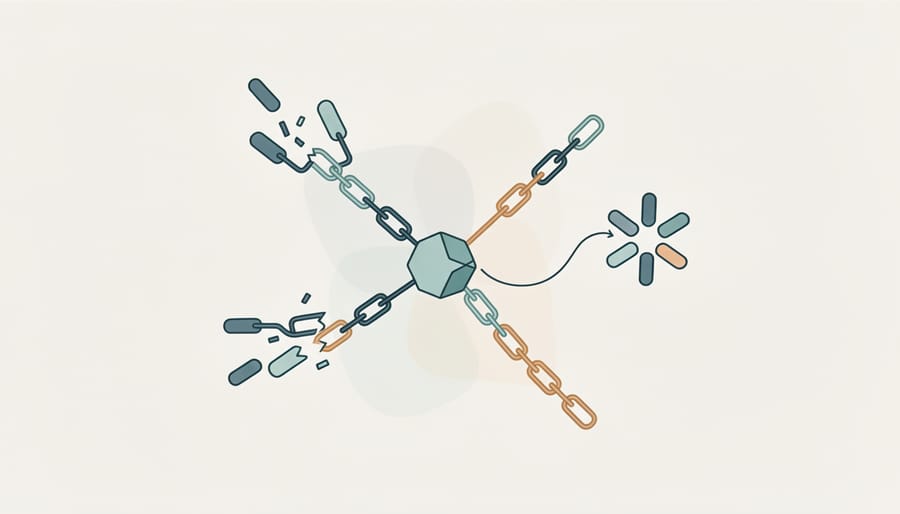
Common Mistakes That Kill Your Success Rate
Look, most broken link campaigns fail before the first email even arrives. Generic templates (“Hey, I noticed a broken link on your site…”) signal automation and get deleted on sight. Personalize each outreach, reference the specific page, explain why the dead link matters to that audience, and show you’ve actually read the content (not just skimmed the H1).
Chasing irrelevant broken links wastes time. A dead resource on a marketing blog won’t value your developer tutorial, even if it’s objectively better. Match topic, audience, and content depth before investing in replacement content.
Thin replacements torpedo credibility. If the original was a 3,000-word research report, your 400-word listicle won’t cut it. Aim to match or exceed the original’s utility, format, and comprehensiveness.
Transactional outreach ignores the relationship layer. Site owners remember who only contacts them to ask for something. Comment on their work, share their content, or offer value before pitching a link swap.
Single-touch campaigns leave wins on the table. Most prospects need 2-3 courteous follow-ups spaced a week apart. People get busy, emails get buried, persistence without pressure converts stragglers into placements.
Each mistake compounds. Generic outreach to an irrelevant link promoting thin content with zero follow-up guarantees failure. Fix one variable at a time, test systematically, and measure response rates to isolate what moves the needle for your niche.
Both broken link building and mention reclamation are opportunistic plays. You’re not cold-pitching a stranger, you’re offering value where a real gap already exists. That makes your outreach warmer, your conversion rates higher, and your links more genuinely earned.
The work above is also work we do for clients on a recurring basis. If running a broken-link audit, contacting linkers, suggesting replacements, and tracking placement isn’t where you want to spend the ten or twelve hours a month it actually takes, our managed link building retainer covers exactly this workflow plus the brand-mention reclamation cadence described above. Same opportunistic plays, run by people whose calendar is built for it.
✓
Worth your time when
- ›You already have research bandwidth but limited editorial capacity
- ›You’re newer and lack the DR to pitch cold guest posts
- ›You have existing content that fills a known gap in your niche
- ›Mention monitoring is already running, reclamation is a free win
- ›You can commit to quarterly maintenance on placed links
✗
Outsource it when
- ›You need volume that no single person can sustain
- ›You don’t have the existing content library to back up the pitches
- ›You’re scaling into a niche your team doesn’t know cold
- ›Inbox management would eat into higher-leverage work
- ›You want editable, maintainable placements at scale (managed networks beat ad-hoc reclamation here)
Start with mention reclamation. It’s faster to execute, requires fewer tools, and targets sites that already know your brand. Once you’ve banked those wins and refined your pitch template, scale into broken link prospecting to tap a wider pool of link opportunities. Both tactics reward resourcefulness over budget, which makes them pretty much ideal for lean teams and bootstrapped projects. The key is consistent execution. Not heroic effort. Block a few hours each month, run your queries, send your emails, and watch your backlink profile grow without chasing vanity metrics or inflated outreach lists.
Try it this week
Run one mention-reclamation sweep. Send ten emails. See what comes back.
-
1
Run the search operator"YourBrand" -site:yourdomain.comand skim the first 50 results. Flag any that mention you without linking. -
2
Pick the ten highest-authority sites. Find a real editor name (LinkedIn, masthead, byline). No “info@” sends. -
3
Send the template. Log opens and replies. Whatever your reply rate is, that’s your baseline for every campaign after this one.
Ten emails is enough to learn whether your pitch lands. Stop strategizing and send them.

