

Turn Broken Links Into Backlinks (Before Your Competitors Do)

Find dead pages on authoritative sites in your niche using tools like Ahrefs Site Explorer or Screaming Frog, filtering for 404 errors that still have inbound links pointing to them. These broken destinations represent opportunities: the original content had value worth linking to, and you can offer a working replacement.
Audit each dead page to understand what it covered, then identify comparable content on your site or create a superior resource that fills the gap. Reach out to sites linking to the broken URL with a brief note acknowledging the dead link and suggesting your piece as a functional alternative that serves their readers better.
Combine this with brand mention reclamation: set up Google Alerts or use tools like BuzzSumo to catch unlinked mentions of your company, then request link additions from publishers already discussing you. Both tactics exploit existing editorial decisions rather than cold pitching, dramatically improving success rates.
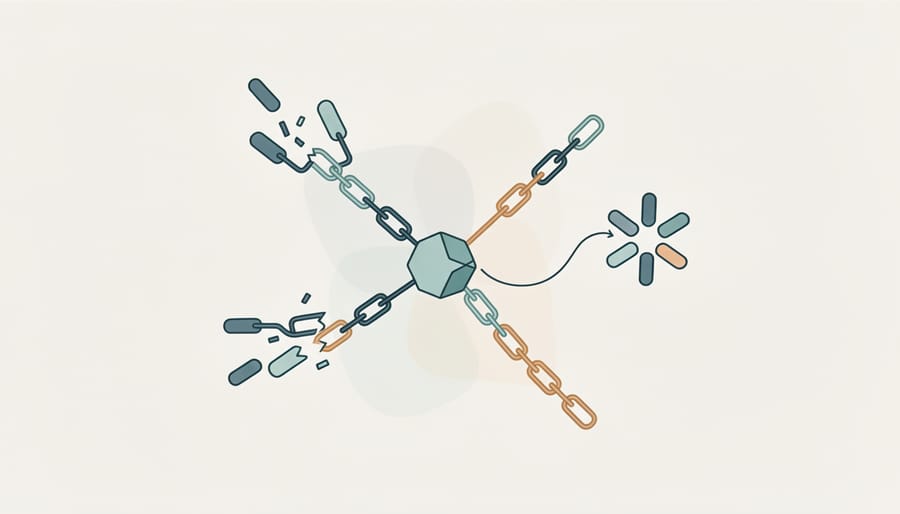
The core weakness of traditional link building is fragility. Pages get deleted, domains expire, and site migrations break URLs, turning earned links into dead ends. Editable link technology addresses this by letting publishers update destinations without touching their HTML, preserving link equity when content moves and enabling real-time optimization of where traffic flows.
How Broken Link Building Actually Works

Finding Dead Links Worth Chasing
Start with resource pages and tool roundups in your niche—these link out heavily and age poorly. Use Check My Links (Chrome extension) to scan pages in seconds; it highlights dead links in red so you can spot opportunities without opening devtools. For: content marketers hunting quick wins.
Ahrefs Site Explorer and the Best by Links report surface your competitors’ highest-authority pages, then filter by HTTP status 404 to isolate broken outbound links they haven’t noticed yet. Why it’s interesting: you’re mining pre-vetted, high-value targets instead of random directories.
Screaming Frog crawls entire domains to map broken internal and external links at scale. Configure it to follow external links one level deep, export the results, and prioritize pages with strong backlink profiles using Majestic or Moz metrics. For: technical SEOs comfortable with spreadsheet workflows.
Combine these methods with smart prospecting frameworks that score opportunities by domain authority, relevance, and replaceability—chase links on pages that still attract traffic and editorial updates, not abandoned blogs. Quality beats volume: ten placements on maintained resource hubs outperform fifty on dormant listicles.
The Replacement Content That Gets Links
Not every piece of content makes a worthy replacement. The webmaster linking to the broken resource chose it for a reason—it served their audience. Your replacement must match or exceed that original value.
Start by understanding context. Read the linking page carefully. What point was the author making? What gap does the dead link leave? A blog post citing “10 SEO tools” needs a tool recommendation, not a theory explainer. A research roundup expects data, not opinion.
Your content should answer the same question the original did, ideally with updated information or a fresh angle. Outdated 2018 statistics? Offer 2024 data. Disappeared tool page? Provide a live alternative with similar features. The goal isn’t just equivalence—it’s improvement.
Relevance trumps perfection. A slightly less comprehensive resource that fits the linking page’s specific context outperforms a sprawling guide that forces the reader to hunt for the relevant section. Scan the paragraph surrounding the broken link and mirror its focus.
If you lack suitable existing content, consider creating linkable assets specifically designed to replace high-value broken links. A single well-researched resource can secure dozens of placements if it fills a common gap in your niche.
Freshness signals quality. Recent publication dates, current examples, and functioning screenshots all reassure webmasters that your replacement won’t break next month.
Brand Mention Reclamation: Claiming Links You’ve Already Earned
Tracking Down Unlinked Mentions
Unlinked mentions—when someone names your brand, product, or team member without adding a hyperlink—represent low-effort link opportunities. The mention already exists; you just need to request the link.
Start with Google search operators to surface existing mentions. Use site:example.com “YourBrand” -site:yourdomain.com to find where a specific site mentions you without linking back. Substitute individual site searches with broader queries like “YourBrand” -site:yourdomain.com inurl:blog to scan across publications. Add quotation marks around multi-word brand names for precision.
Why it’s interesting: Converts existing goodwill into measurable SEO value without cold pitching.
For ongoing monitoring, set up Google Alerts for your brand name, flagship products, and executive names. Configure alerts to deliver daily or weekly digests, then manually check each result for missing links. Google Alerts catches new mentions but misses depth—supplement with tools like Mention, Brand24, or Ahrefs’ Content Explorer, which offer better filtering and historical search.
For: SEOs managing multiple brands or product lines who need systematic discovery workflows.
Track competitor mentions too. If an article covers alternatives in your space and links to rivals but not you, that’s a natural inclusion opportunity. Export results weekly, deduplicate against your backlink profile using Ahrefs or Semrush, then prioritize high-authority domains for outreach.

The Low-Friction Outreach Email
Keep the ask minimal. Your email should emphasize that you’re making their job easier, not adding work. Open with context: mention the specific page, the unlinked mention, and why you noticed it. Then make the request clear—they only need to wrap your brand name in an href tag, a 30-second edit that improves user experience for their readers who want to learn more.
Frame it as mutual benefit: readers get clickable context, their content becomes more useful, and link equity flows naturally. Avoid demanding anchor text changes or new paragraphs. If you’ve recently published relevant content that strengthens the mention’s value, note it briefly but don’t require them to link there instead.
Close with appreciation and a simple yes/no. Many webmasters will comply because the friction is negligible and the logic is sound. For proven frameworks and subject line tactics that increase response rates, see these outreach templates that work.
Test your pitch on 5–10 prospects before scaling. Track open rates and responses to refine messaging. The best emails feel like helpful suggestions, not SEO transactions.
Where These Tactics Fit in Your Link Strategy
Broken link building and mention reclamation work best as complements to outreach-driven tactics like guest posting or original research promotion. They’re less scalable than content-led strategies but demand minimal creative work, making them ideal when your team has research bandwidth but limited editorial capacity.
Prioritize these tactics early in your strategy when you need placements on established sites without pitching original content. They’re particularly effective for newer brands with limited domain authority, since you’re offering genuine value by fixing publishers’ maintenance problems rather than asking for editorial favor. Expect a 5-15% success rate for broken link outreach and 20-40% for mention reclamation, depending on your target’s responsiveness and the quality of your replacement content.
The challenge: most links you earn through these methods become static the moment they go live. If the destination page changes or your site restructures, the link loses relevance or breaks entirely. This is where control matters. Services that provide editable placements let you update link targets without re-pitching publishers, preserving the SEO equity you worked to earn. Hetneo’s technology addresses this by allowing anchor text and destination updates on placed links, turning one-time wins into long-term assets.
To measure link building ROI properly, track not just placement rates but link longevity and relevance decay over time. A fixed link to a discontinued product page delivers zero value six months later; an editable one redirects traffic indefinitely.
For: SEOs managing diverse portfolios, growth marketers optimizing acquisition costs, anyone treating links as infrastructure rather than vanity metrics.
Common Mistakes That Kill Your Success Rate
Most broken link campaigns fail before the first email arrives. Generic templates (“Hey, I noticed a broken link on your site…”) signal automation and get deleted. Personalize each outreach—reference the specific page, explain why the dead link matters to that audience, and show you’ve read the content.
Chasing irrelevant broken links wastes time. A dead resource on a marketing blog won’t value your developer tutorial, even if it’s objectively better. Match topic, audience, and content depth before investing in replacement content.
Thin replacements torpedo credibility. If the original was a 3,000-word research report, your 400-word listicle won’t cut it. Aim to match or exceed the original’s utility, format, and comprehensiveness.
Transactional outreach ignores the relationship layer. Site owners remember who only contacts them to ask for something. Comment on their work, share their content, or offer value before pitching a link swap.
Single-touch campaigns leave wins on the table. Most prospects need 2-3 courteous follow-ups spaced a week apart. People get busy, emails get buried—persistence without pressure converts stragglers into placements.
Each mistake compounds. Generic outreach to an irrelevant link promoting thin content with zero follow-up guarantees failure. Fix one variable at a time, test systematically, and measure response rates to isolate what moves the needle for your niche.
Both broken link building and mention reclamation are opportunistic plays: you’re not cold-pitching a stranger, you’re offering value where a real gap already exists. That makes your outreach warmer, your conversion rates higher, and your links more genuinely earned. Start with mention reclamation—it’s faster to execute, requires fewer tools, and targets sites that already know your brand. Once you’ve banked those wins and refined your pitch template, scale into broken link prospecting to tap a wider pool of link opportunities. Both tactics reward resourcefulness over budget, making them ideal for lean teams and bootstrapped projects. The key is consistent execution: block a few hours each month, run your queries, send your emails, and watch your backlink profile grow without chasing vanity metrics or inflated outreach lists.

