

How Google’s Three Update Types Work Together to Filter Your Site

Google ships three flavors of algorithm update, core, spam, and the helpful-content signal-set that’s now folded into core, and they routinely catch the same site in overlapping ways. A traffic drop is rarely one thing. Usually two filters firing at once, sometimes three, each weighing different signals and each needing a different fix. The mechanics matter because excellent content won’t rescue you from a spam penalty, and a clean backlink profile won’t fix shallow expertise (I’ve watched both of those play out across the last four or five core rollouts). This guide walks through what each system targets, how they stack, and how to read the pattern in your own Search Console data.
What Each Update Actually Targets
Core Updates: The Quality Baseline
Core updates evaluate broad quality signals across your entire site, content depth, expertise demonstration, user experience, and trustworthiness. Google runs these several times per year to recalibrate which sites deserve to rank for competitive queries. They cast the widest net, a core update can affect any page type, any topic, and any industry, which is why they function as the foundational quality filter against which the other systems operate.
Quick vocabulary
- Core update
- A broad recalibration of how Google ranks pages for quality, expertise, and trust. Site-wide in effect, runs every few months.
- Spam update
- A targeted enforcement pass aimed at violations of the spam policies, link schemes, cloaking, scraped content, doorway pages.
- Helpful-content system
- The signal-set that demotes pages written primarily for search engines rather than people. Folded into the core ranking system in March 2024.
- SpamBrain
- Google’s machine-learning spam-detection system. Runs continuously and powers most algorithmic spam penalties.
- Link spam update
- A spam-update sub-class that neutralizes the ranking value of links Google’s classifiers flag as manipulative, rather than penalizing the receiving site directly.
Unlike spam updates that target specific manipulative tactics, core updates ask a fairly simple question, does this site genuinely serve searchers better than the alternatives that rank for the same queries. Sites hit by core often see gradual, site-wide ranking shifts rather than sudden drops on isolated pages. That site-wide signature is the tell. Or at least it usually is. If your whole property slid two positions across a thousand keywords in the same window, you’re looking at a core reassessment of overall authority, not a page-level issue.
The Helpful-Content Signal-Set (Now Inside Core)
For the back half of 2022 and most of 2023, the helpful-content system ran as a standalone classifier that could demote sites for “content written primarily for search engines.” In March 2024, Google folded those signals into the core ranking system (the rollout took about 45 days to fully unspool, which already made the before/after read messy). Practically, that means you won’t see standalone “Helpful Content Update” rollouts anymore. The same signals are still evaluated, but they ship as part of broader core updates and they’re a lot harder to isolate from a pure quality-baseline shift.
Recommendation content, product reviews, comparison guides, “best of” lists, sits inside this signal-set too. Google specifically tests whether the author has demonstrable first-hand experience with the thing they’re recommending. Original photos, usage details across time, comparative testing methodology, evidence of subject matter expertise. The usual stuff. Sites that publish thin affiliate content rehashing manufacturer specs without genuine evaluation are the obvious target. If traffic dropped on review-heavy templates but not informational content, the helpful-content layer is almost certainly what caught you, even though the rollout was branded as a core update.
Spam Updates: The Manipulation Detector
Spam updates target deliberate manipulation, cloaking, scraped content, keyword stuffing, hidden text, expired-domain abuse, and link schemes. Unlike core updates that assess helpfulness, spam is closer to binary, sites either violate Google’s published spam policies or they don’t. Triggers include automated content generation, sneaky redirects, and link manipulation designed to game rankings.
Google’s SpamBrain system now detects most violations algorithmically and issues penalties that suppress or remove pages from search results entirely. The link spam update is a specialized sub-class, instead of suppressing the target site, it neutralizes the link’s ranking value (which is exactly what makes it so hard to diagnose from inside GSC). That’s why some sites mysteriously lose authority signal without ever receiving a manual action. So if your traffic dropped and you’ve been running aggressive link tactics like buying placements, churning out spun articles, hiding keywords, spam is almost certainly the culprit, not core.
Excellent content won’t rescue you from a spam penalty, and a clean backlink profile won’t fix shallow expertise flagged by core.
How These Updates Interact (Not Just Stack)
How the Three Layers Filter Your Site
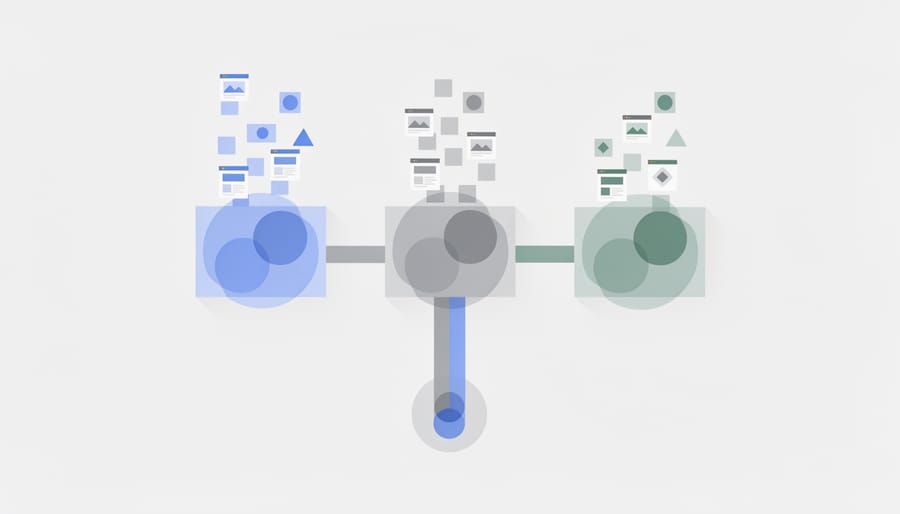
The mental model that helps most is treating the three systems as sequential filters rather than independent dice rolls. Each page passes through all three. A single failure on any layer suppresses the page’s visibility, and a failure on the core layer can suppress your entire site at once.
How the three layers stack
Overlapping Penalties: When Multiple Filters Catch You
A regional home-services site was hit by the September 2023 core update, then flagged again by reviews in November. The diagnosis, thin service-area pages (core) plus boilerplate customer testimonials lacking detail or verification (reviews-signal layer). Recovery required rebuilding location pages with genuine utility while replacing generic star ratings with narrative, first-person accounts. Two layers, two parallel remediation tracks.
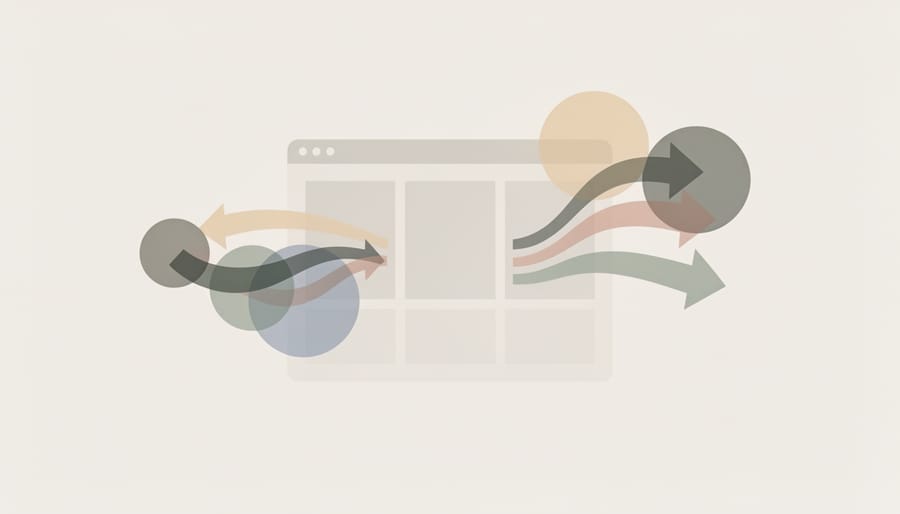
An affiliate comparison site saw traffic collapse across two waves, helpful-content signals in September 2023, then spam in October. The culprit, AI-generated product roundups (helpful-content) combined with doorway pages targeting slight keyword variations (spam). The site faced both sitewide vs page-level penalties, thin content devalued entire categories while duplicate doorways triggered surgical removals from the index.
A health-information portal lost 60 percent of organic traffic when core, helpful-content, and reviews-signal layers converged. The triple penalty stemmed from outdated medical articles (core quality signals), lack of author credentials (helpful-content E-E-A-T requirements), and unverified user ratings on wellness products (reviews-signal). The remediation roadmap prioritized content pruning first, removing or consolidating 400 low-value pages, then layered in physician bylines and replaced star widgets with detailed patient stories. Three layers, three months minimum before any signal of recovery showed up.
When multiple filters activate, recovery timelines extend because each system evaluates on different cadences. Core runs every few months (the gaps have ranged from roughly 70 to 140 days across the rollouts I’ve tracked since 2022). Spam is continuous. The helpful-content signals are baked into core, so they only re-evaluate when core does. Strategic triage means addressing the broadest penalty first, then refining for the narrower signals.
Pro tip
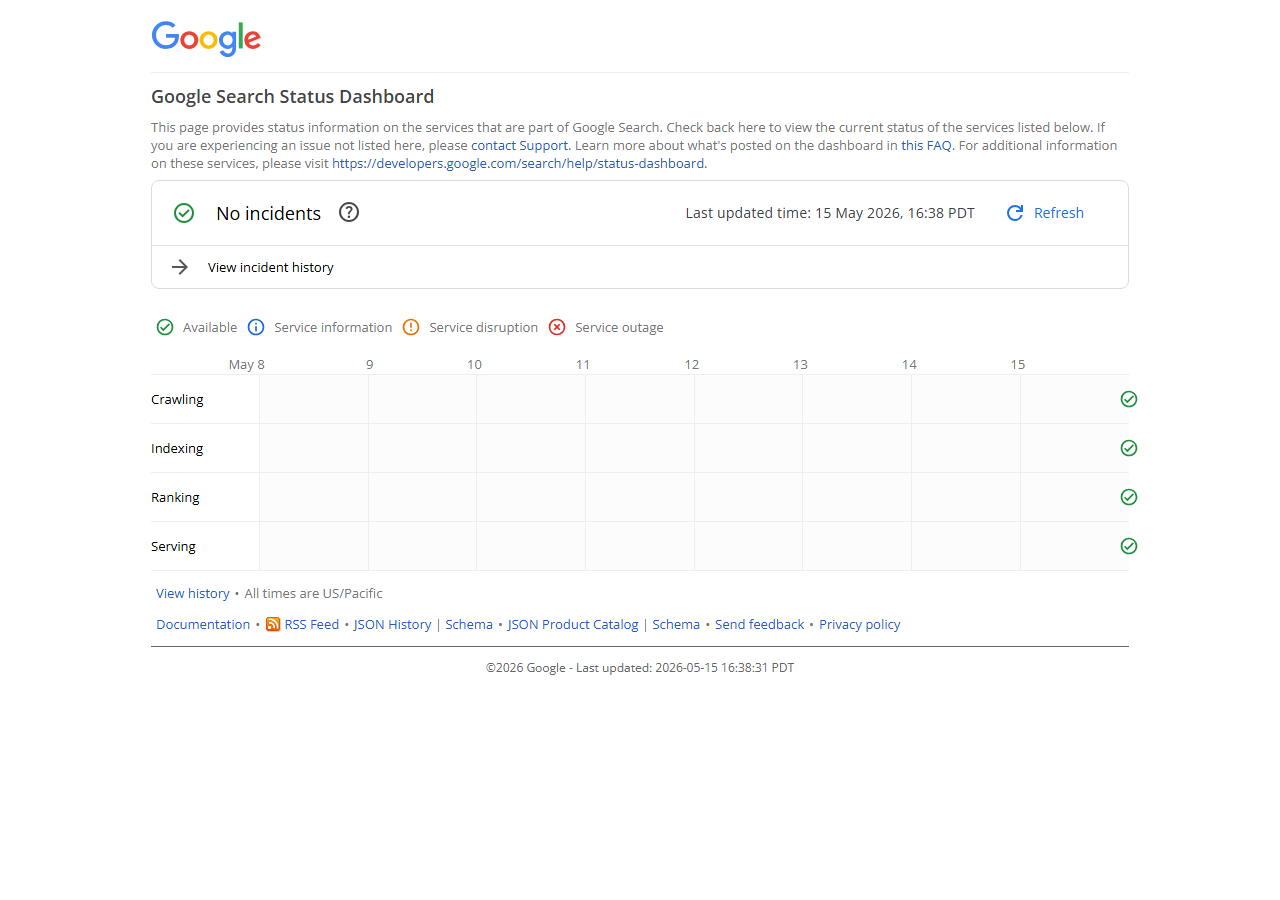
Anchor every diagnosis to Google’s Search Status Dashboard. It’s the only authoritative record of when each rollout started and ended. Cross-reference your traffic drop against the exact start date, not the announcement date, those can differ by 48 hours and that gap is usually what trips people up when they’re trying to assign causation.
Recovery Blocking: Why Fixing One Doesn’t Fix All
Unresolved violations in one update category actively suppress recovery signals from improvements in another. A site penalized for thin reviews content will see limited traffic gains from spam cleanup until the review-quality issues are fixed, even if the spam work was exemplary. This blocking effect occurs because how Google determines penalty scope creates persistent trust deficits that override incremental wins elsewhere.
The mechanism, core updates establish baseline site quality expectations. When a site fails that threshold, Google maintains skeptical scoring until comprehensive improvement is demonstrated across every flagged dimension. Fixing spam but leaving poor reviews signals surface-level compliance rather than fundamental quality commitment. Recovery requires parallel remediation because the systems cross-check signals, technical spam cleanup alone won’t restore rankings if content quality remains substandard.
Strategic takeaway, audit all three update types simultaneously before implementing fixes. A site hit by multiple penalties needs a unified recovery roadmap, not sequential patches. Prioritize issues based on severity and interdependence, recognizing that the most visible problem may not be the primary blocker.
So the practical implication is that any diagnosis worth its name has to read all three layers at once, not in sequence. Looking at one and assuming the others are fine. That’s how teams end up six months into a remediation track that addresses the wrong signal-set.

Diagnosing Which Update Hit You
Timeline Pattern Recognition
Cross-reference your Search Console traffic drop dates against Google’s official update history. Start with the Search Status Dashboard and third-party trackers like Search Engine Roundtable’s confirmed rollout calendar. Most core updates span 1–2 weeks. If your decline started midway through that window, you’re likely affected.
Compare your drop pattern to peer sites in your niche using visibility tools. Simultaneous ranking shifts across multiple domains signal a broad algorithmic change rather than a site-specific penalty. Document the specific pages that lost ground. Well, document the templates more than the individual URLs, the URL list gets unwieldy fast. Product reviews dropping during a core update with strong helpful-content emphasis confirm the cause, while homepage authority losses point to core quality signals more broadly. Timing alone doesn’t prove causation, but a sharp decline beginning within 48 hours of an announced rollout pretty much warrants deeper content and link-quality audits.
Content Pattern Analysis
Track which sections of your site lost rankings to identify the system at work. Product pages dropping signals a reviews-content issue, thin blog posts point to core, aggressive affiliate redirects suggest spam. Google applies different lenses to different content templates, so a mixed-content site can be flagged by multiple systems simultaneously.
Run a URL-level audit grouped by template type, category pages, reviews, blog posts, landing pages. If only your product-review pages tanked while editorial content held steady, the helpful-content layer caught you. Site-wide traffic collapse with no template pattern usually means core quality issues. Sudden complete deindexing is spam, almost always.
Most diagnostic confusion stems from treating all drops as one problem. Sites with page-level quality issues in reviews but strong informational content need surgical fixes, not wholesale rewrites. Segment your analytics by template and publication date, recently published thin content often triggers faster demotion than older pages grandfathered through previous updates.
Note
Competitor movement narrows the diagnostic window. If direct competitors dropped while unrelated domains rose, you’re probably seeing a core rebalancing of topical authority. When low-quality sites in your niche all fell together, spam enforcement is probably active. Tracking 5–10 comparable sites across updates is usually enough to read the pattern within the first week of a rollout.
Strategic Responses for Each Scenario
Update-by-Update Recovery Paths
The same diagnostic that tells you which system caught you also tells you what kind of work you’re signing up for. The three paths look superficially similar from outside but differ sharply in scope, cadence, and signal of recovery.
| Update type | Signals it weighs | Recovery path | Realistic timeline |
|---|---|---|---|
| Core update | Site-wide quality, expertise demonstration, user experience, trust signals, topical authority | Comprehensive content quality lift, prune thin pages, deepen expertise, fix navigation and discoverability | 2–3 core cycles (6–9 months minimum) |
| Helpful-content signals (inside core) | “Search-engine-first” content patterns, missing first-hand experience, thin affiliate roundups, weak E-E-A-T | Rebuild each affected page around documentable testing, author credentials, original media, methodology disclosure | Re-evaluated with each core rollout (3–6 months) |
| Spam update (SpamBrain) | Link schemes, scraped/auto-generated content, cloaking, doorway pages, hidden text, sneaky redirects | Backlink audit and disavow, delete or rewrite thin pages, remove cloaking and doorways, submit reconsideration if manual action present | Weeks for algorithmic; manual action requires Google review |
| Link spam update | Manipulative inbound and outbound link patterns, anchor-text manipulation, paid-link networks | Disavow affected sources, rebuild around topically relevant editorial placements, slow velocity, diversify anchors | Continuous, re-evaluated as classifier re-scores links |
Core Update Recovery: Improving Helpfulness Signals
Recovery starts with understanding whether penalties are sitewide or page-specific, then systematically addressing the helpfulness signals Google prioritizes. Focus content improvements on demonstrating first-hand expertise, replace generic descriptions with specific use cases, original testing results, or direct comparisons. Add author credentials where relevant, showing why you’re qualified to write about the topic.
Improve utility by answering follow-up questions users actually ask. Check the “People Also Ask” boxes and forum discussions to find gaps your content doesn’t address. Cut filler paragraphs that repeat what’s already said elsewhere. Technical fixes matter too, ensure your best content is easily discoverable through clear navigation and internal linking, not buried three clicks deep. Remove or consolidate thin pages that dilute your site’s overall quality signal.
For diagnosis, pull Search Console data around update dates, segment by page type, and identify patterns. Recovery typically takes 2–3 core updates (6–9 months minimum, and honestly that’s the floor not the median) even after improvements ship. Pages that genuinely improved still have to wait for the next core rollout for the new signals to actually get priced in.
Reviews-Signal Recovery: Demonstrating Real Experience
Reviews-signal guidance has consistently emphasized “demonstrable expertise,” content that proves you’ve actually used the product or service. Recovery requires shifting from aggregated opinion to first-hand evidence, dated purchase receipts, comparison photos showing real-world wear patterns, video unboxings with timestamp metadata, test results with methodology disclosed. For services, document your actual client engagement, include case timelines, reference specific project constraints you navigated.
This matters because core now penalizes thin affiliate content masquerading as reviews. The reviews-signal layer specifically rewards proof of direct experience. Diagnostic tip, if your review could have been written using only manufacturer specs and a few Amazon comments, it lacks the experiential signal Google now requires. Recovery means rebuilding each review around a documentable test or engagement, not just rewriting introductions.
Spam Penalty Removal: Clean Link Profiles and Content
Google’s spam classifiers flag link schemes, scraped content, keyword stuffing, cloaking, and auto-generated text. Start by running a backlink audit through Search Console or third-party tools to identify paid links, blog networks, or irrelevant directories. Disavow toxic domains that you can’t manually remove, then submit a reconsideration request if you’ve received a manual action notice.
For content issues, search for thin pages with minimal original value, duplicate product descriptions, AI-generated filler. Delete or substantially rewrite flagged pages rather than leaving them live. Check for hidden text, misleading redirects, or doorway pages created solely for search engines. Algorithmic spam penalties typically lift within weeks of cleanup if you’ve removed the core manipulative elements, but manual actions require Google’s review team to approve your fixes. Monitor Search Console’s manual actions panel and organic traffic patterns to confirm recovery before scaling new content or link-building efforts.
Link Building in a Multi-Update Environment
Modern link building demands a three-dimensional strategy that simultaneously satisfies core quality signals, avoids spam triggers, and aligns with reviews-signal credibility standards. Each acquired link now carries compounded risk and opportunity across all three systems.
Start with anchor text distribution. Exact-match anchors that once boosted rankings now trip spam filters when overused, while generic phrases like “click here” fail to signal topical authority that core rewards. The resilient approach is conversational anchors that naturally incorporate semantic variations. A finance site benefits more from “investment strategies for volatile markets” than “best investment strategies,” because the former signals specific expertise without manipulation patterns.
Context matters more than volume. A single link from a page demonstrating E-E-A-T signals like author credentials, cited sources, updated content, carries more core-aligned authority than dozens from thin affiliate roundups that the spam classifier devalues. Prioritize placements where your content genuinely extends the conversation, not where it interrupts it.
Content relevance creates update-resistant stability. Links from topically adjacent pages build semantic neighborhoods that core interprets as legitimate expertise clusters. A SaaS tool linking from productivity blogs, remote-work guides, and business-automation resources creates a coherent authority pattern. Random links from unrelated niches trigger spam review even when manually placed.
Velocity and timing require restraint. Sudden link spikes after quiet periods flag manipulation-detection systems, while steady, earned acquisition reflects organic growth patterns. Document your outreach and content marketing efforts to distinguish strategic campaigns from artificial schemes if manual review occurs.
Wait It Out or Actively Recover?
Not every traffic drop deserves a full remediation sprint. Some shifts are minor rebalancing that the next core rollout will partially undo on its own. Others are structural and won’t fix themselves no matter how long you wait. Reading which situation you’re in determines whether you commit resources now or hold position.
✓
Active recovery makes sense when
- ›Drop exceeds 25–30% site-wide and persists past the rollout window
- ›Specific templates collapsed (reviews, category pages) while others held
- ›Search Console flags a manual action or visible spam signals
- ›Diagnosable structural issues, thin pages, missing authorship, manipulated links
- ›Multiple systems caught you and the cascade is suppressing every metric
✗
Wait it out when
- ›Drop is under 10–15% and clustered to a handful of queries
- ›Peer sites moved in the same direction (broad rebalancing, not site-specific)
- ›No diagnosable structural issue surfaced in the audit
- ›Rollout is still in progress (volatility is normal in the first 7–10 days)
- ›You’d be remediating for a pattern that can’t actually be confirmed yet
Honestly, in most cases the deciding factor isn’t the size of the drop. It’s whether you can articulate a hypothesis about which system caught you. If you can’t, wait. If you can, work. Burning a quarter on remediation that addresses the wrong layer is worse than holding position while the rollout finishes and the pattern clarifies.
Putting the Three-Layer Model to Work
Modern SEO strategy requires tracking three algorithmic systems in parallel, not isolating your response to whichever update announced most recently. Core assesses overall content quality and experience, helpful-content signals (now inside core) catch search-engine-first writing and thin reviews, spam filters manipulative tactics. Each operates on distinct triggers, but penalties compound, a site flagged for thin reviews won’t recover through spam cleanup alone.
Monitor all three continuously. When rankings shift, run diagnostics across content depth, technical signals, and link provenance before committing resources. The sites that recover fastest treat algorithm interplay as the baseline, not the exception, adapting their editorial standards and technical infrastructure to satisfy multiple systems simultaneously rather than chasing individual update cycles after traffic has already dropped.
Try it this week
Map your last traffic drop to the three-layer model.
-
1
Open Search Console, plot the last 12 months of clicks and impressions, mark every drop greater than 15% with the date. -
2
Cross-reference each date against the Search Status Dashboard. Note whether it lines up with a core, spam, or link-spam rollout. -
3
Segment the queries that dropped by template (reviews, blog, product, category). The pattern that emerges tells you which layer caught you, and which recovery path applies.
One hour of diagnostic work prevents a quarter of remediation aimed at the wrong layer. That’s the real ROI of the three-system model.
Related guides
- Sitewide vs Page-Level Penalties, How Google decides whether to demote a single URL or your entire property.
- Managed Link Building, Editorial placement-focused link building that survives the three-layer filter.

