

Why Google Workspace Appears in Search Results That Have Nothing to Do With It

Search a competitor’s brand name and, every so often, an unrelated giant turns up in the results, Google Workspace squatting on a query that has nothing to do with productivity suites. Same SERP, different intent. It’s not a bug, exactly. It’s how the algorithm’s brand-favoring heuristics interact with thin entity context for the actual query intent. This guide walks through why that happens, how to diagnose it, and what it generally tells you about the entity graph behind modern rankings.
What “Entity Bleed” Actually Looks Like in the SERP
Search engines used to match strings. Type “apple” and you’d get pages containing the word, whether you meant the fruit, the company, or the Beatles’ record label. Around 2012, Google began teaching its systems to recognize entities, distinct people, places, organizations, products, and concepts that exist in the real world and connect inside a knowlege graph. An entity isn’t a keyword. It’s a unique thing with attributes and relationships.
Quick vocabulary
- Brand bias
- Google’s heuristic preference for surfacing recognized brand entities, especially when the query is ambiguous or commercial.
- Query interpretation
- The algorithm’s internal decision about what a search means before it picks results, often distinct from what the user actually intended.
- Entity bleed
- When a high-authority entity surfaces in SERPs for queries outside its real topical territory, usually because the query string overlaps the entity’s vocabulary field.
- Navigational fallback
- The algorithm’s habit of dropping a well-known destination into results when nothing else looks confidently relevant, “here, try this, it’s at least famous.”
- Co-citation
- When two entities are mentioned together across many independent sources without a direct link between them, a soft signal Google uses to map entity proximity.
Google Workspace is the textbook case. It’s an entity, a productivity suite formerly called G Suite, owned by Alphabet, competing with Microsoft 365, used by businesses for email and collaboration. Google’s systems understand those semantic connections even when pages don’t mention every synonym. So far, so good. The strangeness begins when the entity’s vocabulary, “workspace,” “drive,” “docs,” “meet”, starts to leak into SERPs for queries that mean something entirely different. Ahrefs and Moz have both documented the pattern at length, though neither service has a clean term for it. I tend to call it entity bleed, or rather, brand bleed in the link-building context, for lack of a better label.
A brand showing up in an unrelated SERP isn’t a relevance signal, it’s the algorithm’s bias toward famous entities leaking through a thin query interpretation.
The mechanism relies on named entity recognition (NER) algorithms that identify entities in text, then disambiguate them using context clues. When you search “workspace security,” Google has to infer whether you mean physical office security, Google Workspace data protection, or Slack’s equivalent feature, based on your search history, location, and the entities co-occurring in top-ranking documents. Most of the time the inference is right. When it’s wrong, you get a Workspace result on a query about coworking floor plans (I’ve watched this happen during competitive research, and it’s reliably distracting).
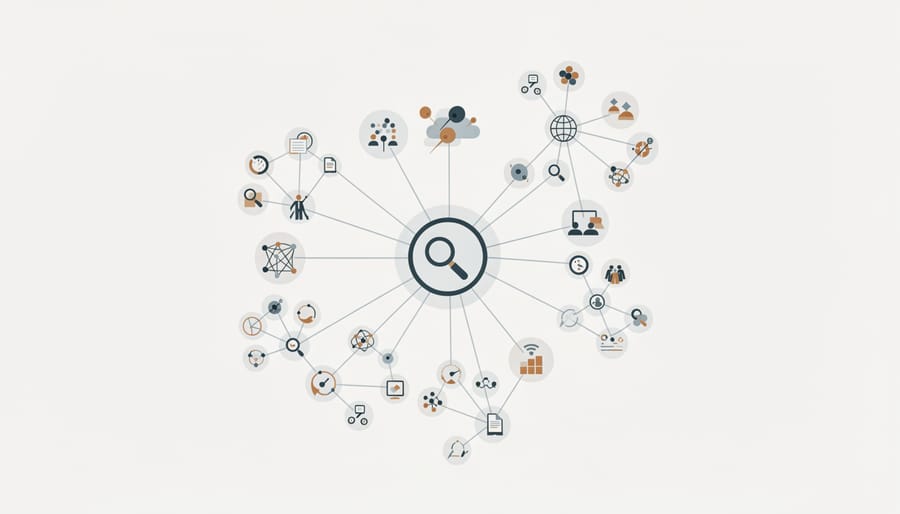
For SEOs and content creators, the takeaway isn’t that Google is broken. It’s that the entity graph has gravity, and when your target keyword sits near a heavyweight entity in vector space, you’re arguably competing with that entity whether you meant to or not. Whether you planned for it or not.
The Google Workspace Pattern: When Entity Signals Misfire
How Core Updates Changed Entity Weighting
Recent core updates reveal a sharp pivot toward entity signals. Google’s September 2023 Helpful Content Update penalized sites relying on exact-match anchor text while rewarding those with consistent brand mentions across authoritative sources, even when those mentions lacked explicit backlinks. Analysis of ranking volatility from Ahrefs showed sites with strong entity graphs (Wikipedia entries, Knowledge Panel presence, structured data markup) recovered faster from algorithm turbulence than keyword-optimized competitors.
Pro tip
When you see a brand entity in an unrelated SERP, check the second and third pages too. Brand bias often inflates the first page, but the actual topical winners are usually clustered just below the fold, those are the pages whose entity profile genuinely matches the query.
The March 2024 update doubled down on topical authority clustering. Pages ranking for “Google Workspace” queries increasingly belonged to domains Google recognized as technology authorities through co-citation patterns, author credentials verified via schema markup, and cross-referenced mentions in industry publications. Entity understanding after core updates now factors how often your brand appears alongside established entities in your niche, a relationship graph that traditional keyword research misses entirely.
By August 2024, exact keyword density mattered less than semantic proximity to validated entities. A page mentioning “collaborative productivity suite” alongside recognized tools like Gmail and Drive outranked pages repeating “Google Workspace” twelve times but lacking entity context. Google’s systems now interpret queries through entity lenses first, matching search intent to knowledge graphs before evaluating on-page optimization signals.
Legitimate Brand Surface vs Anomalous Bleed
Not every brand appearance in an unexpected SERP is anomalous. Sometimes the brand belongs there, even if it doesn’t look that way at first glance. The distinction matters because it tells you whether to compete or move on:
| Signal | Legitimate brand surface | Anomalous entity bleed |
|---|---|---|
| Co-citation depth | Brand co-cited with the query topic across multiple authoritative sources | Brand cited with the query topic only inside its own properties (docs, help center) |
| SERP neighbors | Surrounded by other on-topic results from independent domains | Sitting alone amid a top 10 that’s otherwise about a different topic entirely |
| Click satisfaction | Result landing page directly answers the query | Landing page is a generic product hub the user has to navigate away from |
| Knowledge Panel match | Brand’s KP entry describes attributes relevant to the query | KP entry has nothing to do with the query, the brand just outweighs everyone else |
| Vocabulary overlap | Shared terms reflect genuine topical adjacency | Shared terms are generic vocabulary the brand has effectively colonized (workspace, drive, hub) |
What This Tells Us About Google’s Current Priorities
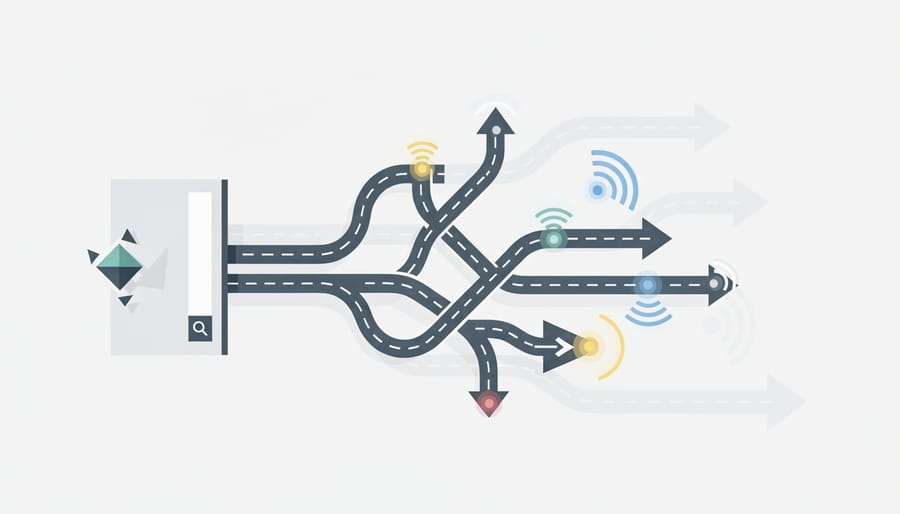
The Workspace ranking pattern reveals that Google privileges established entity graphs, platforms with dense internal cross-references, consistent branding signals, and clear domain authority boundaries. Official documentation and knowledge-base pages from recognized vendors rank aggressively because they satisfy both entity coherence and E-E-A-T signals in core updates.
This explains why niche tutorials often struggle, in my experience, the strongest niche pages still lose to Workspace’s help center on terms they should own, simply because the entity weight is so lopsided (I’ve seen this in a half-dozen client audits where a meticulously researched tutorial got buried under a generic vendor doc). Google now leans toward topical hubs over isolated how-to posts, treating entity relationships as ranking priors. The search engine presumes users seeking product terms want canonical answers, not fragmented interpretations.
Understanding how Google’s update types interact shows this isn’t just link equity, it’s semantic positioning. Pages that clearly state their relationship to recognized entities perform better than those assuming algorithmic neutrality. Backlinko‘s ongoing ranking-factors work has surfaced similar patterns, brand mentions in topically aligned content correlating with ranking stability through update cycles.
For practitioners, the move is to optimize entity mentions, schema markup, and topical clustering to signal your place in Google’s knowledge graph, not just keyword relevance.
Diagnosing Why a Brand Surfaces in an Unrelated SERP
When you spot the pattern in the wild, there’s a repeatable diagnostic loop. Most of it is observation, not tooling.
Brand-bleed diagnostic workflow
The diagnostic loop matters because it tells you whether to fight or pivot. If the bleed is real, the page directly below the brand result is your competitor, not the brand itself. You’re not gonna outrank Workspace’s help center on its own terms. You can absolutely outrank the second-place editorial post, well, the second-place editorial post that hasn’t already locked in its co-citation footprint, in most cases by tightening your entity signals against the actual query intent rather than the brand’s vocabulary.
How Entity Shifts Impact Your Link Strategy
Google now evaluates links through an entity lens. It asks whether the linking page and destination share semantic territory, not just whether the anchor text matches a keyword. A backlink from a project-management blog to your Google Workspace explainer carries more weight than a generic business-tools directory listing, even if the directory has higher domain authority. The algorithm measures entity proximity, how closely related the topics, named entities, and vocabulary fields are between source and target.
Note
Brand bias cuts both ways. If your site sits adjacent to a heavyweight entity in vector space (you’re a Workspace competitor, say, or you write about productivity software), every brand-bleed SERP for that giant is a place you might surface naturally, well, naturally-ish, once your own entity signals get dense enough to register.
This shift explains why core updates devaluing links often surprise site owners. Links that once passed value now register as contextually irrelevant. Exact-match anchor text from unrelated pages signals manipulation rather than natural citation. Instead, focus on earning links from pages that already mention entities in your semantic cluster, collaboration software, SaaS productivity tools, Google Cloud ecosystem partners. When a page discussing Slack alternatives links to your Workspace guide, Google recognizes the shared entity space and assigns relevance accordingly.
Outdated anchor strategies fail because they ignore the surrounding content. A “Google Workspace tutorial” link embedded in a casino forum post holds near-zero value, the entity mismatch is glaring. Modern link building demands you map your content’s core entities, identify publications covering adjacent topics, and craft outreach that highlights genuine topical overlap. Entity-aware link audits reveal which existing backlinks reinforce your semantic authority and which merely inflate vanity metrics.
Why Static Links Break Down in Entity-First Search
Traditional link strategies assume stable relationships. Anchor text signals topic, target URL delivers relevance, and rankings follow predictably. But entity-first search dissolves those certainties. When Google reinterprets “Google Workspace” from a product feature cluster to a unified productivity entity, inbound links anchored with legacy terms like “G Suite collaboration tools” or “Google Apps integration” suddenly mismatch the entity Google now expects. Fixed URLs pointing to outdated feature pages become dead weight if the entity’s authoritative hub shifts to a consolidated landing page.
Static links can’t adapt when entity boundaries evolve, when Google merges overlapping concepts, splits formerly unified topics, or reweights relationships between entities. The liability compounds over time. Your backlink profile ossifies while Google’s knowledge graph remains fluid.
Watch for
Pages that ranked stably for years suddenly slipping a few positions after a core update, with no obvious on-page or backlink change. In most cases, the entity boundaries shifted underneath them. The fix usually isn’t more links, it’s updated anchor language and tighter topical clustering on the page itself.
Adaptive link infrastructure, dynamic anchor strategies, entity-aware URL selection, and context-responsive internal linking, treats links as living connections that reflect current entity understanding rather than historical keyword guesses. For SEOs managing enterprise sites, this means auditing link portfolios not just for authority metrics but for entity alignment, pruning or updating links that anchor to deprecated entity interpretations before they drag rankings down.
Measuring Entity Alignment in Your Backlink Profile
Start by exporting your current backlink profile from tools like Ahrefs, Similarweb, or Google Search Console. Download the full list of linking domains and anchor text distributions. You’ll need this raw data to analyze entity signals at scale.
Run your anchor text through an entity extraction API. Google’s Natural Language API or similar tools can identify which entities appear most frequently in your incoming links. Compare these extracted entities against your site’s core topics. If you’re a Google Workspace reseller but your backlinks primarily mention generic “cloud storage” or unrelated SaaS products, there’s a mismatch worth addressing.
Map linking domains to their own topical authority. Use topical clustering tools or manual review to classify whether each linking site operates in your entity neighborhood. A link from a Microsoft 365 comparison site reinforces Google Workspace as your core entity, a link from a generic business blog weakens that signal.
Check for entity dilution in your link portfolio. Calculate what percentage of your backlinks mention your primary entities versus tangential or off-topic terms. If fewer than 40 percent of your links reference your main subject matter, Google may struggle to pinpoint your site’s expertise.
Audit your most powerful links first. Sort backlinks by domain authority or referring domain traffic, then manually verify whether the top 50 linking pages use language and context that aligns with your target entities. High-authority misaligned links can skew Google’s perception more than dozens of low-value relevant ones. Screaming Frog‘s custom-extraction features make this scriptable for portfolios where manual review breaks down.
Document patterns in anchor diversity. Entity-aligned profiles typically show varied but semantically related anchor text, “Google Workspace tips,” “Gmail productivity,” “collaborative tools”, rather than exact-match repetition or random phrases. Flag outliers for potential disavowal or outreach correction.
When to Worry About Brand Bleed, and When to Ignore It
The honest answer is, in most cases, you should probably ignore it. Brand bleed is fascinating to watch but it’s rarely a problem you can solve directly. The exception is when the bleed is happening on a query you specifically want to win, and the brand result genuinely doesn’t deserve to be there. In that case, the diagnostic loop above gives you a defensible plan.
✓
Worth diagnosing the bleed when
- ›You’re targeting the bleed query commercially
- ›Your entity sits adjacent to the bleeding brand
- ›The second-place result looks beatable on entity signals
- ›You’re tracking why a page slipped after a core update
- ›You’re auditing a competitor’s seemingly inexplicable ranking
✗
Ignore the bleed when
- ›The brand result is technically on-topic, just famous
- ›You’re nowhere near the brand’s entity territory
- ›It’s a low-volume, low-intent query
- ›You’re noticing it on a one-off SERP and not a pattern
- ›You’d be competing for a click that doesn’t convert
Truth is, ownership of the algorithm’s brand-favoring behavior isn’t something you change. You work around it, document it, and shift attention to the queries where entity signals actually decide the outcome. For most teams managing limited link-building budgets, that triage is where the strategy lives.
Try it this week
Pick three queries you’re targeting. Run the brand-bleed diagnostic on each.
-
1
For each query, list every brand entity in the top 10. Note which sit alone in a sea of editorial competitors versus which appear in clusters. -
2
Identify the real topical winner under each brand, the page just below the brand result that’s actually on-topic. That’s your competitive benchmark, not the brand. -
3
For one query where the bleed looks beatable, audit your own page’s entity signals, schema, co-cited entities, anchor profile, and tighten whichever is weakest.
The brand will keep bleeding. Your job is to make sure that when Google looks past the bleed, your page is the one waiting underneath.
Related guides
- Entity understanding after core updates, How GA4 reporting changes once you start optimizing for entities instead of keywords.
- E-E-A-T in core updates, Why brand entity signals and E-E-A-T overlap so heavily in modern ranking.

