

Why Opaque Link Ownership Could Get Your Site Deindexed

Verify who owns the link network before partnering. Request corporate documentation, operating history, and named leadership contacts—opacity in ownership often signals private blog networks or fronts designed to manipulate rankings while shielding operators from liability. Check domain registration patterns: bulk purchases from privacy-protected registrars, identical WHOIS guard services across dozens of sites, and hosting on the same IP blocks reveal coordinated schemes built to evade detection.
Audit the network’s public footprint. Legitimate link platforms publish clear policies, maintain active support channels, and showcase real editorial teams. Networks that refuse to disclose traffic sources, moderation practices, or algorithmic ranking criteria are engineered for plausible deniability when Google issues manual penalties.
Cross-reference deindexation histories using site: searches and third-party index trackers. Networks with recurring vanishing acts—domains that appear, rank briefly, then disappear from search results—indicate algorithmic penalties for manipulation. A single deindexed property may be coincidence; five or more suggests systematic abuse designed to extract value before inevitable detection and abandonment.
What Ownership Transparency Actually Means
The Digital Paper Trail
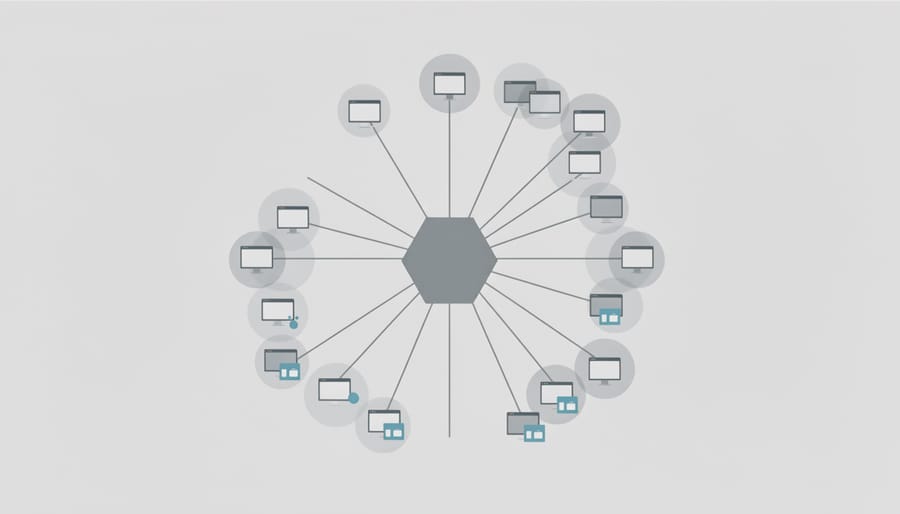
Legitimate sites leave consistent technical footprints; opaque link networks try to hide them but often fail. Start with nameservers. Run a WHOIS lookup on a domain linking to you. If dozens of unrelated sites share identical nameserver configurations—especially from privacy-focused hosts—that cluster warrants scrutiny. Similarly, IP address blocks tell a story: many low-quality link farms operate from narrow IP ranges, easily spotted using reverse IP lookups.
CMS signatures matter too. Check page source for platform identifiers—WordPress version strings, specific plugin patterns, or templating systems. When twenty domains use the same obscure theme with near-identical configurations, you’re likely looking at programmatic deployment rather than organic sites. Registrant details provide another vector. Even behind privacy shields, patterns emerge: registration dates in tight clusters, shared administrative contacts across supposedly unrelated properties, or bulk registrations from the same entity.
Cross-reference everything. A single red flag means little; three or more create a pattern. Tools like BuiltWith, SecurityTrails, and DomainTools accelerate this detective work, surfacing connections invisible at surface level. The goal isn’t paranoia—it’s informed judgment about which inbound links genuinely help versus which expose you to algorithmic risk.
Why Search Engines Care
Google’s Webmaster Guidelines explicitly call out link schemes that manipulate PageRank, including networks that obscure ownership or participant lists. Early detection relied on manual reviews—human raters flagging suspicious patterns. Today’s systems use machine learning to identify link networks at scale, analyzing velocity, anchor text distribution, topical relevance, and co-citation patterns across millions of sites. When algorithms spot coordinated activity without clear disclosure—identical footprints, synchronized publishing schedules, or circular linking across supposedly unrelated domains—they flag the entire network. This is what Google actually penalizes: not guest posting itself, but the opacity that suggests manipulation. Transparency functions as both a quality signal and a trust metric, helping algorithms distinguish legitimate editorial relationships from manufactured schemes designed solely to pass authority.
How Opaque Networks Create Deindexation Risk
The Network Effect of Penalties
When search engines detect manipulative link patterns on one domain, the fallout rarely stops there. Algorithms scan ownership footprints—shared registrant details, hosting blocks, nameservers, analytics IDs—to map likely networks. If Domain A gets penalized and shares an IP range or WHOIS contact with Domains B through Z, those sites face scrutiny or preemptive devaluation.
Historical case studies show cascading deindexation within weeks of an initial penalty. In 2014, Google’s manual action against a single high-profile blog network triggered the removal of hundreds of connected properties. Shared Google Analytics codes and cross-linked footer patterns exposed the entire graph. Similar waves occurred in 2017 and 2019 as algorithms improved at detecting cloaked ownership through indirect signals like overlapping outbound link profiles and synchronized content updates.
The mechanism is straightforward: once a domain exhibits spam signals, the engine audits its neighborhood. Legitimate sites accidentally sharing infrastructure with bad actors get flagged as potential accomplices. Recovery requires not just cleaning your own backlinks but proving operational independence—distinct contacts, separate hosting providers, and no cross-promotional trails.
For site owners, the risk compounds when partnering with link vendors who manage hundreds of clients from consolidated infrastructure. One client’s penalty can taint your domain by proximity, even if your content is pristine.
PBNs vs. Transparent Networks
Private blog networks (PBNs) disguise ownership through privacy registrations, varied hosting providers, and content that mimics independent sites—all designed to manipulate search rankings while appearing organic. Search engines flag this pattern because the lack of transparency signals deception. Transparent link networks, by contrast, disclose their structure: editorial partners acknowledge relationships, authors publish under real names, and businesses openly run content hubs. These networks survive algorithm updates because honesty itself signals quality—no need to hide when your links come from genuine editorial judgment.
The core difference: PBNs evade detection to exist; transparent networks welcome scrutiny because their value proposition doesn’t depend on trickery. Understanding PBN penalty risks helps you spot red flags like hidden WHOIS data or suspiciously similar site templates. For those considering building safer networks, the lesson is clear: structure that requires concealment won’t scale safely.
Signals Search Engines Use to Detect Hidden Ownership
Infrastructure Fingerprints
Sites within opaque link networks often share technical infrastructure that leaves detectable fingerprints. Multiple domains hosted on the same IP address or consecutive IP ranges signal common ownership, especially when combined with shared SSL certificates issued under bulk orders. Check DNS records for patterns: identical nameservers, similar registration dates clustered within days, or privacy-protected WHOIS entries using the same registrar. CDN configurations can expose networks too—several sites routing through identical edge server clusters or sharing custom CDN subdomains suggest centralized management. Server response headers sometimes leak identical software versions or server tokens across supposedly unrelated domains. Reverse IP lookups reveal how many sites occupy a single server; legitimate businesses rarely share hosting with dozens of unrelated domains. These infrastructure overlaps aren’t definitive proof of manipulation, but when multiple signals align—same hosting provider, sequential IP blocks, matching SSL patterns, identical DNS infrastructure—they indicate deliberate efforts to scale link operations while minimizing transparency. Run basic technical checks before accepting links from unfamiliar sources.

Content and Link Patterns
Opaque link networks often reveal themselves through content patterns that feel mechanically coordinated rather than editorially independent. Sites publishing identical article structures—same headings, similar word counts, parallel topical sequences—signal centralized template control. Watch for synchronized timing: when multiple domains launch campaigns simultaneously or publish refreshed content on matching schedules, it suggests orchestrated activity rather than natural editorial rhythms.
Reciprocal linking creates another tell. If Site A links to Site B, which links to Site C, which loops back to Site A in predictable chains, you’re observing engineered pathways designed to manipulate authority flow. Similarly, when supposedly independent domains share identical outbound link profiles—citing the same external sources in the same order—the editorial independence claim collapses.
These behavioral signals matter because they indicate coordination hidden behind separate brand identities. Networks disguising their common ownership rely on appearing editorially distinct while operating from shared playbooks. Scrutinize link profiles, publication calendars, and content frameworks to spot the template underneath.
For: SEO professionals, site owners evaluating backlink sources, digital auditors
What Transparent Metrics Look Like in Practice
Transparent link vendors publish verifiable proof of their practices rather than vague assurances. Look for openly listed domain inventories with real metrics—not sanitized examples—showing actual Domain Authority, traffic ranges, and posting frequency. Reputable providers disclose who owns their sites, how content is commissioned, and which domains share infrastructure or editorial teams.
Key transparency markers include: complete ownership records (not anonymous registrants), Google Analytics screenshots or third-party traffic verification, documented editorial guidelines, and honest conversations about risk. If a vendor can’t answer “Who owns domain X?” or “When did this site last get indexed?”, that’s a red flag.
Hetneo differs by treating transparency as infrastructure, not marketing. Every domain in the network includes ownership attribution, publishing its metrics history and editorial standards publicly. When a domain changes hands or gets deindexed, that information appears in real time—no hidden penalties or surprise removals.
Contrast this with typical link vendors who rotate through burned domains, obscure their network structure, and vanish when Google acts. Transparent operators stay accountable: they publish post-mortems when sites drop, explain why certain domains were retired, and let you verify claims independently. If you can’t validate their data with tools like Ahrefs, Majestic, or Search Console, walk away.

Protecting Your Site When Buying Links
Vetting Link Sources Before Placement
Before committing to any link source, run a layered vetting process. Start with WHOIS history lookups to flag domains with recent ownership transfers, privacy-shielded registrations, or frequent registrar changes—common signals when identifying toxic link patterns. Use reverse IP searches to detect link farms: dozens of unrelated sites sharing a single IP often indicate automated networks built purely for SEO manipulation. Archive.org snapshots reveal content pivots—a domain that shifted from legitimate business to link aggregator overnight raises red flags. Cross-reference registration data across suspected network members; matching registration dates, nameservers, or contact details expose coordinated schemes. Domain age alone doesn’t guarantee safety, but new domains with aggressive outreach and thin content warrant extra scrutiny. Combine these checks with manual spot-reviews of actual site content and link context. For researchers and site owners: these five-minute audits prevent months of ranking damage.
Transparency in link networks isn’t an ethical nicety—it’s practical risk mitigation. Opaque ownership structures, recycled domains with hidden histories, and networks that vanish without warning create technical debt that compounds over time. Search engines increasingly penalize sites associated with manipulative practices, and recovery from algorithmic penalties or manual actions takes months of remediation work that far exceeds the cost of vetting partners upfront.
The shift toward verifiable sources reflects a broader industry recognition: sustainable SEO requires accountability at the infrastructure level. Sites that document ownership, maintain consistent contact information, and publish clear terms survive algorithm updates and build lasting authority. Those that obscure these fundamentals become liabilities.
For site owners, the standard is straightforward: if you can’t verify who operates a link source, where traffic originates, or how long the domain has maintained its current purpose, treat it as high-risk. Transparency separates durable link-building from temporary tactics that degrade into technical problems. The question isn’t whether to demand visibility—it’s whether you can afford not to.

