

Why Google’s Core Updates Keep Devaluing Your Links (And What Actually Works Now)

Audit your backlink profile for patterns that correlate with recent ranking drops—specifically purchased links from PBNs, mass directory submissions, and widget/footer links embedded sitewide. Google’s core updates since 2022 have systematically devalued these manipulative signals, meaning sites relying on them now carry dead weight that doesn’t help and may trigger algorithmic suppression.
Shift link-building effort toward editorial placements that deliver contextual relevance: contributor articles on industry publications, original research that earns organic citations, and strategic partnerships where your link appears in body content alongside genuine recommendations. These “living links” retain value because they mirror natural user behavior and withstand successive algorithm shifts.
Stop treating links as static equity. Google now evaluates link velocity, anchor diversity, and surrounding content freshness to detect artificial inflation. A link from a dormant page on a once-authoritative domain carries less weight than a recent mention in actively updated content, even from a smaller site. Focus on recency and topical alignment over legacy domain authority scores.
Implement a quarterly link health check: flag orphaned links pointing to deleted pages, update outdated anchor text that no longer matches user intent, and disavow toxic patterns you’ve inherited or built. This maintenance prevents algorithmic penalties while surfacing opportunities to refresh high-value placements with current offers or updated statistics that keep your profile adaptive.
What Link Signal Devaluation Actually Means
The Difference Between Devalued and Penalized Links
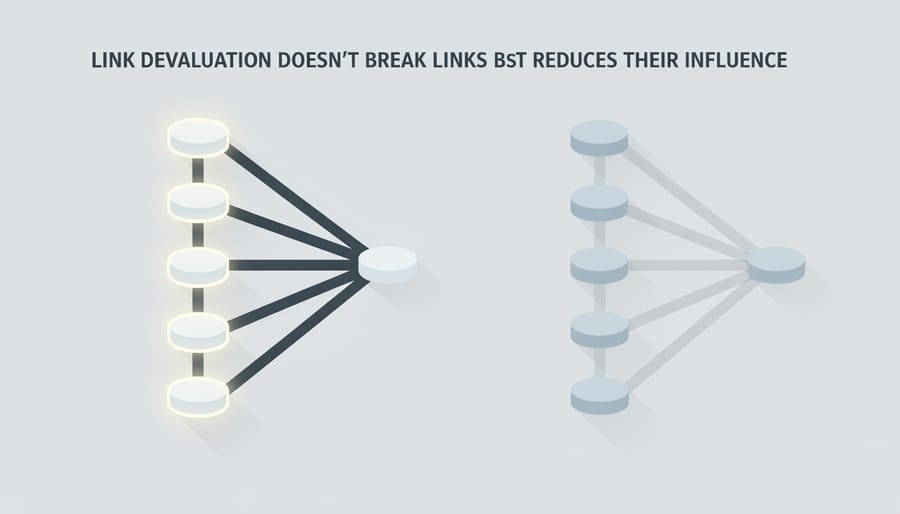
When Google “blinks” a link—rendering it invisible for ranking purposes—the outcome depends on whether the link is devalued or penalized. Understanding the penalties versus devaluation distinction matters because the consequences and recovery paths differ significantly.
Devalued links simply lose their voting power. Google’s algorithms identify low-quality signals—think blog comment spam, mass directory submissions, orwidgetized footer links—and discount them to zero. Your site doesn’t suffer a ranking drop; those links just stop helping. No manual action appears in Search Console, and your other legitimate links continue working normally.
Penalized links trigger active suppression. When Google detects manipulative link schemes at scale—purchased links, PBN networks, or coordinated reciprocal arrangements—it may apply a manual action or algorithmic filter that pushes your entire site or specific pages down in results. Recovery requires disavowing the toxic links and sometimes filing a reconsideration request.
The practical test: if you lost rankings after a core update without a Search Console warning, you likely have devalued links that stopped contributing. If you received a manual action notice, you face an active penalty requiring cleanup.
Which Link Types Lose Value in Core Updates
Editorial Links vs. Manipulative Patterns
Google’s algorithms scan for three core signals when deciding whether a link carries genuine editorial weight or signals manipulation.
Relevance context matters most. An authentic link typically appears within substantive content that shares topical overlap with the destination page. Google’s language models evaluate whether the surrounding paragraphs logically connect to the linked resource or whether the link feels inserted solely for SEO purposes. A backlink from a healthcare blog to a pharmaceutical site embedded in a 2,000-word research synthesis carries more weight than the same link dropped into a 300-word generic post.
Why it’s interesting: This explains why guest post networks with thin, template-driven content lost value after recent core updates.
Content depth at the linking domain acts as a trust proxy. Sites publishing detailed, regularly updated material in a defined niche signal editorial intent. Google cross-references publication frequency, author credentials, and topical consistency. A link from a site with years of focused coverage holds more authority than one from a recently launched domain with scattered topics.
Site quality metrics provide the final filter. Google evaluates Core Web Vitals, user engagement patterns, and whether the linking site itself attracts natural backlinks. Domains exhibiting scaled patterns such as excessive outbound links, thin affiliate content, or minimal original research trigger devaluation algorithms.
For: SEO practitioners auditing why their link profiles stopped moving rankings after algorithm shifts.
The Stale Link Problem
Links decay. A backlink that boosted rankings in 2019 may contribute little today, not because Google penalized it, but because the context around it aged poorly. When the surrounding content references outdated statistics, defunct products, or superseded best practices, Google’s algorithms detect staleness and discount the authority signal flowing through that link.
Google’s freshness signals work in layers. The search engine tracks when a page was last meaningfully updated, how recently its cited sources were published, and whether its terminology matches current usage patterns. A link embedded in a 2018 guide using deprecated API names or obsolete tool recommendations carries less weight than one in a recently refreshed resource, even if both pages have similar domain authority metrics.
Anchor text becomes obsolete too. Links pointing to your page with phrases like “top Penguin recovery tactics” or “mobile-first index preparation” flag themselves as outdated, signaling to Google that the linking context may no longer reflect current search behavior or user needs. The algorithm doesn’t explicitly penalize these links, but it applies a relevance discount when calculating their contribution to your overall link profile.
The practical impact: a site losing rankings often discovers that 40-60 percent of its backlink profile points from pages untouched in three-plus years, creating drag rather than lift in competitive queries where fresher signals dominate.
How Core Updates Changed Link Building Strategy
Why Static Links Become Liabilities
Static links erode in value the moment content ecosystems shift around them. A footer link placed in 2019 might have pointed to authoritative research. Today, that same page may be thin, outdated, or rewritten with user-generated spam—but the link remains, signaling endorsement you never intended.
Google’s algorithms increasingly evaluate context, not just link existence. After recent core updates, sites with high volumes of static outbound links to deteriorated destinations saw measurable ranking drops. The liability compounds when linked pages shift topic focus, adopt intrusive ad layouts, or disappear behind paywalls.
Link placement also becomes misaligned. A 2020 sidebar widget recommending “essential JavaScript frameworks” looks dated when the ecosystem pivots to new tooling. The architecture remains fixed while reader needs evolve, creating relevance gaps that algorithms detect through engagement signals like immediate bounces.
Why it matters: Static link strategies assume permanence in a system designed around freshness signals and contextual alignment. Sites treating links as set-and-forget assets accumulate technical debt that manifests as traffic erosion.
For: SEO practitioners and content strategists managing aging link portfolios across evolving topic landscapes.
The Control Gap in Traditional Link Building
Traditional link building creates a control problem: once a backlink goes live, SEOs lose nearly all ability to adapt it. You can’t update anchor text if search behavior shifts or brand messaging changes. You can’t redirect the target URL without breaking the original placement. You can’t refresh surrounding context when the linked page evolves or gets replaced.
This dependency on webmasters introduces friction at every turn. Minor edits require outreach emails, negotiation, and waiting—if the site owner responds at all. Outdated links pointing to deprecated pages remain frozen in place, leaking authority to 404s or irrelevant content. When algorithm updates penalize certain anchor patterns or devalue specific link types, you’re stuck with what’s already published.
The gap grows wider as pages age. Guest posts published two years ago may contain broken internal references or outdated statistics, but updating them means reopening conversations with editors who’ve moved on. Directory listings become stale, forum signatures link to discontinued products, and resource pages point to sunsetted tools. Each dormant link represents wasted equity you can’t reclaim or redirect without external cooperation.

What Works Now: Adaptive Link Strategies
Living Links: Maintaining Relevance Post-Placement
Traditional link building treats placement as the finish line. Links go live, you move on. But when Google’s algorithm shifts or your strategy pivots, those static anchors and URLs can become misaligned—or worse, detrimental. Living links solve this by allowing post-placement edits to anchor text, destination URLs, and surrounding context.
Why it matters: A link placed six months ago with product-focused anchor text may now point to a deprecated page or contradict your current messaging hierarchy. Instead of letting it decay into irrelevance or ask for removal, you modify the anchor to reflect updated priorities, swap the URL to your refreshed resource, or adjust the contextual sentence to match current positioning.
Practical use cases include updating anchors after rebranding, redirecting links when you consolidate content, and refining context when Google devalues certain phrase patterns post-update. If a core algorithm change suddenly penalizes exact-match commercial anchors, you can soften them to branded or topical variations without losing the placement itself.
The workflow: Maintain a living spreadsheet of outbound placements with access credentials or publisher contacts. Quarterly, audit which links still serve strategic goals. Modify what’s misaligned. This approach treats links as evolving assets rather than fire-and-forget artifacts, keeping your profile responsive to both internal strategy shifts and external algorithm changes. It requires more maintenance overhead but delivers sustained relevance in a landscape where yesterday’s best practice becomes tomorrow’s red flag.
Transparent Metrics Over Inflated Scores
Domain Authority and Domain Rating—the two-digit scores served up by third-party tools—are convenient shortcuts, but they don’t reflect how Google actually evaluates links. These proprietary metrics aggregate signal into a single number, masking the nuances that matter: topical relevance, editorial standards, traffic patterns, and whether a site exists to inform or manipulate rankings.
Real linking opportunities reveal themselves through verifiable data. Check organic traffic estimates in tools like Ahrefs or Similarweb—sites pulling consistent search visits demonstrate they satisfy user intent, a proxy for the quality signals Google rewards. Examine indexed pages versus total pages; a healthy ratio suggests most content meets inclusion thresholds rather than thin filler. Review referring domain diversity—legitimate publishers attract links from varied sources, while PBNs share narrow, incestuous link graphs.
For researchers and SEO practitioners: scan a site’s content publication cadence and author transparency. Regular updates with named contributors signal editorial investment. Cross-reference domain registration dates with first archive snapshots on Wayback Machine to spot recently launched “aged” domains—a hallmark PBN tactic.
Ignore inflated scores from sites that exist solely to sell links. Prioritize platforms where your target audience already spends attention, where editorial teams vet submissions, and where traffic data confirms real readership. These fundamentals outlast algorithmic shifts and deliver compounding value beyond any single metric snapshot.

Evaluating Your Existing Link Profile
Start by pulling a complete export of your backlink profile from Search Console, Ahrefs, or your preferred tool—you need a full picture before you can spot weak signals. Focus on three devaluation markers: contextual mismatch, anchor staleness, and placement irrelevance.
Contextual mismatch reveals itself when the linking page topic diverges sharply from yours. A recipe blog linking to your SaaS product page carries minimal topical authority; Google’s systems recognize this disconnect and discount the signal. Check whether the surrounding content actually relates to what you offer—if a reader wouldn’t naturally click through, the link is probably flagged as low-value.
Anchor staleness shows up as exact-match commercial phrases that haven’t evolved in years. If twenty links still say “best insurance quotes 2019,” you’re signaling outdated content management. Review anchor distribution: modern profiles lean heavily toward branded and natural variations, not keyword-stuffed repetition.
Irrelevant placements cluster in sidebars, footers, or sitewide template blocks rather than inline editorial content. Sitewide links from unrelated domains carry little weight and may trigger scrutiny. Filter your export by placement type and prioritize body content links.
Next steps: tag links for retention, disavowal, or outreach-based update. High-authority, contextually aligned links deserve relationship maintenance—reach out to update anchors or refresh surrounding context. Weak directories or paid placements with no editorial value go into your disavow file. Mid-tier links on related but outdated content are candidates for polite outreach: offer a refreshed statistic, updated resource, or new angle that benefits their readers while modernizing your signal.
Run this audit quarterly. Link profiles decay as content ages and algorithms shift.
Link building isn’t dead—it’s under new management. Google’s core updates continue to reward relevance, freshness, and contextual fit while systematically devaluing static placements that offer little signal beyond their existence. Widgets, footers, and one-time guest posts on topically distant sites lose influence not because they’re inherently bad, but because they don’t evolve as content and user intent shift.
Your next step: audit your backlink profile for staleness. Identify which links sit on pages that haven’t been updated in years, which lack semantic connection to your content, and which live in isolated silos. Then pivot—invest in relationships that yield living links on pages that get refreshed, collaborate on resources that attract natural citations over time, and focus placement efforts where your expertise genuinely strengthens the host content.
Control what you can control: the relevance and vitality of the ecosystems you build in. Core updates will keep coming, but sites that treat links as part of dynamic, contextual networks rather than static trophies consistently weather algorithmic shifts with less volatility and stronger long-term performance.

