
How Black Hat SEOs Hide Link Schemes (And How Forensic Linux Tools Expose Them)

Linux dominates digital forensics because it offers transparent, scriptable access to raw disk data without altering evidence—a non-negotiable requirement when analyzing manipulative link networks or investigating black hat SEO tactics. When investigators examine suspicious backlink profiles or uncover private blog networks, they turn to specialized Linux distributions that mount storage as read-only, hash every byte for court admissibility, and chain together command-line tools to parse millions of URLs in minutes.
The forensics workflow mirrors detective work: acquire the target system or dataset without contamination, preserve cryptographic proof of integrity, analyze link patterns using grep, awk, and custom Python scripts, then document findings in formats legal teams understand. For SEO practitioners facing penalties or researchers mapping link spam ecosystems, understanding these Linux-based investigation methods reveals exactly what footprints remain visible—server logs, WordPress database entries, DNS records, and the graph topology that betrays coordinated networks.
This guide walks through why Linux owns this space, which specific tools investigators deploy, what behavioral signatures trigger scrutiny, and how a real-world link network analysis unfolds from disk image to evidence report.
What Black Hat Link Graph Forensics Actually Means
Link graph forensics is the practice of mapping and analyzing how websites connect to each other through hyperlinks. Investigators create visual networks showing which sites link to which, revealing the structure and patterns of web relationships. In natural linking, websites cite genuinely useful resources, creating organic patterns that reflect real human recommendations and editorial decisions.
Black hat link graphs show artificial patterns instead. These networks display telltale signatures: dozens of sites created simultaneously, identical anchor text across multiple domains, link farms where every site links to every other site, or hub-and-spoke arrangements with one central site receiving links from shells with no genuine content. Understanding how black hat networks work helps investigators spot manipulation techniques like private blog networks and link schemes designed to inflate search rankings.
Linux dominates this forensic work because the platform offers powerful command-line tools for scraping, parsing, and analyzing massive link datasets. Investigators can process millions of connections, calculate network metrics, and identify suspicious clusters that would be invisible in manual review. The forensic process turns messy web data into clear evidence of either legitimate citation patterns or coordinated manipulation attempts.
Why Linux Dominates Link Forensics Work

Built for Scale and Speed
Linux forensic tools excel at handling massive link datasets because the operating system itself was designed for multi-user, multi-process workloads. Graph databases like Neo4j and PostgreSQL run natively on Linux with fewer memory bottlenecks than Windows equivalents, processing millions of nodes without performance degradation. Command-line utilities like grep, awk, and sed parse gigabyte-sized log files in seconds rather than minutes. Why it matters: When analyzing link networks spanning hundreds of domains, these speed advantages compound—what takes hours on a desktop OS completes in minutes on a Linux server. For: SEO analysts investigating competitor backlink profiles or auditing PBN footprints at scale. The kernel’s efficient file handling and process scheduling mean you can run parallel scans across multiple data sources simultaneously without system lockup.
The Open-Source Toolchain Advantage
Linux-based forensics outperforms proprietary Windows solutions through composable command-line tools that chain together via pipes and scripting. Tools like grep, awk, and jq parse massive log files and JSON datasets in seconds, filtering link patterns across terabytes of web crawl data without GUI overhead. The Unix philosophy of small, focused utilities means investigators build custom workflows for each case rather than forcing data into rigid commercial interfaces.
Open-source transparency matters here: analysts verify tool behavior by reading source code, ensuring no hidden biases in how link graphs are analyzed. Network utilities like curl, wget, and tcpdump integrate seamlessly with Python or Bash scripts, automating bulk domain checks and header analysis that would require expensive licenses on Windows platforms.
For practitioners: Linux’s package ecosystem delivers cutting-edge graph analysis libraries and network forensics tools months before commercial vendors catch up, letting investigators stay ahead of evolving black hat techniques.
Essential Linux Tools for Link Graph Investigation
Graph Databases and Query Languages
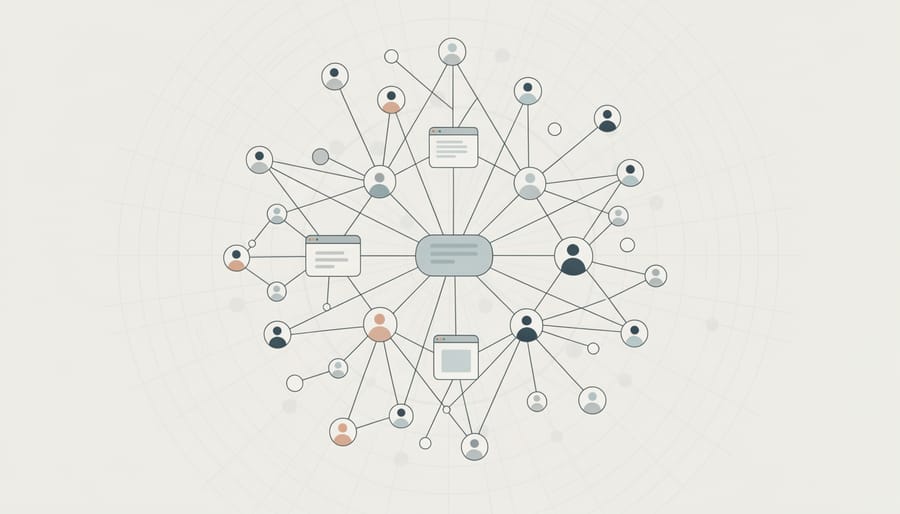
Graph databases excel at representing link networks as nodes and edges, making them powerful for forensic analysis of manipulative SEO patterns. Neo4j remains the standard production-grade choice, offering mature tooling and a declarative query language called Cypher that lets investigators traverse relationships like “LINKS_TO” or “SHARES_IP_WITH” across thousands of domains. Memgraph provides a faster, in-memory alternative with Cypher compatibility, ideal for real-time analysis of live link graphs during active investigations.
Why it’s interesting: Cypher queries can surface multi-hop patterns invisible in spreadsheets—like discovering that five seemingly unrelated blogs all link through a shared intermediary PBN node three hops away.
For: forensic analysts tracking link schemes, SEO researchers mapping competitive networks, security teams investigating coordinated campaigns.
Sample workflow: import scraped backlink data as CSV, model domains as nodes with properties (IP, registrar, creation date), create directed edges for hyperlinks, then run graph algorithms to detect tightly clustered communities or unusual hub-and-spoke topologies that suggest artificial link building rather than organic growth.
Crawling and Data Collection
Gathering backlink data at scale requires tools built for efficiency and programmability. Scrapy, a Python framework, crawls entire link graphs by following href patterns, extracting anchor text, and storing relationships in structured formats—ideal for mapping how networks interconnect. Why it’s interesting: Lets you build custom spiders that respect robots.txt while archiving every outbound link a domain publishes. For: researchers auditing link velocity or investigating PBN footprints.
Wget recursively downloads entire sites with `–mirror` and `–convert-links`, preserving directory structure for offline analysis of cross-linking patterns. Why it’s interesting: A single command captures snapshots before content vanishes or gets edited. For: investigators documenting evidence chains.
Curl handles individual requests with precision, testing response headers and redirect chains to identify cloaking or link injection. Why it’s interesting: Scriptable in bash loops to probe thousands of URLs and flag HTTP inconsistencies. For: engineers automating link health checks across suspect networks.
Pattern Recognition Scripts
NetworkX and igraph are Python libraries built for graph analysis—essential for mapping relationships between domains, IPs, and link sources in suspected manipulation networks. NetworkX excels at calculating centrality metrics to identify hub nodes, while igraph handles million-edge graphs faster, making it suitable for large-scale link farm detection. Why it’s interesting: Both expose hidden connection patterns that manual analysis would miss. For: Investigators analyzing backlink profiles or tracking coordinated campaigns.
Shell utilities like grep, awk, and sed remain indispensable for preprocessing server logs and extracting timestamp patterns, user agents, or referrer chains before feeding data into graph tools. Combined with diff and comm, they quickly surface anomalies across sequential log snapshots. These command-line staples enable rapid automated pattern detection in forensic workflows, turning gigabytes of raw traffic into structured datasets. For: System administrators and security researchers needing lightweight, scriptable footprint analysis.
Visualization and Reporting
Raw data becomes defensible evidence when properly visualized. Graphviz generates hierarchical network diagrams directly from command-line output, useful for mapping domain relationships and link structures discovered during forensic analysis. Export link graphs as DOT format files, then render as PNG or SVG for reports. Gephi handles larger datasets with interactive filtering, letting investigators identify clusters and outliers in complex link schemes. For courtroom presentation, command-line tools like imagemagick batch-process screenshots, while pandoc converts terminal logs to formatted PDFs with timestamps preserved. Most forensic frameworks include native JSON or CSV export flags, enabling seamless handoff to visualization pipelines. The combination transforms obscure shell output into comprehensible evidence that non-technical stakeholders can evaluate, bridging the gap between technical discovery and legal action.
Red Flags Forensic Tools Detect in Link Networks
Forensic analysis tools scan link networks for patterns that rarely occur naturally but consistently appear in manufactured schemes. Understanding these signatures helps both investigators detect manipulation and practitioners recognize exposure risks in black hat automation techniques.
IP address clustering stands out immediately. When dozens of seemingly unrelated domains resolve to the same C-block subnet, tools flag the network. Legitimate sites distribute across hosting providers; coordinated networks often share infrastructure to cut costs, creating forensic breadcrumbs visible through reverse IP lookups and traceroute analysis.
Shared tracking codes provide another reliable indicator. Google Analytics IDs, AdSense publisher codes, or Facebook Pixel identifiers appearing across multiple domains suggest common ownership. Automated scrapers extract these identifiers from page source, building ownership graphs that reveal hidden connections between supposedly independent properties.
CMS fingerprints expose templated deployment. When sites exhibit identical WordPress theme versions, plugin configurations, or filesystem timestamps, investigators infer bulk creation. Tools compare HTTP headers, meta generator tags, and directory structures to identify cookie-cutter patterns inconsistent with organic site development.
Anchor text distribution reveals optimization intent. Natural backlink profiles show diverse, often branded anchor text. Networks display statistically improbable keyword concentration, with exact-match commercial terms appearing at rates that betray deliberate manipulation rather than editorial choice.
Temporal clustering catches coordinated campaigns. When registration dates, first crawl timestamps, or link acquisition patterns synchronize across domains, forensic timelines expose simultaneous deployment. Legitimate sites launch independently; networks launch in waves, leaving temporal signatures that correlation analysis detects.
These patterns compound. A single indicator might warrant investigation; multiple overlapping signals confirm artificial construction. Modern forensic suites score networks by aggregating these features, calculating confidence levels that guide enforcement decisions and competitive intelligence assessments.
Real-World Forensics Workflow on Linux
Here’s how a forensics analyst investigates a suspected private blog network using Linux tools.
First, export backlink data from common sources like Ahrefs, Majestic, or Common Crawl. Use wget or curl to pull datasets, or API clients to retrieve structured JSON. Clean the raw data with awk and sed to normalize domains, strip parameters, and deduplicate entries.
Next, load the link graph into Neo4j or Apache AGE (PostgreSQL extension). Model sites as nodes and links as directed edges with properties like anchor text, link placement, and first-seen date. This structure enables pattern queries that flat files cannot support.
Run community detection algorithms like Louvain or label propagation to identify clusters of interconnected sites. Tightly grouped domains with minimal external links signal coordinated networks. Flag clusters where anchor text distribution skews heavily toward commercial keywords rather than natural editorial patterns.
Cross-reference suspicious clusters against WHOIS records and DNS data. Use whois command-line tools and passive DNS databases like SecurityTrails or DNSdb. Look for shared registrant emails, nameservers hosted on identical IP blocks, or registration date patterns suggesting bulk purchases.
Correlate findings with behavioral signals. Sites that share Google Analytics IDs, AdSense codes, or similar server fingerprints strengthen the evidence. Tools like BuiltWith data or custom Python scripts parsing HTML sources reveal these footprints. For broader context on identifying automated manipulation, see techniques for detecting black hat SEO bots.
Finally, generate a report using Jupyter notebooks or R Markdown. Include visualizations from Gephi or Cytoscape showing network topology, statistical summaries of link patterns, and timestamped evidence logs suitable for compliance documentation or platform abuse reports.

What This Means for Link Builders
If investigators can reconstruct link networks with open-source tools and a few hundred gigabytes of crawl data, your link profile needs to withstand forensic scrutiny. The patterns that flag manipulation—identical anchor text distributions, synchronized link velocity, shared hosting footprints—are trivially detectable with the methods outlined above.
For SEOs: Build links that pass the “graph analysis test.” Natural profiles show messy, organic growth with varied timing, diverse anchor text, and links from sites with their own independent link histories. Footprint reduction isn’t about hiding; it’s about genuine editorial relationships that create defensible patterns.
Legitimate link services differentiate themselves through metric transparency. They document referring domain authority distributions, show historical link velocity curves, and explain why each placement fits the client’s existing graph structure. When providers can’t or won’t show you the structural metrics that forensic tools will reveal anyway, that’s your signal to walk away.
Bottom line: Tools this powerful and accessible make link quality non-negotiable.
Forensic Linux distributions have fundamentally altered the risk calculus for manipulative link schemes. Tools like Maltego, Gephi, and custom Python scripts now parse vast link graphs in hours, surfacing patterns that once stayed hidden for months or years. Network topology analysis reveals hub-and-spoke structures, temporal clustering flags artificial velocity, and domain registration forensics connect seemingly unrelated properties. The investigators’ advantage is growing.
Why this matters: Search engines increasingly collaborate with security researchers who use these exact methodologies, shrinking the window between deployment and detection.
The practical takeaway: Verifiable, transparent link building—guest posts with real editorial oversight, genuine partnerships documented on both sides, citations earned through original research—leaves forensic trails that withstand scrutiny. Sustainable strategies now mean building links you’d confidently show an investigator.

