

Stop Begging for Guest Posts: A Prospecting System That Actually Works

Most outbound prospecting fails because teams confuse activity with strategy, sending hundreds of generic pitches to untested domains, then wondering why response rates stay below 5%. Strong prospecting starts with a clear target profile: identify sites whose audience overlaps with yours, check their authority and traffic in tools like Ahrefs, then verify they publish contributed content by searching “write for us” or “guest post” alongside their domain. Build a qualified list by filtering for editorial standards, scan recent posts for comment quality, author bios, and dofollow link policies, then tier prospects by alignment and reach. Systematic prospecting frameworks replace guesswork with repeatable filters that separate high-potential sites from time sinks. The system is the deliverable; the outreach is just what runs on top of it.
Why Most Guest Post Prospecting Fails
Here’s the thing. Most prospecting efforts fail because they confuse activity with strategy. Teams build massive lists by scraping authority scores or keyword rankings, then blast generic pitches, ignoring whether a site actually publishes guest posts, serves their niche, or fits their client’s editorial profile. The result, in most cases, is single-digit response rates and burned sender reputation. Or worse, a domain you wanted in two years from now learns to filter your sending address.
Prospecting vocabulary
- TAM
- Total addressable market of guest-post-friendly sites, the raw universe before any filtering. Usually thousands of domains; useful only as the starting denominator.
- ICP-fit
- How tightly a prospect matches your ideal-customer-profile filter on niche, DR band, traffic shape, and audience overlap. The first cut after TAM.
- Segment quality
- Average ICP-fit score across a prospect segment. Drives reply rates more than any other lever; raises or sinks an entire campaign.
- Signal-density
- How many positive vetting signals (real traffic, recent posts, named bylines, working internal links) a prospect carries per minute spent reviewing it. Your time-to-decision metric.
- Kill-list
- The growing inventory of disqualifying patterns (ghost domains, link-strippers, ad-stuffed shells) that automatically removes a prospect from future campaigns.
The core mistake is treating all domains equally. Look, a DR 60 parenting blog won’t publish your fintech how-to, no matter how polished the pitch. Relevance matters more than raw authority, yet most prospectors skip basic editorial review, they don’t read recent posts, check author guidelines, or verify the site accepts contributions.
Volume becomes a crutch. When 500 emails yield three placements, the instinct is to send 1,000 more, not to question why 99% ignored you. This approach fills your pipeline with dead ends: sites that ghost after approval, demand rewrites that erase your value, or bury your link six clicks deep. (I’ve watched this exact pattern run on three different client accounts in the last year, the team always wants to add volume before they fix the filters.)
Bad prospecting compounds downstream. If your targets are misaligned from the start, no amount of outreach polish will save the campaign. You waste time negotiating with sites that will never convert, while competitors lock in partnerships with the handful of domains that matter. Quality prospecting isn’t about finding more sites, it’s about finding the right ones before you hit send. Sounds obvious on paper. Try telling that to a team five hundred pitches deep into a quarter.

The system is the deliverable. The outreach is just what runs on top of it.
Honestly, the way to think about this is that prospecting is the upstream investment that determines whether your downstream outreach effort has any chance. Get the system right once and every subsequent campaign inherits the filters. Skip the system and you’re rebuilding from zero every quarter.
System-Driven vs Reactive Prospecting
The two approaches diverge on almost every dimension that matters for cost-per-placement:
| Dimension | System-driven prospecting | Reactive prospecting |
|---|---|---|
| List source | Competitor backlinks, search-operator harvests, and tool-API pulls run through a fixed filter stack | Whatever the SEO sees in their feed that week, plus the last vendor’s leftover spreadsheet |
| Filter logic | Documented ICP-fit rubric with weighted scoring, applied identically every pull | Gut-feel “this looks fine”, different criteria each campaign |
| Kill-list | Persistent across campaigns, grows every cycle as new disqualifiers surface | None, the same dead-end domains get re-discovered and re-pitched |
| Time per prospect | 2-4 minutes vetting, decision made on signal-density | 8-15 minutes, with no rubric to anchor the call |
| Reply rate trend | Climbs cycle-over-cycle as the filters tune to your niche | Flat or declining, no learning loop |
| Handoff cost | Low, a new team member inherits the rubric and gets productive in a week | High, every campaign re-trains tribal knowledge |
The reactive approach feels faster in week one and then bleeds time every week after. In my experience, the breakeven for building the system is usually two campaigns, by the third, you’re cutting research time roughly in half on equivalent placement counts. Built a 220-domain list for a fintech client last spring that took maybe nine hours end to end, the next campaign in the same niche took under four because most of the kill-list work was already done.
Pro tip
Write your ICP-fit rubric before you open Ahrefs. Forcing yourself to articulate the niche, DR band, traffic-shape, and audience-overlap criteria in plain text first means the tool filters become a mechanical translation of your strategy, not a substitute for it. The rubric is the asset; the export is just data.
Building Your Prospect Database
Search Operators That Surface Real Opportunities
Start with operator combinations that filter for sites actively seeking contributors. Use `intitle:”write for us” + [your niche]` to find explicit submission pages, or `inurl:contributor-guidelines + [topic]` for formal programs. The string `”guest post by” + [keyword]` surfaces sites already publishing external work. Pair `”submit a guest post”` with domain modifiers like `site:.edu` or `site:.org` to narrow by authority.
Export results efficiently: run your search, scrape the first 50-100 URLs with a browser extension like Link Klipper or SEO Minion, then paste into a spreadsheet. Add columns for domain authority, topical fit, and contact status. Filter out obvious spam, sites with thin content, aggressive ads, or mismatched topics, before you invest time in outreach. Probably the single highest-leverage twenty minutes of the whole pipeline.
Note
Operator harvests get stale fast, sites archive their “write for us” page, redirect to a 410, or quietly stop accepting submissions. Always sanity-check the last-modified date on the submission guidelines before adding a domain to the active list. Stale instructions almost always mean stale editors.
Rotate operators to avoid echo chambers. Try `”become a contributor”`, `”guest author”`, or `”contributor opportunities”` with Boolean modifiers like `-“comments closed”` to exclude dead pages. (Pro tip from a list I built last quarter for a SaaS client, swapping `”write for us”` for `”contribute an article”` surfaced a completely different 40-domain pocket the obvious operator missed.)
Competitor Backlink Mining
Start by loading your top five competitors’ domains into Ahrefs Site Explorer or comparable backlink tools. Export their referring domains, then filter the list by Domain Rating above 40 and traffic above 1,000 monthly visits to surface sites worth your time.
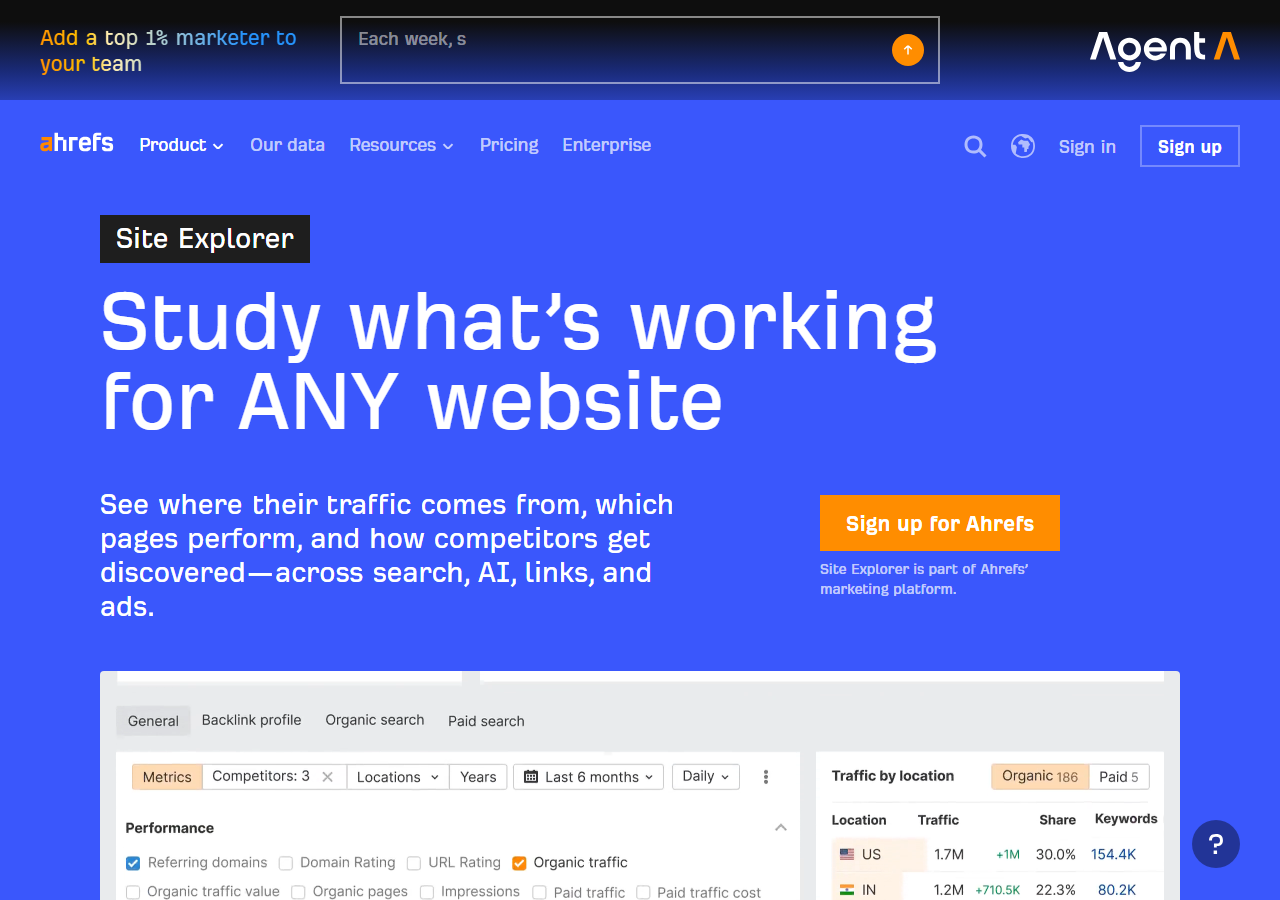
Cross-reference publication dates and anchor text patterns, editorial placements typically use varied, natural anchors and appear alongside organic content, while paid spots often cluster in “contributor” or “sponsored” sections with exact-match anchors. Flag domains that link to multiple competitors; these overlap targets already cover your niche and prove they accept outside contributors. Sort your final list by referring domain count descending to prioritize high-authority publishers first.
This method turns competitor research into a vetted prospect pipeline in under an hour, letting you skip cold discovery and focus outreach on proven placements. Truth is, the “multiple-competitor overlap” filter alone usually surfaces the 20-30 highest-yield domains in any given niche. Actually, scratch the “usually”, that’s been true on every list I’ve built where the niche had at least four established players to mine against.
API and Tool-Based Prospecting
Link databases like Hunter.io and Apollo let you pull email addresses and social profiles in bulk by domain or industry filter. Scraping tools such as Screaming Frog or custom Python scripts can extract contact forms, author pages, and submission URLs from hundreds of sites overnight. Content APIs, WordPress REST, Medium’s API, or RSS feeds, reveal recent post topics and publishing frequency, helping you prioritize active blogs.
Most outreach platforms (Pitchbox, BuzzStream, Lemlist) offer native integrations or CSV imports to funnel these leads directly into sequenced campaigns. Always respect robots.txt directives, honor opt-out requests, and avoid harvesting personal data protected under GDPR or CAN-SPAM. Automation scales discovery; human judgment still filters quality.
The Discovery Pipeline
So, the four stages below are the standard pipeline I’ve ended up settling on across most prospecting builds. It’s not the only ordering that works, but it does maximize the cost-savings of putting cheap filters before expensive ones. Roughly. Your mileage may vary on niches where the TAM is small enough that you can hand-vet the whole thing.
Discovery pipeline
A 1,000-domain TAM typically lands at 30-50 pitch-ready prospects by the time it exits the pipeline. That ratio sounds brutal until you compare reply rates on the filtered list against reply rates on the raw export, the filtered list usually replies at 4-6x the raw rate, which more than offsets the volume haircut.
Vetting: Separating Signal from Noise
Traffic and Authority Metrics That Matter
Organic traffic and referring domain count matter more than Domain Authority or Domain Rating scores alone. Look for sites that pull steady monthly visitors from Google, Ahrefs’ “Organic Traffic” and Moz’s backlink reports reveal whether a site actually ranks. Cross-check referring domains to confirm the site earns natural backlinks, not just reciprocal swaps or PBN links.
Topical authority signals alignment: a site ranking for keywords in your niche passes more relevant equity than a general directory with inflated DR. Check the “Top Pages” report to see what content performs; if the strongest pages match your topic cluster, the link carries weight.
Watch for manipulation red flags. Sudden DR spikes, thin content with high scores, or referring domains from irrelevant foreign sites suggest link schemes. Compare multiple tools, Moz, Ahrefs, SimilarWeb, since each crawls differently. Discrepancies often expose inflated metrics. A site with 500 referring domains but zero organic traffic is selling links, not earning them. (For most teams, this single rule alone strips 15-20% of an otherwise-clean prospect list.) Prioritize real audience reach over vanity numbers when building your prospect list.

Editorial Quality Signals
Before accepting a guest post spot, audit the host site for signs of genuine editorial care. Read several published posts, are they meaty, well-researched pieces or thin rewrites padded with generic advice? Check author bios: real bylines with LinkedIn links or portfolio credentials signal a site that values contributors. Notice the editorial voice: does the homepage copy sound like a person or a keyword bot? Scan the navigation and internal linking, logical structure and working links suggest maintenance; broken paths and orphaned pages don’t.
Count the ads per screen: two or three placements are normal; wall-to-wall banners or pop-ups under every paragraph indicate monetization overshadows user experience. Watch for niche sprawl, a site covering “SEO, keto recipes, and home loans” in equal measure lacks topical authority and likely accepts anyone willing to pay. Each red flag compounds risk; two or more mean walk away. Pulled a 60-domain list in March where eight of the candidates had this exact “everything blog” pattern. Every one of them quoted a placement fee in the first reply.
Strategic Fit and Anchor Flexibility
Before pitching a guest post, confirm the site’s audience shares interests with yours, demographic overlap signals that your link will reach readers who care. Review editorial guidelines to see whether they permit contextual, relevant links within body copy or restrict you to author bios. Sites with restrictive policies dilute your SEO value and limit strategic fit and relevance.
Post-placement control matters: can you update anchor text or URLs if your content strategy shifts? Static placements lock you into outdated links. Living Links Technology solves this by letting you adjust targets without re-negotiating with publishers, a decisive advantage when pivoting campaigns or retiring pages. Check whether a platform offers this flexibility before committing outreach time. If a site scores high on audience alignment and link freedom, prioritize it; if editorial rules are rigid and audiences tangential, move on.
Outreach That Gets Responses
Personalization at Scale
Automation tools save hours, but generic merge fields, “Hi {{FirstName}}, I read {{CompanyName}}’s blog”, telegraph lazy templating. Instead, pull specific data points: reference a recent article by headline, cite a product launch from their changelog, or note a staffing shift on LinkedIn. Backlinko’s outreach research consistently shows that personalized hooks lift reply rates well above the generic baseline, one agency I worked alongside increased reply rates roughly 40% by dynamically inserting the prospect’s most-shared piece and a single-line reaction.
The trick is layering: automate list-building and initial filtering, but invest 90 seconds per high-value prospect to customize the hook. Tools like Lemlist or Mailshake can rotate sentence structures and conditionally display paragraphs based on industry tags, preventing repetitive phrasing across your sequence. Pair this with outreach templates that work as scaffolding, swap out the boilerplate intro for genuine observation, then let automation handle follow-ups and scheduling. Test one fully custom batch against a semi-automated cohort; measure reply rate, not just open rate, to find your efficiency ceiling.
Watch for
A “personalization” merge field that just inserts the company name into a generic sentence is worse than no merge field at all. Editors clock it instantly, the moment they suspect a template, the rest of the email reads as suspicious by association. Either invest the 90 seconds for a real observation or send a clearly-templated short email and own it.
Pitching Topics Editors Actually Want
Before pitching, audit the target site’s last 15-20 posts. Look for gaps: topics they cover tangentially but haven’t explored in depth, emerging subtopics in your niche they’ve missed, or outdated pieces you can refresh with new data. Tools like Ahrefs Content Gap or BuzzSumo reveal what competitors publish that your prospect doesn’t.
Frame your pitch as solving an editorial problem. If a site covers email outreach but lacks templates for cold LinkedIn messages, propose that angle. If their audience is enterprise sales teams but recent posts skew toward solopreneurs, pitch content bridging that gap.
Check their comments and social shares to see what resonates. High engagement signals unmet reader demand. Reference specific posts in your pitch to show you’ve done the work: “Your May piece on follow-up cadences performed well, this complements it by addressing timing for multi-channel sequences.”
Position yourself as filling a need, not asking a favor. Editors want contributors who understand their content calendar, audience pain points, and traffic goals. Demonstrating that alignment makes your pitch stand out from generic templates.
Follow-Up Sequences That Don’t Annoy
Send your first follow-up three business days after the initial email, most replies arrive within this window. Plan a three-touch sequence: initial pitch, value-add follow-up (share a recent industry report or relevant case study that supports your angle), then a brief final check-in. Space touches 4-5 days apart. If you see opens but no reply, your subject line works but your offer doesn’t, revise the pitch. Track engagement signals: opens, link clicks, time spent on your author page. Prioritize leads who opened multiple times or visited your site; they’re warm but hesitant. After three attempts with no engagement, archive and move on. Your time matters more than persistence theater.
Tracking and Iterating Your System
Track three core metrics from day one: response rate by site tier, placement rate by pitch angle, and referral traffic by domain authority bracket. Log every outreach email, reply status, and placement URL in a CRM or simple spreadsheet with columns for site category, decision-maker role, pitch version, and outcome date. This baseline data reveals which segments respond and which messages convert.
After twenty prospects, compare performance. If SaaS blogs reply at 40% but agency blogs at 10%, shift targeting. If how-to pitches land placements faster than opinion pieces, adjust your angles. Review measuring link performance quarterly to identify which placements drive clicks and engagement, then prioritize similar sites in future rounds.
Refine your ICP template every cycle. Add disqualifying signals you missed initially, sites that ghost after acceptance, editors who strip your links post-publication, domains with sudden traffic drops. Tag these patterns in your workflow so you skip them next time. Build a swipe file of subject lines and intro hooks that earned replies, and retire templates below 15% response rates.
Iteration beats volume. A tighter target list with personalized messaging outperforms spray-and-pray outreach every time. Treat prospecting as a closed feedback loop: measure, learn, adjust, repeat.

Build It or Buy It
Look, the prospecting system pays back, but it isn’t free to build. Whether you should own the system internally or outsource depends on the volume you’re running and the niches you’re operating in. Mostly volume, if I’m being honest about which factor moves the answer. Here’s the framing I use when a client asks.
The outsource path, in our case, is the managed link building service that runs this exact pipeline on behalf of clients who’d rather not build it themselves. Same prospect-database hygiene, same vetting criteria, same outreach cadence described above, just operated as a subscription rather than as a system you maintain in-house. Worth a look if the build-it column below describes a project your team doesn’t have the calendar for in Q3.
✓
Worth building the system for
- ›Ongoing campaigns across 2+ niches you control
- ›Teams running 20+ pitches per month indefinitely
- ›Niches where third-party vendors don’t have inventory
- ›Agencies whose differentiator is editorial-grade placements
- ›Brands building a long-term institutional capability
✗
Outsource instead for
- ›One-off launches with a fixed-budget link target
- ›Volume needs under 5-10 placements a quarter
- ›Niches where a reputable vendor already has aged donor inventory
- ›Founders who’d rather buy hours than build a workflow
- ›Short-horizon campaigns where the system can’t amortize
I’d argue the breakeven for building internally is somewhere around two campaigns of meaningful volume. Below that, the spreadsheet, the rubric, the kill-list, none of it gets used enough to repay the build time. Above it, the system starts compounding hard. Hard enough that by campaign five or six the rubric is doing most of the thinking for you.
Try it this week
Build a 30-prospect list with the four-stage pipeline. Document every kill-list addition as you go.
-
1
Write your ICP-fit rubric in plain text first: niche, DR band, traffic shape, audience overlap. One paragraph, not a long doc. -
2
Pull 500 raw domains from competitor backlinks plus one operator harvest. Apply the ICP filter, then signal-vet the survivors. -
3
Log every domain you killed and why. That log is your kill-list seed, and it’s the most valuable asset to come out of week one.
The first pass is slow on purpose. By the third campaign, the same pipeline will produce a higher-quality list in half the time, that’s the compounding the system was built for.
Outbound prospecting is a system, not a checklist you finish once. The sites you identify today become a reusable pipeline you refine each quarter, testing new filters, retiring low-performers, and layering in fresh verticals as your content evolves. Start with a tight list of twenty vetted targets rather than a scattershot hundred. Track open rates and reply sentiment to learn which criteria actually predict receptive editors. Over time, this vetting compounds: you’ll recognize patterns in who responds, which niches convert, and where your content genuinely adds value. Tools that let you update links post-placement, like Living Links, future-proof the effort by letting you refresh outdated URLs or swap in stronger examples without re-pitching editors. Treat each outreach cycle as a feedback loop. Document what worked, retire what didn’t, and iterate. A small, well-researched list you can defend will always outperform a bloated spreadsheet you can’t.
Related guides
- Outreach Templates That Work, The pitch scaffolding that runs on top of a well-built prospect list.
- Prospecting Frameworks, How systematic filters replace guesswork and separate high-potential sites from time sinks.
- Prospecting Videos That Get Placements, when a short recorded walkthrough lands the placement that another templated pitch email would not.


Comments (0)