

Why Second-Line Defense Matters More Than You Think in Link Risk Management

Here’s the thing. Most link risk lands on teams that didn’t see it coming because nobody was watching independently. Enterprise risk frameworks have a name for that watching function: the second line of defense (2LOD). First-line teams execute, second-line functions set policy and monitor compliance, third-line audits verify the whole thing works. Applied to link building, the second line is roughly the difference between catching a publisher pivot in week two and explaining a ranking collapse in month four. This guide walks through what 2LOD looks like for a backlink portfolio, the signals to monitor, and the escalation discipline that keeps the system honest.
What 2LOD Risk Management Actually Means for Link Builders

The three-lines model isn’t an SEO invention. It comes out of operational-risk practice at banks and insurers, and the practitioner literature on it (Moz has covered the SEO-adjacent version in their strategic guides) keeps coming back to one point. First-line teams own execution. Second-line functions own oversight, independent of execution. Third-line audit verifies that both lines are doing their jobs. Skip the middle layer and, well, you’ve built a system where the people acquiring the risk are also the people responsible for spotting it. Which never ends well.
Quick vocabulary
- First line of defense
- The team executing link acquisition, outreach, placement, vendor coordination. Owns delivery metrics.
- Second line of defense (2LOD)
- Independent oversight that monitors the first line against defined risk policies. Owns the watching function.
- Third line of defense
- Internal or external audit. Periodic verification that the first two lines actually work as designed.
- Audit cadence
- The scheduled frequency at which the second line re-evaluates the portfolio (typically weekly health-signal review, quarterly full audit).
- Escalation trigger
- A pre-defined metric or pattern that automatically routes a finding to the next response tier (amber to analyst, red to legal/SEO lead).
- Residual risk
- The exposure that remains after all mitigations are in place, the thing you’ve consciously decided to accept rather than fix.
The Gap Between Placement and Protection
Most link-building operations stop at placement. Agencies pitch, outreach teams execute, links go live, and the engagement ends. That’s first-line activity, execution without oversight. The second line introduces a critical buffer: ongoing independent monitoring that detects emerging risks after placement, in the months and quarters where most of the damage actually happens (which, in my experience, is also when budget for monitoring has long since been reallocated).
The gap materializes in predictable ways. A publisher changes ownership and injects PBN patterns across their network. A previously clean site pivots to pharmaceutical spam. Google updates its algorithm and reclassifies entire link categories as manipulative. Without structured second-line monitoring, these shifts go unnoticed until a penalty lands. (I’ve watched this play out on three client portfolios in the last eighteen months alone, in every case the linking domain had been clean at placement and went sideways within ninety days.)
Pro tip
If your link-building vendor also handles your “link monitoring,” you don’t have a second line, you have a first line wearing two hats. The whole point of 2LOD is independence. The watcher cannot be the watched.
So most teams discover risk retroactively, through traffic collapse or manual actions, because no one owns the watching function. First-line teams optimize for volume and placement success metrics, not downstream risk exposure. Second-line functions exist to catch what execution teams cannot see while focused on delivery. The absence of this layer transforms every backlink portfolio into unmanaged technical debt. Slow-bleeding, mostly invisible, until it isn’t.
Why Traditional Risk Models Fail for Links
Corporate risk models assume relatively static assets and predictable hazards. Links behave differently. A high-authority domain linking to you today may pivot to spam networks next quarter, or lose its editorial standards under new ownership. Algorithms shift penalties from obvious manipulations to nuanced pattern detection, making yesterday’s safe practice today’s liability.
The watcher cannot be the watched. Second-line oversight only works when its incentives are independent of placement volume.
Links themselves degrade. Anchor diversity that once signaled natural growth can morph into over-optimization as your profile ages. Traditional risk matrices evaluate probability and impact at a point in time, but link risk compounds across temporal dimensions, a disavowed domain reappears under a redirected URL, a penalized site passes authority before Google recrawls it. The asymmetry matters too: acquiring one toxic link takes seconds, identifying and neutralizing it demands ongoing surveillance. Standard frameworks lack mechanisms for continuous third-party reputation monitoring, algorithmic change detection, and the decay modeling that link portfolios require.
Building Your Second Line: Risk Detection and Monitoring
Core Link Health Indicators to Track
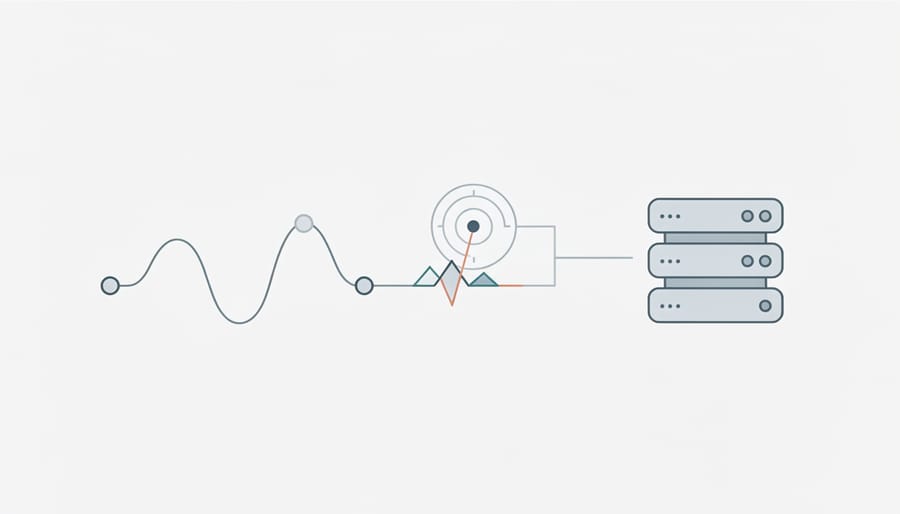
Effective second-line oversight requires ongoing link portfolio surveillance built around specific health signals. Start with anchor text distribution drift, compare current ratios of branded, exact-match, and generic anchors against baseline data to spot unnatural clustering that invites algorithmic scrutiny. Backlinko’s guides on anchor-text patterns are a reasonable baseline reference for what “natural” tends to look like in practice. Reasonable, not gospel.
| Signal | Mature second line catches | Missing second line misses |
|---|---|---|
| Anchor drift | Baseline-vs-current ratio review every monitoring cycle, amber alert above defined thresholds | Exact-match anchors quietly cluster past 40% before anyone notices |
| Referring-domain reputation | DR / spam-score deltas tracked per domain, ownership changes flagged for review | A clean publisher becomes a PBN node and keeps passing equity for months |
| Velocity anomalies | Acquisition / loss rates compared against rolling baseline, sharp deviations escalated | Spikes and culls look like noise until they correlate with a manual action |
| Indexation status | Non-indexed backlinks surfaced and triaged (real link or decaying source?) | Quiet de-indexation goes unmeasured, value silently evaporates |
| Source-site penalties | Manual-action and algorithmic-hit detection on referring domains, automatic reclassification | Penalty inheritance discovered post-mortem after rankings already moved |
| Escalation trail | Every finding logged with timestamp, owner, decision, residual-risk acceptance | Verbal handoffs, no paper trail, no defensible record during a reconsideration request |
Next, monitor referring-domain reputation changes by tracking Domain Authority shifts, spam-score increases, or sudden content pivots on sites linking to you (we caught one mid-tier DA-42 publisher pivot to a sports-betting affiliate program three weeks before the next core update, and the second-line flag was the only reason we pruned in time). Domains that become PBNs or redirect farms post-acquisition become liabilities overnight (well, more accurately: liabilities by the next core update, which is usually six to twelve weeks out). Link velocity anomalies flag when acquisition or loss rates deviate sharply from historical norms, signaling either aggressive campaigns that risk penalties or sudden link culls worth investigating. Indexation status matters because non-indexed backlinks provide zero SEO value and may indicate quality decay or technical issues at the source. Finally, watch for site-level penalties affecting your link sources: tools like Ahrefs and Similarweb can surface manual-action and algorithm-hit patterns on referring domains, since Google’s view of those sites directly impacts how it values your links. Together, these metrics to track form an early-warning system that lets your second line catch emerging risks before they trigger penalty reviews or ranking drops.
Setting Alert Thresholds That Actually Work
Risk tolerances must map to link type and business impact. Establish three-tier thresholds: green (routine monitoring), amber (investigation required within 48 hours), and red (immediate action). High-authority editorial links tolerate minimal red flags, sponsored placements demand stricter toxicity limits. Define trigger metrics explicitly, anchor text concentration above 40%, sudden Domain Rating drops exceeding 10 points, or links from penalized neighborhoods warrant amber alerts. Actually, scratch 40% as a hard rule, what counts as “too much” varies by niche and link age, so calibrate against your own portfolio’s baseline first.
The audit → trigger → escalate cycle
Look, build escalation protocols before breaches occur. Amber triggers route to your second-line risk analyst for manual review and documentation, red alerts notify both SEO and legal teams within four hours. Calibrate sensitivity by analyzing historical false positives, if 70 percent of amber alerts resolve as benign, raise thresholds incrementally. Test protocols quarterly using simulated scenarios: inject a hypothetical toxic backlink cluster and clock response time. Boring but effective.
Watch for
Alert fatigue is the failure mode I see most often. If amber triggers fire daily and 90% resolve as benign, the analyst stops reading them, and the one real signal in the noise gets archived along with everything else. Tune thresholds against your own false-positive rate every quarter.
Balance caution with pragmatism. Over-aggressive thresholds generate alert fatigue and stall legitimate link building, lax settings miss genuine threats until penalties land. Document every threshold decision and adjustment in your risk register. What constitutes acceptable risk today shifts as Google’s algorithms evolve, your alert system must too.
When to Deploy the Disavow Tool (And When Not To)

Risk-Scoring Your Link Portfolio
Assign each link a composite risk score by evaluating four signals together: contextual relevance (does the linking page topic align with yours?), anchor text distribution (natural variety vs keyword stuffing patterns across your profile), velocity (sudden spikes trigger flags), and domain health (check for thin content, ad bombardment, or previous manual actions). Map each signal to a simple three-point scale, 0 for clean, 1 for borderline, 2 for problematic, then sum the scores.
Note
Tools like Ahrefs, Moz, and Screaming Frog each surface a different subset of the four signals. In my experience, no single tool gives you all four cleanly, the second-line workflow typically pulls anchor data from one source, velocity from another, and reconciles in a spreadsheet. Tedious. Necessary.
Links scoring 0–2 fall into low risk, 3–5 are medium and warrant monitoring, 6–8 are high risk and should enter your disavow queue or immediate outreach list for removal. Run this audit quarterly, not just after traffic drops. Export your backlink data from Search Console or third-party crawlers, tag each row with its risk tier in a spreadsheet, and sort by domain clusters to spot patterns. This method surfaces portfolio-level vulnerabilities that single metrics miss, like a batch of otherwise high-DA links all using identical commercial anchor text.
The Disavow Decision Tree
Start by categorizing each link by type: editorial, guest post, directory, user-generated, or paid placement. For editorial links older than 24 months with stable anchor text, monitor quarterly unless ranking drops occur. Guest posts from sites with DR below 20 or obvious link farms warrant immediate manual removal requests before resorting to the disavow tool.
✓
Worth building 2LOD for
- ›Multi-domain portfolios with 500+ referring domains
- ›Agencies managing link profiles for multiple clients
- ›Sites with prior manual actions or recovery history
- ›Regulated industries where audit trails are non-negotiable
- ›Aggressive growth phases where velocity itself is a risk vector
✗
Trust the vendor instead for
- ›Single-site brands with under 50 referring domains
- ›Pure editorial placement (no paid, no guest-post programs)
- ›Pre-launch sites where there’s nothing yet to monitor
- ›One-time link reclamation projects with a fixed end date
- ›Teams without bandwidth to maintain audit cadence (worse than no 2LOD: half-built 2LOD)
High-risk signals include exact-match anchors at scale, sudden link velocity spikes, or domains flagged in Search Console. If manual outreach fails within 30 days and the link poses algorithmic risk, add to disavow. For sites currently ranking well, adopt a conservative threshold: disavow only when penalty evidence exists or link patterns clearly violate guidelines. Mid-tier links from topically irrelevant but legitimate sites can stay under watch. Document every decision with timestamp, risk score, and action taken to maintain audit trails that inform future interventions and demonstrate due diligence during recovery efforts.
Penalty Recovery Through Second-Line Governance
Building the Penalty Response Playbook
A documented playbook transforms reactive scrambles into controlled operations. Start with an escalation matrix: define severity tiers (minor algorithmic dip, manual action notice, ranking collapse) and assign response owners from first-line SEO teams and second-line risk reviewers. Each tier triggers a standardized evidence-gathering protocol, capture Search Console messages, export backlink snapshots via Ahrefs or Majestic, and timestamp all communications with Google.
Next, codify your remediation sequence. For link penalties, the playbook should mandate link audit completion within 48 hours, stakeholder sign-off on disavow submissions, and version-controlled disavow file storage. Include pre-approved communication templates for reconsideration requests that reference your monitoring logs and corrective actions, demonstrating governance rather than guesswork.
For: SEO managers and risk officers building repeatable penalty prevention and recovery workflows.
Why it matters: documented playbooks reduce recovery time, ensure consistent stakeholder communication, and provide audit trails that satisfy both Google and internal compliance teams.
Making 2LOD Work With Living Links Technology
Traditional 2LOD risk management assumes a read-only audit trail: you review what happened, flag violations, and wait for first-line teams to fix problems. In link building, that means spotting a bad anchor three months after publication and emailing a webmaster who may never reply.
Living links technology flips this model. When your monitoring layer detects risky anchor text concentrations or a linking domain’s quality suddenly drops, the second-line team can directly edit the anchor, update surrounding context, or redirect the target URL, without relying on external cooperation (we’ve cleaned anchor drift on a fifty-link cluster in roughly an afternoon using this, which would normally be a month of outreach). This turns second-line defense from reactive reporting into proactive control. More or less.
A practical example. Your quarterly audit flags twelve links using exact-match commercial anchors that now exceed safe thresholds. Instead of documenting the risk and hoping first-line outreach succeeds, you adjust six anchors to branded variants and update two target URLs to informational pages within the hour. Risk mitigated before the next algorithm update.
The governance advantage is separation of concerns. First-line teams focus on acquisition velocity and relationship building, second-line monitors aggregate risk patterns and makes surgical corrections when thresholds breach. You maintain compliance without bottlenecking campaigns.
For researchers building risk frameworks or in-house SEO teams establishing audit protocols, living links compress the observe-decide-act loop from weeks to minutes, essential when penalties move faster than email threads.
Try it this week
Stand up a minimum-viable second line in five working days.
-
1
Day 1: export your full referring-domain list and snapshot baseline anchor ratios, DR distribution, and velocity for the trailing 90 days. This is your “what normal looks like.” -
2
Days 2–3: write your three-tier threshold definitions (green/amber/red) plus the escalation owners. Keep it to one page, anything longer won’t get followed. -
3
Days 4–5: run the first cycle. Document every finding, every decision, every accepted residual risk. Future-you will need that paper trail more than you think.
A first-pass 2LOD is always rougher than the polished version. Ship it anyway, the gap between half-built oversight and no oversight is much wider than the gap between half-built and fully-mature.
Effective 2LOD risk management isn’t about freezing link building, it’s about building the oversight layer that lets you scale safely. The second line of defense gives you visibility into what your first line is doing, flags patterns that could trigger penalties, and ensures you can intervene before Google does.
Start practical implementation with monitoring: track your backlink velocity, anchor text distribution, and referring domain quality weekly. Establish clear intervention thresholds, when spam ratios exceed 15 percent or exact-match anchors cluster above 10 percent, you investigate. Document every decision, every disavow, every quality flag, your audit trail protects you during recovery and proves due diligence if penalties hit.
Use tools that give you control when risks surface, platforms that let you segment link profiles, automate risk scoring, and export disavow files instantly. The goal is predictable, defensible growth. Second-line oversight transforms link building from a liability into a governed capability, turning reactive panic into proactive risk management that scales with your ambition.
Related guides
- Monitoring Linking Domains, the surveillance cadence that feeds second-line oversight on a working portfolio.
- Cleaning Up Toxic Links, what to do once the second line surfaces a real liability.
- Measuring Link Building, the metrics your second line should be tracking from day one.

