

Your Guest Posts Are Live, But Are They Actually Working?

Your guest post went live. The editor confirmed the link. You closed the tracker, marked it shipped, and moved on. Fast-forward three months. You cannot say whether that placement is sending a single qualified visitor, whether the anchor still points where you wanted it to, or whether the host even still serves the URL (I had one go to a parked domain inside ninety days, and nobody noticed for half a year). That is the gap this guide closes. Where the sister piece on choosing quality placements from the start teaches you how to vet a host before you pitch, this one teaches you how to audit what you already shipped, signal by signal, so you know which links are working, which are dying, and which are quietly bleeding budget.
Why Traditional Guest Post Metrics Miss the Point

Post-placement audit vocabulary
- Link decay
- The gradual erosion of a placement’s value as the host page loses traffic, rankings, or topical relevance over time.
- Anchor drift
- When an editor changes your anchor text after publication, often to a generic phrase or, worse, to a competitor’s brand name.
- Page removal
- The host quietly deletes the article, returns a 404, or moves it to a noindex archive without telling you.
- Rel change
- A previously followed link silently gains
rel="nofollow",rel="sponsored", orrel="ugc"attribution. - Content edit
- The host rewrites surrounding paragraphs, often replacing the context that made the link relevant in the first place.
- Host redirect
- The article URL 301s or 302s to a new path, sometimes the homepage, sometimes a competitor, sometimes a parked page.
The DA Trap
Domain Authority is a proprietary metric, Moz’s own documentation is clear that it predicts ranking ability and is not used by Google as a ranking signal. Honestly, that is the part most agencies skip over. A DA 60 link from an irrelevant host will not move the business, and a DA 30 link from a tight-niche publication often will. Usually. The score conflates dozens of upstream signals into a single number that obscures what matters at audit time, which is whether the link drives qualified visitors who take action.
Pro tip
When you re-audit a placement, pull the host’s organic-traffic trend in Similarweb alongside the link’s DR. A DR that has held steady while estimated traffic has halved is a placement that is decaying faster than the third-party authority score is willing to admit.
When you are evaluating whether a live link still earns its keep, ignore the vanity metric. Track referral traffic quality, conversion rates, and revenue attribution instead. The point of the audit is not to defend the placement, it is to find the ones that need re-pitching, redirecting, or quietly walking away from.
Placement Count Theater
Look, many teams track placements like tallies on a scoreboard. Fifty guest posts, two hundred social shares, all of it disconnected from traffic, conversions, or revenue. This creates the illusion of productivity while obscuring whether the effort generates returns. A report showing “95 placements secured” tells stakeholders nothing about business impact, and worse, it tells the team nothing about which of those 95 are still serving a live, indexable, followed link to the page you actually care about.
Volume metrics breed busywork, chasing easy placements on low-authority sites, repurposing generic content, and celebrating quantity over resonance. Without tying placements to downstream outcomes (clicks, sign-ups, pipeline value), teams cannot distinguish valuable channels from noise. The fix requires measuring what matters at the placement stage, and then auditing what changes after the link has been in the wild for a quarter. Track placements as inputs, but evaluate campaigns by the revenue or qualified leads each channel actually delivers six months in.

What Actually Counts, ROI Frameworks for Link-Based Guest Posts
Ranking Movement as a Leading Indicator
Ranking movement often signals link impact before traffic or revenue changes arrive. Track target URL keyword positions weekly using Ahrefs Rank Tracker, Google Search Console, or your usual rank tracker, focusing on the 10-20 terms most relevant to each placed link. Document baseline positions for two weeks before publication, then monitor for 8-12 weeks after. Establishing control groups (similar pages without new links) helps isolate whether position gains stem from your placements or broader algorithm shifts.
Compare ranking velocity between test and control URLs to quantify link contribution. This approach makes tracking link performance actionable even when conversions lag, and it is the leading indicator you want to lean on during the audit. Export position data at consistent intervals and flag any URLs that jump 5+ positions within four weeks of link publication. These early movers validate placement quality and justify continued investment before downstream metrics materialize. Worth noting, the reverse is also true. A target URL that gave up 3-5 positions in the 60 days after a placement went live is your earliest warning that the host page itself is sliding (or that the link was already nofollowed at publication and nobody checked). Had this exact thing happen on a fintech client last spring. The placement looked clean on day one, was quietly switched to sponsored on day nine, and the target lost four positions inside a month.
A live link is not a working link. Audit the difference, or pay for it later.
Traffic Attribution from Referral and Organic Channels
UTM parameters let you trace every referral click back to specific posts, hosts, and campaigns. Append source, medium, campaign, and content tags to outbound links, Google Analytics 4 then segments this traffic so you can measure direct conversions and calculate cost per acquisition by host. Without UTM tracking, referral traffic lumps into generic buckets, obscuring which placements drive results. For indirect lift, monitor organic traffic to the target pages a placement points at. Compare growth patterns against baseline periods and control pages. A spike in branded searches or organic visits to a featured URL after a campaign suggests the placement expanded awareness even when users did not click through immediately.
Set up custom segments in your analytics platform to isolate this behavior. Track on-page engagement metrics like time on page and scroll depth, high engagement from both referral and subsequent organic visits validates content resonance. This two-layer approach captures immediate clicks and delayed discovery, giving you a fuller picture of compounding value beyond last-click attribution. (I have watched single-source last-click attribution kill three otherwise-healthy placements on the same client, do not let it kill yours.)
Conversion Tracking, From Link to Revenue
Traffic from guest posts rarely converts in one session. Multi-touch attribution models (first-touch, last-touch, linear, time-decay) help you allocate credit across every touchpoint in the buyer journey, revealing which placements actually influence conversions versus which get incidental credit. Connect UTM-tagged links to your CRM (HubSpot, Salesforce, or lightweight alternatives like Pipedrive) to track how referrals become leads, then revenue. For e-commerce, GA4’s conversion paths report shows exactly how guest post clicks interact with email, paid ads, and organic search before purchase. Service businesses benefit from call tracking tools that attribute phone leads back to originating links. The key constraint, most attribution windows span 30-90 days, so measure campaigns quarterly rather than weekly.
Export conversion data monthly, segment by publication tier, and calculate cost-per-lead for each placement to identify which partnerships merit renewal or deeper collaboration. The audit reuses this same data with a different question. Not “did the campaign convert” but “is this specific live link still producing the conversion rate it produced in month two.” A drop is the signal to look upstream at the placement itself, the anchor, the surrounding paragraph, the rel attribute.
The Audit Cycle, Healthy Placements vs Dying Signals
Honestly, most audit failures I see come down to confusing presence with health. The link is still there, so the placement is fine, right? Not quite. A live URL with a nofollowed, drifted anchor sitting on a host page that has lost 60% of its traffic in six months is technically alive and functionally dead. Or, well, dead enough that it is no longer contributing anything you can measure. The signals below are the ones I run through, in order, on every placement during a quarterly cycle.
| Signal | Healthy placement | Dying placement |
|---|---|---|
| HTTP status | 200 on the article URL, link target also 200 | 404 on the article, 301 to the host’s homepage, or a soft-404 thin page |
| Anchor text | Matches your original spec, contextual, surrounded by relevant prose | Silently rewritten to “click here”, the host’s own brand, or a competitor |
| Rel attribute | Followed (no rel) or as agreed at placement | Newly nofollowed, sponsored, or ugc without notice |
| Indexation | Indexed in Google, returns on a site:host.com “exact title” query | Dropped from index, moved to noindex, or buried behind a paywall |
| Surrounding context | Original paragraph intact, topically tied to your target page | Paragraph rewritten, topic drifted, or your section quietly cut |
| Host trajectory | Stable or growing organic traffic on the article and the host overall | Host is on a 6-month traffic decline, or article ranks for nothing relevant |
The cadence and the order matter. Most teams who try to audit ad-hoc end up only catching the obvious failures (the 404s) and missing the slow leaks (the anchor drift, the rel change). The cycle below is the one I keep coming back to:
The quarterly audit cycle
The first three steps are mechanical and easy to automate, the fourth is where teams stall. In my experience, the cycle only sticks if the verdicts get written down the same day the data lands, otherwise next quarter’s audit re-discovers the same issues and nothing actually changes upstream.
Watch for
The host’s robots.txt change. A placement that was indexed for six months can vanish overnight when a host adds Disallow: /guest/ or migrates its blog under a noindex section. Spot-check with a quick MXToolbox or curl pass on the article URL during every cycle, not just on the host’s homepage.
The Link Decay Problem and Why Flexible Links Matter
Even carefully placed backlinks decay over time. Often faster than you would guess. A guest post about Q3 product launches still ranks well in Q1, but now points visitors to an outdated landing page or discontinued offer (I had one pointing at a sunsetted pricing page for almost ten months before anyone flagged it), creating friction instead of conversions. Similarly, anchor text optimized for “best project management tools 2023” becomes a relevance liability when links lose relevance heading into 2025. Seasonal campaigns present another trap, holiday promotion anchors sitting idle eleven months a year, diluting topical authority without driving traffic. Brand pivots compound the problem, acquisitions, rebrands, or positioning shifts leave orphaned links that confuse search engines and users alike. Each misalignment chips away at the ROI you calculated at placement, transforming assets into drag on domain authority and user experience.
The Cost of Inflexibility
Traditional link placements carry hidden costs beyond the initial outreach investment. When a destination URL underperforms or a linked asset becomes outdated, that placement converts to dead weight, traffic flows to content that no longer serves your conversion goals, yet you continue paying the opportunity cost in lost conversions. Calculate this precisely, multiply monthly referral visitors from a placement by your average conversion rate and customer value, then compare actual performance against potential if the link pointed to your current best-converting asset. The delta represents ongoing opportunity cost.
Note
Link infrastructure that permits post-placement optimization eliminates this drain. When you can redirect a guest-post link to an updated landing page, a seasonal campaign, or an A/B test variant without returning to the original publisher, each placement becomes a persistent asset rather than a depreciating one. Backlinko’s primer on link equity is a useful refresher on why the destination matters as much as the source.
For ROI modeling, this flexibility compounds value over time, a single evergreen placement can serve multiple campaigns across years rather than declining into irrelevance after months.
Building a Measurement Stack That Scales
Essential Tools and Integrations
Google Analytics 4 remains the baseline for tracking traffic sources and conversion paths from referrals, connect UTM parameters to every shared link so you can trace which posts drive actual sign-ups or purchases. For automated rank monitoring, tools like Ahrefs and Semrush surface which placements earn search-visible backlinks over time, critical when guest posts live on third-party domains. API integrations between your CRM and your rank tracker let you merge engagement metrics with lead quality and customer lifetime value without spreadsheet gymnastics.
If you are running link-building campaigns at scale, a dedicated link intelligence layer is worth it. Probably essential, honestly. Most teams I work with end up running Ahrefs Site Explorer on their own root domain on a monthly cadence, specifically to catch lost referring domains before the host link is gone for good. (Or rather, before the host link disappears in a way that is too late to renegotiate.) Automation turns sporadic guesswork into repeatable measurement, freeing you to optimize strategy instead of chasing data.
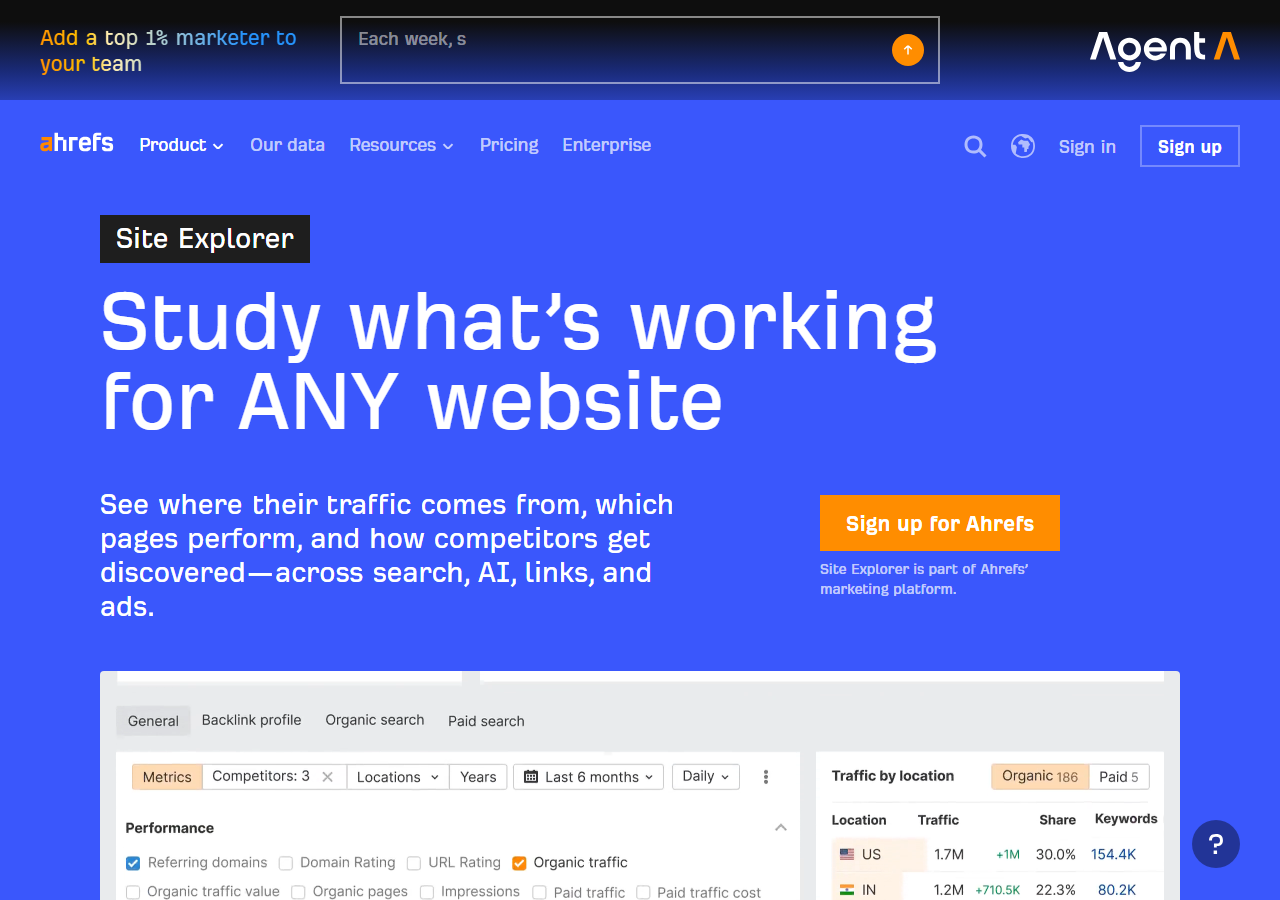
Once the deep-dive playbook is in your back pocket, the next layer is the dashboard that surfaces decay before you have to react to it. The screenshot tooling and the lost-backlinks report only matter if the verdicts land somewhere a stakeholder can see at a glance, otherwise the audit becomes another spreadsheet that nobody opens.
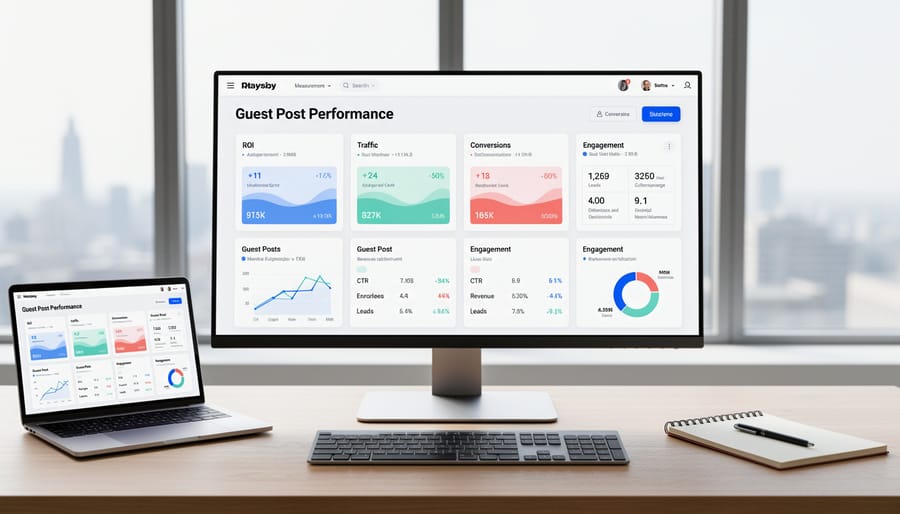
Creating Your ROI Dashboard
Surface six core metrics, click-through rate (traffic from each placement to target), conversion rate (desired actions taken), cost per acquisition, engagement rate (likes, shares, comments per post), reach (unique viewers), and share of voice (your brand mentions versus competitors). Visualize trends with line charts for month-over-month growth, bar charts for campaign comparisons, and cohort tables showing performance by topic cluster or placement tier.
Segment data by campaign type (awareness versus conversion), content topic (product launches, thought leadership, community engagement), and placement tier (earned media, owned channels, paid amplification). This structure reveals which combinations drive results and which drain budget. Build dashboards in Google Data Studio, Tableau, or your analytics platform, whatever stakeholders already use. Update weekly during active campaigns, monthly for evergreen link-building efforts. Include a benchmark row comparing current performance to historical averages so teams spot anomalies quickly and reallocate spend toward high-performing segments.
Calculating True Cost Per Acquisition from Guest Links
Accounting for Hidden Costs
Most ROI calculations miss the time buried in each placement. Outreach sequences consume hours per accepted pitch, drafting personalized emails, following up, negotiating edits. Factor in editorial revisions, relationship management calls, and the opportunity cost of choosing guest posts over other channels. A $300 link requiring eight staff hours at $75/hour actually costs $900. Track total labor per campaign, not just hard costs like software subscriptions or freelancer fees. This reveals which publications demand disproportionate effort relative to traffic or authority gains, letting you reallocate budget toward efficient channels.
Without this full-cost view, you are optimizing the wrong number. And the audit makes it worse, or better, depending on how you look at it, because a placement that costs $900 to land and is dead twelve months later costs $900 a year, not $900 once. Actually, scratch that. If you have to re-pitch it, it costs $900 plus the re-pitch hours, then again the following year if the new editor edits the anchor back to something generic. Three changes in eighteen months. That is the kind of pattern the dashboard surfaces only if you bake true cost into the model from day one.
Benchmarking Against Other Channels
Guest post CPA typically ranges $150-$500 per published placement, while paid search often delivers leads at $50-$200 but without lasting SEO benefit. Content marketing yields lower per-link costs ($80-$300) yet demands ongoing production overhead. Email outreach costs pennies per contact but converts under 5% to placements. Track your blended CPA across channels monthly, if guest posts cost 2x your paid ads but generate compounding organic traffic for 24+ months, the lifetime value justifies the premium. Build a simple dashboard comparing CPA, traffic growth rate, and conversion attribution by source to optimize spend toward channels with the strongest six-month trailing ROI.
When to Re-Pitch, Accept the Loss, or Double Down
Once you have tracked metrics for at least 60-90 days, you have enough signal to make strategic decisions. The framework is straightforward, double down on placements generating traffic or conversions above your target cost-per-acquisition, optimize those hovering near breakeven, re-pitch the ones that decayed for fixable reasons, and accept the loss on persistent underperformers.
✓
Re-pitch when
- ›The host page is alive but your link was nofollowed silently
- ›Anchor was edited to a generic phrase you can ask to revert
- ›Article was removed within the last 6 months and the editor is reachable
- ›The host still ranks for relevant terms, just not the article URL
- ›You can offer a content refresh in exchange for restored placement
✗
Accept the loss when
- ›The host domain has been sold or rebranded entirely
- ›Host traffic has collapsed 70%+ across 6 months
- ›The article is now behind a paywall or noindex archive
- ›The new owners run a competing offer (do not link from there anyway)
- ›You cannot reach a human editor after three attempts
Double down when a placement drives qualified traffic at or below your calculated acceptable cost per click. If a single guest post delivers 200 visits at $0.50 each and your benchmark was $2.00, negotiate additional placements with that publisher or invest in amplifying that content. Look for patterns across high performers, specific topics, publication types, or author relationships, then replicate those conditions.
Pivot when traffic arrives but engagement falls short. Low time-on-site or high bounce rates suggest audience mismatch, not placement failure. Probably. Test different anchor text, update the linked landing page, or request minor edits to the intro paragraph to better set reader expectations. Many publishers allow reasonable post-publication tweaks (more than you would think, if you ask politely and bring a draft). Walk away after three months of negligible traffic (under 10 visits) or when cost per conversion exceeds five times your target. Redirect energy to proven channels. Track which partner sites consistently underdeliver across multiple posts, that is a relationship to retire, not renew.
Document your thresholds in advance. Deciding which metric triggers which action before you see the data prevents emotional attachment to sunk costs and keeps your link-building budget focused on measurable returns.
Putting the Audit on a Schedule
Measuring whether your guest posts are actually working moves from aspiration to reality when you build three foundations, tracking infrastructure that connects each placement to downstream outcomes, an audit cadence that surfaces decay before it costs a Google update cycle, and the organizational discipline to act on what the audit returns. The frameworks here work only when your measurement layer persists through the inevitable changes in landing pages, product positioning, and campaign messaging. Editable link technology addresses this directly, when destination URLs shift or tracking parameters need updating, you can modify links after publication without chasing down editors or abandoning attribution data.
Transparent metrics matter equally. Tools that surface click patterns, geographic distribution, and referral quality let you spot which placements justify renewal and which represent sunk costs. ROI calculation requires honest inputs, lean on platforms that show you the full picture, not curated dashboards designed to flatter spend. The discipline to focus on outcomes rather than activity remains your responsibility. The right infrastructure makes that focus sustainable.
Try it this week
Audit ten live placements. Tag each one: double-down, re-pitch, or accept loss.
-
1
Pull ten guest-post URLs from the last 18 months. Run them through Screaming Frog in list mode, capture status, anchor, rel, and target URL. -
2
Join the crawl with GA4 referral data and your rank tracker. Flag every placement where the link is silent, drifted, or pointing at a dead target. -
3
Write a one-line verdict for each placement. Send the re-pitch emails the same day, you will recover roughly two of every three issues this way.
The audit you run this week is the one that stops next quarter’s silent decay from becoming next year’s ranking regression.
Related guides
- Quality Guest Post ROI, The placement-quality-from-the-start framework that pairs with this audit guide.
- Stop Guessing If Link Building Works, The measurement system the audit cadence plugs into.
- Why Niche Edits Go Stale, A sister angle on the same decay problem from the niche-edits side.

