

Email Newsletter Ads That Actually Make Money (Without Annoying Your Subscribers)

Email newsletter ads turn your subscriber list into revenue by selling placement to sponsors who want access to your audience. Most publishers charge $20-$100 per thousand subscribers (CPM) for a text block or banner in their regular sends, though engaged niche audiences command premium rates—sometimes $500+ CPM for highly targeted communities.
Start by auditing your open rates and click-through data; sponsors pay for attention, so sub-15% open rates need fixing before you pitch advertisers. Create a simple one-page media kit listing your subscriber count, demographics, typical engagement metrics, and sample placement options (header banner, mid-newsletter spotlight, dedicated send). Approach sponsors directly through warm outreach to companies already advertising in similar newsletters, or list your inventory on ad networks like Paved, Swapstack, or Sparkloop Ads to handle matchmaking and payments.
Protect subscriber trust by capping ads at one per issue, clearly labeling sponsored content, and rejecting sponsors misaligned with your editorial voice. Test placement positions and formats across three sends before committing to rate cards—a bottom placement might outperform a header if your readers scroll to your curated links. Price transparently, deliver promised impressions, and share performance data post-campaign to build repeat business.
What Email Newsletter Ads Are (And Why They Work)
Email newsletter ads are paid sponsor placements that appear inside the emails creators send to their subscribers. A brand pays to reach your audience through a featured message, product mention, or call-out block in your newsletter content.
The exchange is straightforward: sponsors gain access to engaged readers who’ve already opted in, creators earn revenue from their email lists, and subscribers discover products or services selected for relevance. Unlike display ads that interrupt browsing or affiliate links embedded in existing recommendations, newsletter ads are explicit sponsorships occupying dedicated space within the email.
Why they work: readers treat newsletters differently than websites. Opening an email signals intentional attention. Subscribers trust curated content from a known sender more than algorithmic feeds or banner placements. When a creator vouches for a sponsor or offers context around the placement, conversion rates climb because the endorsement carries weight.
Newsletter ads also preserve subscriber experience better than alternatives. Creators control placement, frequency, and sponsor selection. Readers see relevant offers without leaving their inbox. Sponsors reach niche audiences with high signal-to-noise ratios. The format rewards alignment between creator expertise, audience needs, and sponsor offerings, making authenticity a competitive advantage rather than an obstacle.
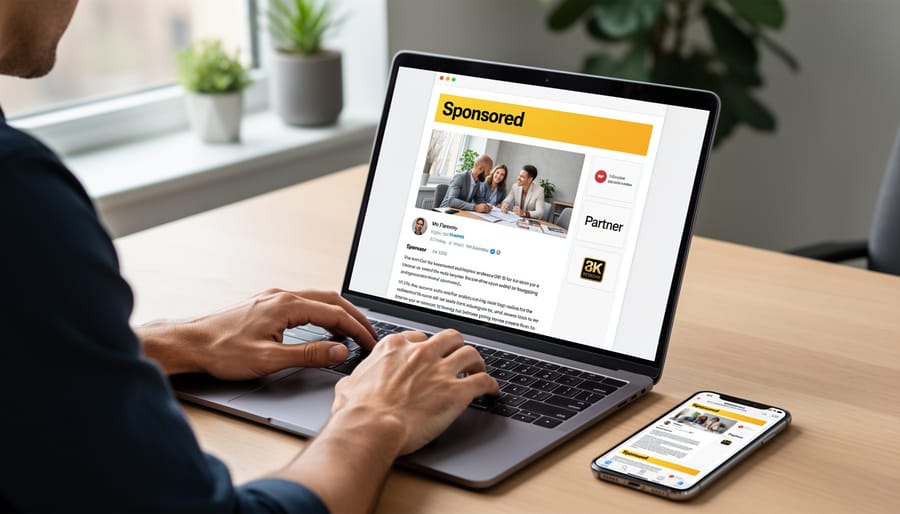
Three Newsletter Ad Formats That Perform
Dedicated Sends
A dedicated send replaces your regular newsletter with a single sponsor’s message—the entire email becomes their ad. This format commands the highest CPM rates, often $50–$100+ per thousand subscribers, because it delivers complete attention and no competing content. Sponsors get full creative control (within your brand guidelines) and measurable click-through directly to their landing page.
The trade-off is subscriber fatigue. Each dedicated send interrupts the content experience your readers expect, so use them sparingly—most newsletters limit these to once per month maximum. They work best when the sponsor’s product closely matches your audience’s needs and interests, so the message feels like a useful recommendation rather than a disruption.
Vet sponsors carefully before committing to a dedicated send. Your name goes on that email, so declining sponsors who don’t align with your values protects long-term trust. Be transparent with readers by labeling these emails clearly as sponsored content in the subject line or preheader. When the alignment is strong, dedicated sends can feel like curated recommendations—profitable for you, valuable for readers, effective for sponsors.
Integrated Sponsor Blocks
This is the default sponsorship format for most newsletters. A sponsor message appears as a discrete block—typically 50 to 150 words—inserted at the top, middle, or bottom of your regular content. The sponsor provides copy, you label it clearly as “Sponsored” or “Partner Content,” and it runs for an agreed period or number of sends.
Top placement commands premium rates because every reader sees it before scrolling. Mid-roll placements work well in longer digests, offering context from surrounding content. Bottom slots cost less but reach only engaged readers who scroll through.
Why it’s interesting: This format preserves your editorial voice while generating predictable revenue. Sponsors get dedicated attention without disrupting your content structure.
Set clear visual separation—borders, background tint, or spacing—so readers instantly recognize paid content. Most newsletter operators limit themselves to one integrated block per issue to avoid fatigue. Track click-through rates for each placement to justify pricing and optimize future positioning.
For: Newsletter publishers balancing monetization with reader trust and seeking repeatable sponsorship deals.
Classifieds and Multi-Sponsor Slots
Classifieds bundle short sponsor mentions—typically one sentence each—into a single newsletter block, letting you stack three to eight advertisers per issue. Each sponsor pays a smaller fee (often $100–500 for lists under 50,000), but you fill available inventory faster and diversify revenue sources in one placement. This format works best when your audience expects quick discovery, like curated link roundups or resource digests.
Why it’s interesting: You trade higher per-sponsor rates for volume and speed, reducing the sales cycle while maintaining editorial real estate for primary content.
Structure each listing with the sponsor name, a single benefit statement, and a call-to-action link. Keep copy standardized—same character count, same grammatical structure—so no single advertiser dominates visually. Group them under a consistent header like “Tools Worth Exploring” or “Reader-Supported Picks” to signal commercial content without breaking reading flow.
For: Newsletter operators with 10,000+ subscribers who want predictable monthly revenue without negotiating individual sponsorships each cycle; works especially well for general-interest or multi-topic lists where audience needs vary widely.
How to Price Your Newsletter Ad Inventory
Start by calculating your baseline Cost Per Thousand Impressions (CPM). Industry benchmarks range from $20–$50 for general newsletters, $50–$100 for engaged audiences in specific niches like SaaS or finance, and $100+ for highly targeted professional communities. Your actual rate depends on three factors: list size, engagement metrics, and niche relevance.
For list size, newsletters under 5,000 subscribers typically charge $50–$200 per placement as flat fees rather than CPM. Between 5,000 and 50,000, shift to CPM pricing or flat rates in the $300–$2,000 range. Above 50,000, CPM becomes standard because it scales predictably and sponsors understand the math.
Engagement metrics matter more than raw subscriber counts. If your open rate exceeds 40 percent and click-through rate tops 3 percent, add 30–50 percent to baseline CPM. Sponsors pay premiums for proof that readers actually engage. Share your trailing 90-day open and click rates when discussing pricing—transparency builds trust and justifies higher rates.
Niche relevance commands the highest premiums. A cybersecurity newsletter reaching 8,000 IT directors can charge more than a general business newsletter with 40,000 subscribers because the audience match is precise. If your readers represent a hard-to-reach professional segment, start 50–100 percent above general CPM benchmarks.
Format affects pricing too. Dedicated emails to your full list command 2–3x the rate of inline placements within regular content. Top-of-newsletter spots earn 20–30 percent more than mid-newsletter positions. Sponsored content written in your voice costs more than standard display text because it requires your time and editorial integration.
Avoid performance-based pricing initially. Charging per click or conversion shifts campaign risk entirely to you and undervalues engaged audiences. Lock in flat fees or CPM until you’ve run 10-plus campaigns and understand typical sponsor conversion patterns. Then consider hybrid models with base guarantees plus performance bonuses for sponsors seeking measurable outcomes.
Finding Sponsors Without a Media Kit or Sales Team
You don’t need a glossy deck or sales team to land your first sponsors. Start with platforms that connect newsletter publishers to advertisers actively seeking audiences like yours.
Sponsor marketplaces handle discovery and logistics. SparkLoop connects newsletters with performance-based sponsors, taking a cut in exchange for vetting advertisers and managing payments. Paved operates a self-service marketplace where brands browse newsletters by niche and audience size, then book placements directly. Swapstack focuses on smaller newsletters (1,000+ subscribers) and facilitates both paid sponsorships and newsletter cross-promotions. Each platform has different minimums and approval criteria, so apply to multiple.
Direct outreach works when you target brands already advertising in similar newsletters. Screenshot their ads, note which newsletters run them repeatedly (a sign of positive ROI), then email their marketing team with your subscriber count, open rate, and audience description. Lead with relevance: explain why your readers match their customer profile. Keep the initial pitch to three sentences and attach your one-page info sheet.
Your network often yields the fastest results. Ask subscribers what tools they use daily, then reach out to those companies. Mention specific readers who are customers. Founders of small software tools, course creators, and niche service providers often say yes to newsletters serving their exact market, even without formal ad budgets.
Create a simple sponsor info sheet in Google Docs or Notion. Include subscriber count, open rate, one-paragraph audience description, link to past issues, available ad slots, and pricing. Skip design theatrics. Clarity beats polish when someone is evaluating dozens of options. Update metrics monthly and keep the URL stable so you can share it instantly when opportunities arise.
Writing Sponsor Content That Converts (For Both Parties)
Good sponsor content reads like a useful recommendation, not an interruption. Start with clear disclosure—”Sponsored” or “Partner Content” at the top—so readers know what they’re seeing before they engage. Transparency builds trust; hiding the commercial relationship erodes it faster than any single ad ever could.
Match your newsletter’s established tone. If you typically write conversationally, don’t suddenly shift to corporate marketing speak. The sponsor’s message should feel native to your format—same sentence structure, same vocabulary level, same rhythm. Readers trust you as a filter; maintain that voice even when featuring paid placements.
Lead with what the product or service actually does, not vague claims. Describe the problem it solves or the outcome it delivers in one concrete sentence. Follow with a single compelling reason your specific audience might care—tie it to their work, challenges, or goals. End with a direct call to action: “Try the free tier,” “Read the case study,” or “Browse the catalog.” Ambiguous CTAs kill click-through rates.
Balance promotional and informative by frontloading value. If you’re sponsoring a tool, explain its core function before pitching features. If it’s an event, state the topic and format before the registration link. Readers will click when they understand exactly what they’re getting and why it matters to them.
Test different formats—a dedicated sponsor slot versus integrating mentions into curated links—and track performance. Share metrics with sponsors transparently. Conversions happen when the match between sponsor offering and audience need is genuine, and your presentation makes that connection immediately clear.
Tracking What Works (Metrics Sponsors Actually Care About)
Sponsors want to know whether your readers clicked—and whether those clicks led to meaningful action. The metrics that matter:
Click-through rate (CTR): The percentage of readers who click your sponsor’s link. A 2-5% CTR is typical for well-matched placements in engaged newsletters.
Conversion attribution: Did clicks turn into signups, purchases, or trials? This requires tracking beyond the click. Use UTM parameters (utm_source, utm_medium, utm_campaign) appended to sponsor URLs so their analytics can trace the path from your newsletter to their conversion event.
Open rate context: A 40% open rate with strong CTR tells a different story than 10% opens with the same CTR. Share both to help sponsors understand reach versus engagement.
Reporting cadence: Send simple summaries within 48 hours of send (total clicks, CTR) and follow up after a week with any conversion data the sponsor shares back. Tools like Bitly, Rebrandly, or your ESP’s built-in tracking handle link metrics. Some creators build lightweight sponsor dashboards using spreadsheets or tools like Google Data Studio for recurring partners.
What sponsors remember: Clear numbers delivered promptly, without jargon or spin. Show the work, acknowledge what you can and cannot track, and make renewing easy.


When to Say No to Sponsor Money
Not every sponsor check is worth cashing. Turn down offers when the product conflicts with content you’ve previously published or undermines your editorial position—readers notice inconsistencies faster than you think. Walk away from sponsors who demand copy approval beyond basic factual review, insist on language that sounds unlike your voice, or refuse disclosure requirements.
Watch for oversaturation risk. Running more than one sponsor per issue dilutes impact and trains readers to scroll past all ads. If you’re tempted to add a second slot because revenue looks good, test subscriber engagement metrics first—opens, clicks, and unsubscribe rates will tell you if you’re approaching the limit.
Red flags include sponsors offering far above market rates without clear reasoning, requests to avoid standard “sponsored” labels, or products with predatory pricing buried in fine print. A single mis-targeted ad that prompts fifty unsubscribes costs more than the placement fee, especially when those subscribers represented your most engaged segment. Protect list quality first; sponsor revenue compounds only when trust remains intact.
Successful newsletter ad monetization comes down to three principles: match sponsors to your audience’s real interests, disclose every paid placement clearly, and treat reader attention as your scarcest resource. Start by documenting your subscriber demographics and engagement metrics in a simple one-page deck—open rates, click-through data, and audience composition. Use this to approach five brands your readers already discuss or use. Send a brief pitch explaining who reads your newsletter, what they care about, and one specific ad slot you’re offering. Most creators wait too long to start; your first sponsor teaches you more than any guide can.

